
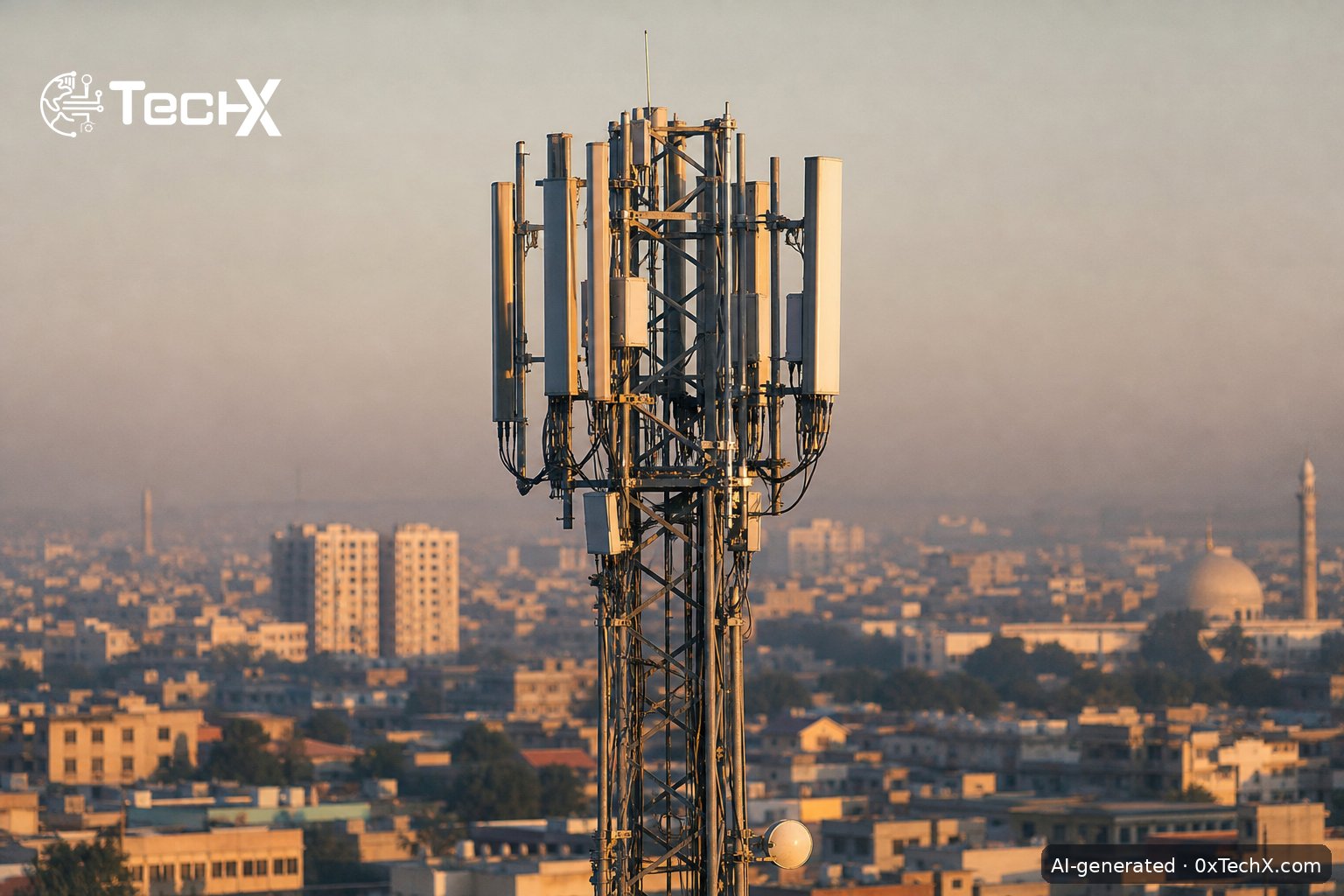
Zong 5G sites have crossed the 1,000 mark across Pakistan, with the operator confirming it has deployed and integrated over 1,000 5G and 4G TDD expansion sites in major cities and urban centres. The milestone lands as the country’s overall 5G rollout accelerates sharply, with the Prime Minister being told on 25 November 2026 that network upgrades for 5G are now complete in 86 cities nationwide.
What the Zong 5G Sites Milestone Actually Means
When Zong launched commercial 5G on 19 March 2026, it set a clear public target. The company committed to deploying and upgrading 1,000-plus 5G sites nationwide in 2026, aiming to drive scale, speed, and impact across Pakistan’s digital ecosystem. Eight months later, that target is done.
Zong has already deployed and integrated over 1,000 5G and 4G TDD expansion sites across major cities and urban centres, and now serves 56 million-plus subscribers through 17,000-plus network sites, including those 1,000-plus 5G sites nationwide.
What most coverage misses: hitting 1,000 sites is not the finish line. Each operator is contractually required to deploy at least 2,000 sites in the first phase of the rollout. So Zong is halfway through its legal obligation, not done. The next 1,000 sites will determine whether Pakistan’s 5G promise reaches smaller cities and suburban areas beyond the current urban clusters.
How Pakistan’s Wider 5G Rollout Looks Right Now
Zong is one piece of a bigger picture that has moved fast since March. Telecom companies have finished 5G network upgrades in 86 cities in Pakistan, Prime Minister Shehbaz Sharif was told at a review of the IT ministry in Islamabad on 25 November 2026.
On 3 November 2026, the PTA chairman told the National Assembly that about 2,300 towers had been upgraded and roughly 70 per cent of 5G services in Karachi were rolled out. These numbers show steady momentum, but also a clear gap: 70 per cent coverage in Pakistan’s largest city still means thousands of Karachi streets have no 5G signal yet.
The number of 5G users in Pakistan has reached around 1.3 million, marking notable progress in the four months since the service began expanding nationwide. Separately, 3.81 million 5G-compatible devices are registered nationwide, per the PTA. The gap between compatible devices and active users shows that many people already own a 5G phone but cannot yet use 5G where they live or work.
Zong’s Technical Edge and What It Delivers
In preparation for the launch of 5G, Zong acquired 110 MHz of spectrum in the 2026 NGMS/5G Auction, including 60 MHz in the 2.6 GHz band and 50 MHz in the 3.5 GHz band. That is a solid mid-band holding that balances speed with reasonable building penetration.
Backed by globally benchmarked infrastructure, Zong has already demonstrated speeds exceeding 1.4 Gbps in trials, reinforcing its position at the forefront of network innovation. Real-world speeds for most users will be lower than that trial figure, but even a fraction of 1.4 Gbps is a dramatic jump from typical 4G speeds in Pakistan.
Zong’s network is increasingly AI-enabled, using intelligent technologies to continuously optimise network performance and energy efficiency across thousands of sites. That AI layer matters because it can automatically shift capacity to busy zones during peak hours, which is exactly what a dense urban network like Karachi or Lahore needs.
Z HomeFi, Pakistan’s first 5G Fixed Wireless Access home broadband service, is extending high-speed internet access without relying on conventional fixed-line infrastructure. For the millions of Pakistani homes that have no fibre cable, this is a practical alternative to wired broadband.
You can read more about how the broader Pakistan 5G picture developed, including the Alibaba super-app tie-in, in our earlier piece on Alibaba building Pakistan’s government super app as 5G hits 86 cities.
Who Else Is Building 5G in Pakistan?
Zong is not alone. In March 2026, Jazz launched 5G services across approximately 180 sites, including Islamabad, all provincial capitals, and several major metropolitan areas. Based on PTA data from early August 2026, Jazz had deployed 689 5G sites, followed by Zong with 338 sites and Ufone with 109 sites, with Jazz accounting for about 60.7 per cent of all deployed 5G sites at that point. Since then Zong has closed the gap considerably, now topping 1,000 sites.
Jazz, Zong, and Ufone all secured spectrum in the 2026 auction and are involved in the rollout process. Under the government’s rollout plan, telecom operators are expected to add roughly 3,000 new network sites annually to support the expansion of 5G services. That is a demanding target, and 2026 is proving it is achievable.
What This Means for Everyday Pakistani Users
If you live in one of the major cities already covered, the first practical upgrade is speed on your existing phone. Zong 5G sites use the same handset-side software as 4G, so if your phone supports 5G and your area has a Zong 5G site nearby, you can switch on. Check your phone settings and Zong’s official coverage map at zong.com.pk to confirm your area.
For businesses in covered cities, low-latency 5G opens the door to real-time cloud tools, video-heavy workflows, and IoT sensors that simply do not work reliably on 4G. The 5G rollout also strengthens the CPEC agenda by enabling high-speed, low-latency connectivity for smart industries, healthcare transformation, and precision agriculture.
The honest caveat: Pakistan’s 5G era has officially begun, but the rollout is still phased. If you are outside a major urban centre, 5G is not for you yet. The 2,000-site contractual obligation per operator means the next phase of Zong 5G sites must double what has been built so far, pushing the network into second-tier cities.
Frequently Asked Questions
Has Zong actually finished deploying 1,000 5G sites?
Yes. Zong’s Director of Strategy confirmed in November 2026 that the company has deployed and integrated over 1,000 5G sites across major cities and urban centres in Pakistan, meeting its year-start commitment.
Which cities have Zong 5G right now?
Zong’s 5G network is already live in over 20 cities, expanding a network that positions the operator to support growing demand for faster consumer and business connectivity. Key cities include Islamabad, Rawalpindi, Lahore, Karachi, Peshawar, and Quetta.
Is Zong’s current 5G a true standalone network?
The PTA Chairman told the National Assembly Standing Committee on IT that no new 5G infrastructure has been deployed yet in the strict sense; current 5G runs on existing 4G towers in a non-standalone rollout. This is normal for an early 5G rollout and still delivers meaningfully faster speeds, but a full standalone 5G core will come in later phases.
When will 5G reach smaller cities in Pakistan?
The next phase of expansion is expected to focus on adding more sites and extending coverage to additional urban areas, as Pakistan moves to scale up its 5G network nationwide. Each operator must reach 2,000 sites under Phase 1 rules, so more cities will be added through 2027 and beyond.