

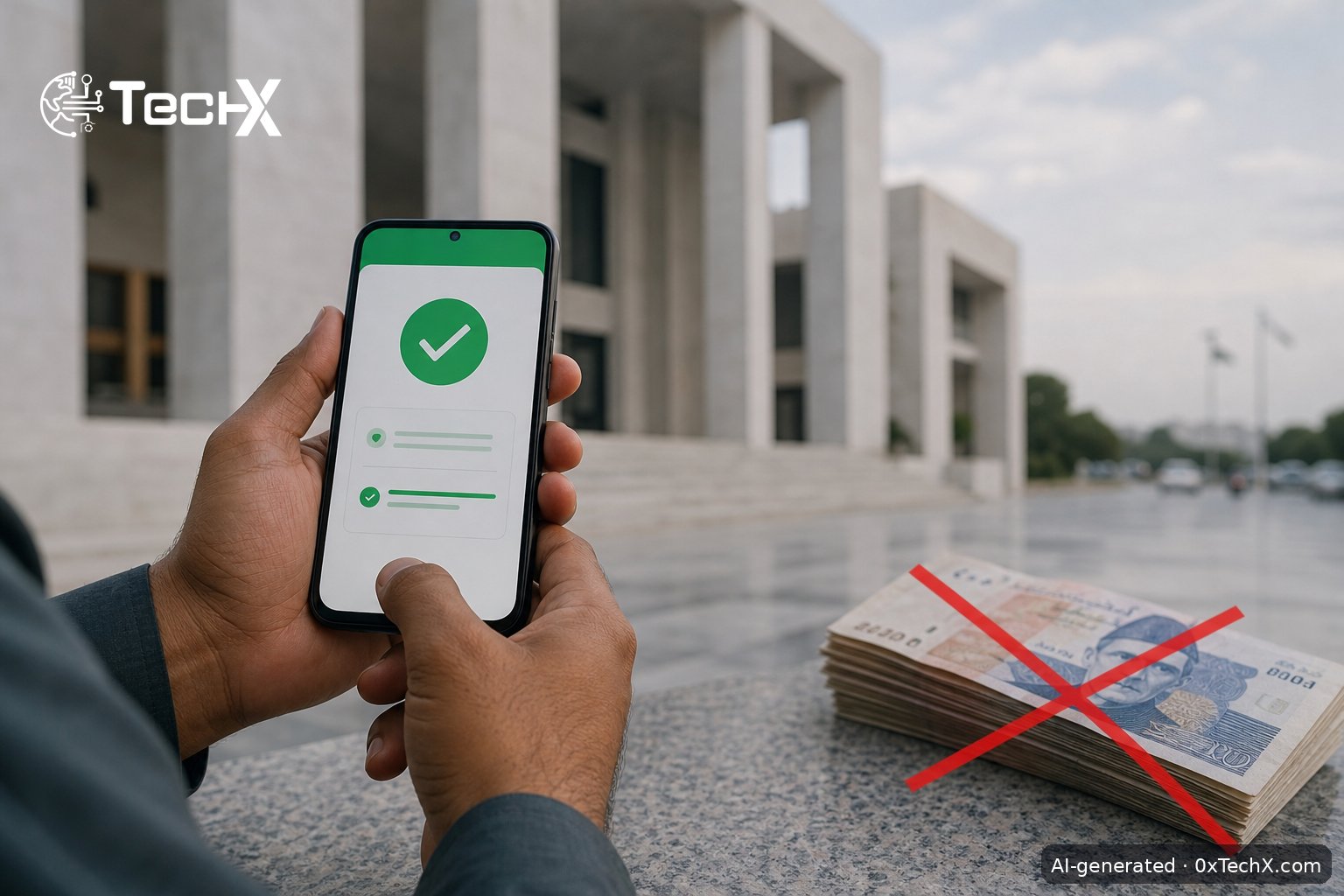
Islamabad bans cash payments at all Metropolitan Corporation Islamabad (MCI) offices starting December 1, 2026, under a formal notification signed on November 25 by MCI Chief Officer Captain (Retd) Awais Afzal. This is not a pilot scheme or a suggestion, it is a hard deadline. If you have ever paid a property tax bill, a trade licence fee, or a utility fine at an MCI counter, the way you do it is about to change completely, and you have very little time to prepare.
Why Islamabad Bans Cash Payments from December 1
The move is part of the government’s Cashless Islamabad initiative, which carries the backing of Prime Minister Shehbaz Sharif. The goal is to remove physical currency from all public-sector transactions in the capital and create a fully auditable, digital money trail. The district administration issued the directive first, and MCI has now put it into a binding office order.
The notification is specific: no MCI office, directorate, wing or branch may accept cash after November 30. All MCI cash counters are to be physically closed by that date, and all manual receipt books are to be sealed and deposited with the relevant accounts office. This means there is no fallback option at the counter window.
What makes this order unusually firm is the accountability clause. Any officer or employee who accepts cash after December 1 faces strict departmental action. The director and head of each office are also held personally responsible if a violation happens under their watch. Directors must submit an implementation report to the Chief Officer within seven days of the deadline.
What Payments Are Covered
The ban covers every category of money that the public pays to MCI. This includes:
- Property and other taxes
- Service fees and rents
- Fines and penalty charges
- Trade and business licence fees
Critically, the ban does not stop at cash. Cheques, pay orders and demand drafts are also off the table from December 1. The only accepted payment method going forward is a fully digital channel, mobile banking, internet banking, or any other electronic transfer approved by MCI.
MCI offices have been told to put up public awareness notices explaining how to pay online, so residents can learn the process before the deadline hits. This is a small but important detail: the government is at least acknowledging that not every Islamabad resident is already comfortable with digital payments.
The Bigger Picture for Pakistan’s Digital Economy
This is not an isolated move. The ICT administration and the Capital Development Authority (CDA) are also set to stop accepting cash at their offices from December 1. The government’s target is even more ambitious beyond that: by December 31, all merchants across Islamabad are expected to join the digital payment system.
Prime Minister Shehbaz Sharif has also directed relevant authorities to prepare time-bound plans for taking digital payments nationwide, with most federal and provincial institutions expected to be fully digitised by the end of December 2026. Islamabad’s December 1 mandate is essentially the first firm proof point of that larger policy.
For Pakistan’s fintech sector, this matters a great deal. Every time a government body forces digital adoption, it grows the user base for mobile wallets, internet banking apps and payment gateways. Banks and payment firms that attended the Islamabad policy meeting have already signalled their support for the rollout. If the SBP’s upcoming AI-driven banking rules, expected by March 2027, align with this digital-first direction, the policy momentum could become self-reinforcing. For more on the regulatory side of this shift, see our earlier piece on SBP AI banking rules arriving by March 2027.
What This Means for Residents and Small Businesses
If you are an Islamabad resident, the practical reality is simple: you need a working mobile or internet banking account before December 1. Most major banks in Pakistan, including HBL, MCB, UBL, Meezan and others, offer apps that can handle government payments. Services like Raast, the State Bank of Pakistan’s instant payment system, are designed exactly for this kind of government-to-public transaction.
Small businesses and shopkeepers who regularly visit MCI offices for trade licences or fine payments need to act now. With only days left before the cash counters close on November 30, waiting is not an option. Set up your mobile banking account, verify it with your CNIC, and do a small test transaction before the deadline.
One gap that existing coverage has not fully addressed is the risk of informal middlemen. If MCI counters stop taking cash, some individuals may offer to "pay on your behalf" for a fee. These arrangements carry real risk: MCI has no mechanism to issue a valid digital receipt for cash handed to a third party, meaning you could pay and have no proof of settlement.
Frequently Asked Questions
From when exactly do MCI offices stop taking cash?
December 1, 2026 is the hard deadline. All MCI cash counters are being closed on November 30, the day before.
Can I still pay by cheque or pay order after December 1?
No. The notification specifically rules out cheques, pay orders and demand drafts in addition to cash. Only digital payments are accepted.
What digital payment options can I use for MCI dues?
Any online banking or mobile banking channel your bank supports should work. The State Bank of Pakistan’s Raast instant payment system is also designed for government payments. MCI offices will display notices explaining the available options.
What happens to an MCI officer who takes cash after December 1?
The notification warns of strict departmental action against the individual officer, the relevant director, and the head of the office. The accountability goes up the chain, not just to the counter clerk.