
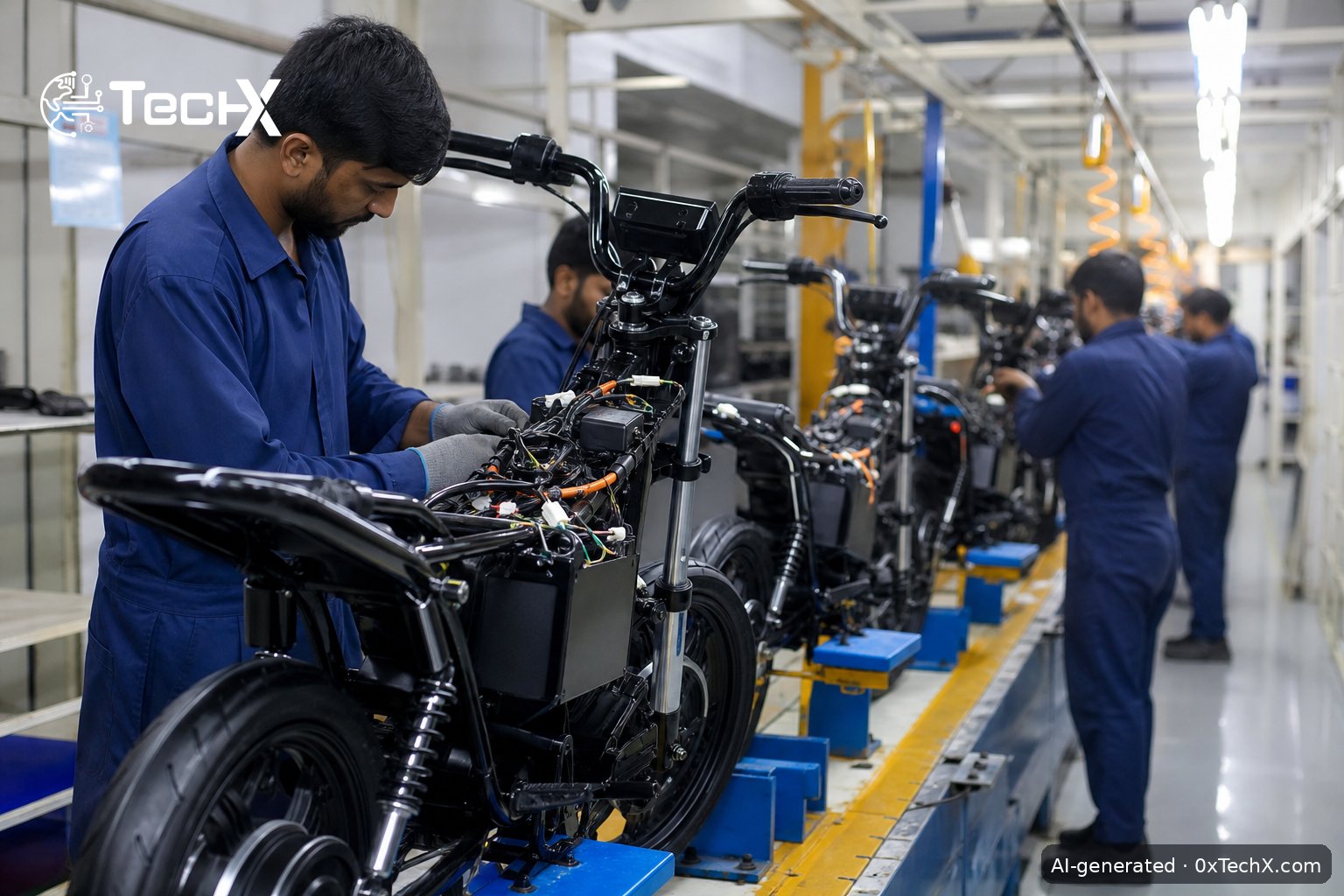
The Pakistan electric bike policy is at a crossroads. Local factories have now built over 290,000 electric bikes, annual output has grown nearly 30 times in four years, and over 85 companies hold assembly licences. Yet the auto policy that should guide this boom has stalled, leaving manufacturers, investors, and everyday buyers in the dark. That is the picture that emerged from a Senate committee meeting on 3 November 2026.
How Big Is the Electric Bike Boom in Pakistan?
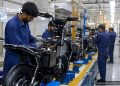
The numbers are striking. Pakistan’s electric vehicle output grew from just 7,345 units in FY2021-22 to 210,268 units in FY2025-26, according to data the Engineering Development Board (EDB) placed before the Senate Standing Committee on Industries and Production. That is nearly a 30-fold rise in four years.
On top of that annual figure, the EDB said cumulative local production capacity for electric motorcycles now exceeds 290,000 units, supported by more than 85 licensed local assemblers. The figures were shared after Senator Anusha Rehman asked about electric vehicle manufacturing in the country.
Cheap petrol alternatives, government subsidy schemes, and rising fuel prices have all pushed demand upward. The Prime Minister’s Electric Bike and Rickshaw Scheme, run under the broader PAVE (Pakistan Accelerated Vehicle Electrification) Programme, committed Rs 100 billion over five years to push this transition forward. The government also set a national target: 30 percent of all motorcycles, three-wheelers, cars, and buses should be electric by 2030.
So Why Is Pakistan Electric Bike Policy Still Stuck?
Here is the problem. The old Auto Industry Development and Export Policy (AIDEP) that covered the period 2021 to 2026 expired on 30 June 2026. When it lapsed, so did the tax breaks that came with it. Hybrid vehicles that had enjoyed a reduced GST rate of 8.5 percent suddenly faced the full 25 percent standard rate, pushing prices up by more than Rs 1.3 million on some models.
A new draft policy, the Auto Policy 2026-31, was prepared by the Ministry of Industries and Production. But it ran into two walls at once. First, the IMF objected to the low tax rates proposed for electric vehicles, pushing for the full 18 percent GST instead of the 1 percent rate the government wanted. Second, traditional carmakers and parts manufacturers, led by the Pakistan Association of Automotive Parts and Accessories Manufacturers (PAAPAM), said the new policy gave too many advantages to EVs without a clear transition plan for existing businesses.
Following pressure from the auto industry, the draft policy was shelved and a high-level committee under Deputy Prime Minister Ishaq Dar was tasked with writing a new version. As of the Senate briefing on 3 November 2026, the committee was still awaiting final approval, and industry uncertainty remained high. Investor planning for new EV projects is on hold because nobody knows what the final tax and localisation rules will look like.
The Charging Infrastructure Gap Nobody Talks About
Perhaps the most striking detail from the Senate committee session is one that most coverage has missed. The EDB told lawmakers that 40 motorway locations between Peshawar and Karachi have been identified for EV charging stations, and 18 installations are under way. But the EDB could not give a confirmed count of operational public chargers. Only one charging station, located at Bhera on the Islamabad-Lahore Motorway, is confirmed to be working right now.
Senator Saleem Mandviwalla, who chairs the committee, highlighted this gap sharply. He said Karachi alone would need 4,000 to 5,000 charging stations to serve mass EV adoption, yet the government’s national target is just 3,000 stations across the whole country by 2030. The committee heard that the government plans to charge a discounted tariff of Rs 40 per unit at these stations.
Officials did offer some reassurance on the charging side. Electric motorcycles with 3 to 7 kilowatt batteries only need a standard 220-volt household socket to charge, which removes the need for a dedicated station for most daily riders. Companies including Star Charge and HUBCO have shown interest in building out the public charging network.
The Battery and Skills Problems Running Underneath
Two more issues came up at the Senate session that the Pakistan electric bike policy needs to address urgently.
First, batteries. Manufacturing licences issued by the EDB do not specifically require companies to use lithium-ion batteries. Some assemblers install cheaper lead-acid batteries instead, which are heavier, shorter-lived, and can be unsafe. A grey market in scrap batteries is also growing. The Engineering Development Board confirmed that a new battery policy is being finalised, but it has not been approved yet.
Second, skills. The committee pointed out that the workforce building and repairing these bikes is not being formally trained. Senator Rehman described a visit to Chinese EV factories where vocational training centres sit directly inside manufacturing plants. She urged Pakistan to follow the same model. The committee recommended sending an industry delegation to China to study those facilities.
At the same time, five different government ministries currently have a hand in the EV sector, with no single coordinating body. Manufacturing licences come from the EDB, quality standards from PSQCA, and charging infrastructure from NEECA under the Energy Ministry. This fragmentation slows decisions and confuses investors.
What Does This Mean for Pakistani Buyers?
If you are thinking about buying an electric bike, the core good news is that local production is strong, prices are competitive, and the government subsidy of up to Rs 80,000 for electric motorcycles is still active under the PAVE scheme. For daily commuters, the fact that most e-bikes charge on a normal home socket makes running costs very low.
The risks are on the policy side. If the new auto policy takes much longer to finalise, more tax relief could lapse. And if you plan to travel beyond your city, the charging network is still very thin outside major motorways.
Pakistan’s digital and industrial transformation ambitions depend on getting this kind of enabling policy right. The electric bike sector shows what local manufacturing can do when given even basic support. But 290,000 bikes built without a clear path forward is a momentum that policy confusion can quickly undo.
Frequently Asked Questions
How many electric bikes has Pakistan made locally?
The Engineering Development Board told a Senate committee on 3 November 2026 that Pakistan’s cumulative local production capacity for electric motorcycles exceeds 290,000 units, supported by more than 85 licensed assemblers. Annual output in FY2025-26 alone reached 210,268 units.
Why is the Pakistan auto policy delayed?
The old AIDEP 2021-26 expired on 30 June 2026. A new draft policy was shelved after pushback from traditional carmakers and an IMF objection to low EV tax rates. A committee under the Deputy Prime Minister is working on a new version, but it has not been finalised yet.
How many EV charging stations does Pakistan have?
As of the November 2026 Senate briefing, only one public charging station (at Bhera on the Islamabad-Lahore Motorway) is confirmed operational. The government has identified 40 motorway locations for future stations and has 18 installations under way, with a target of 3,000 stations nationwide by 2030.
What is Pakistan’s national EV target for 2030?
The government aims for 30 percent of all motorcycles, three-wheelers, cars, and buses to be electric by 2030, amounting to roughly 2.2 million electric vehicles on Pakistan’s roads. Reaching that target depends heavily on finalising the new auto policy and building out the charging network.