
Pakistan US economic ties have deepened faster in the past two years than at almost any point in recent history, covering energy, critical minerals, and technology investment. Yet even as the two countries build closer commercial links, analysts note that crypto sits in a complicated position: domestically Pakistan has moved to regulate it, but it remains outside the core of formal bilateral trade deals. Here is what is happening and why it matters for Pakistani tech workers, fintech startups, and blockchain developers.
How Pakistan-US Economic Ties Got So Strong
Since U.S. President Donald Trump began his second term in January last year, economic ties with Pakistan have deepened significantly, sharply boosting bilateral trade. The relationship shifted from a mostly security-focused one to a genuinely commercial one, with Washington showing real interest in what Pakistan has to offer.
Washington has emphasised economic and commercial issues in its engagement with Islamabad, taking a strong interest in Pakistan’s critical minerals, and pushing for the country to import more U.S. goods, including energy supplies. In October 2025, Pakistan received its first-ever shipment of U.S. crude oil, a milestone that would have seemed unlikely just a few years ago.
U.S. Secretary of State Marco Rubio stated that Washington looks forward to exploring cooperation with Pakistan on critical minerals and hydrocarbons. Pakistan-US relations are now moving into an era where economic, technical, and strategic interests converge, with a focus on trade, investment, technology, energy, critical minerals, and regional diplomacy.
One concrete sign of this warmer relationship: the latest round of U.S. trade tariffs unveiled by the Trump administration on November 25 targeted 14 economies, including the European Union, China, and India, but did not include Pakistan. Pakistan was investigated but is not on the tariff list, and was spared alongside Mexico and Norway. For Pakistani exporters competing with Indian and Chinese rivals in the U.S. market, that is a meaningful advantage right now.
Where Does Crypto Fit in Pakistan US Economic Ties?
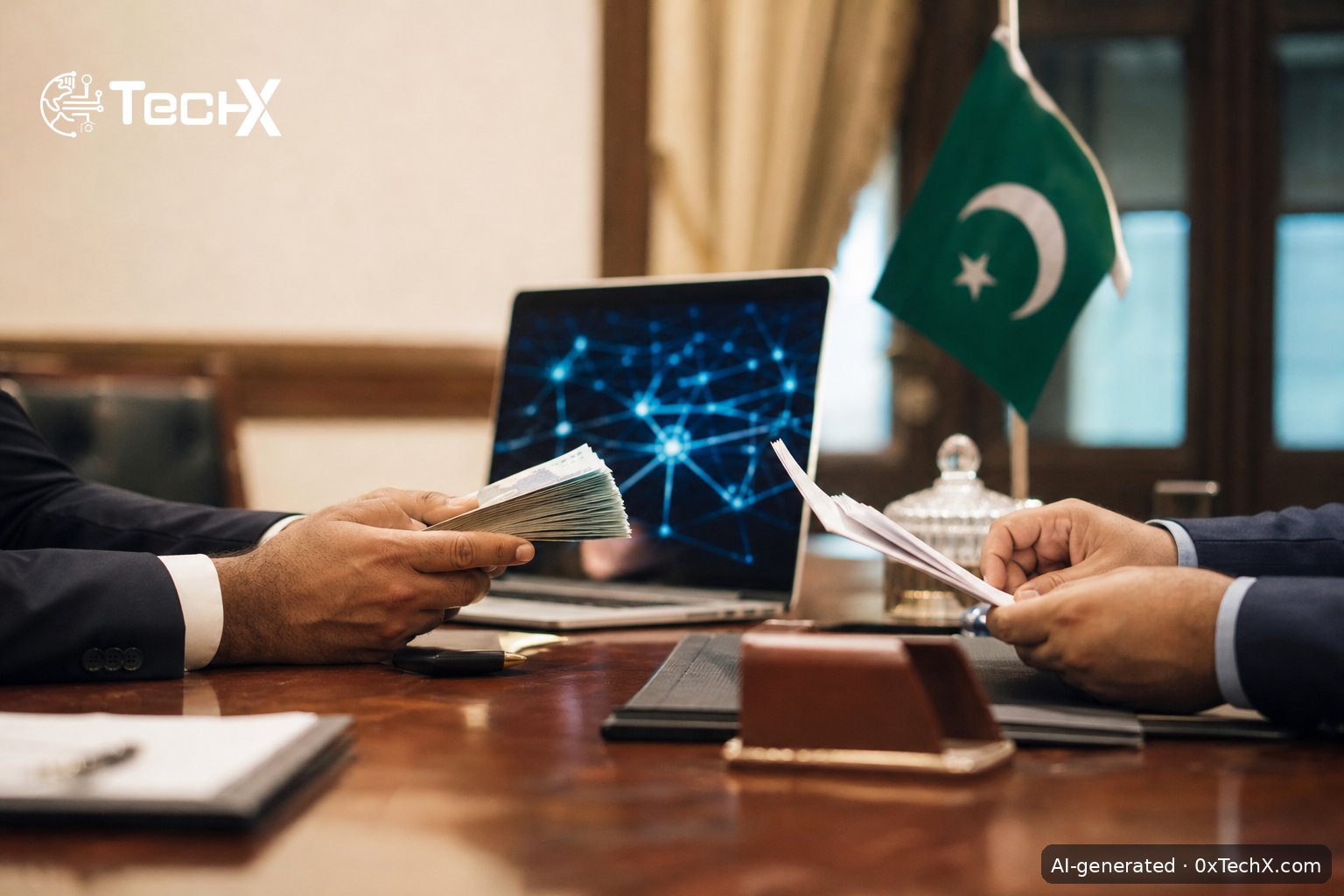
This is where things get interesting and a little confusing. Until two years ago, Pakistan wanted little to do with crypto. That changed quickly. In early 2026, Pakistan passed major crypto legislation and signed a memorandum of understanding with World Liberty Financial, the cryptocurrency venture tied to President Donald Trump’s family, to explore integrating the USD1 stablecoin into a regulated digital payments framework.
But the Nikkei Asia analysis published today (November 26, 2026) highlights that crypto remains outside the core of durable bilateral economic cooperation. Analysts tracking Pakistan-US relations point out that the crypto diplomacy was largely deal-specific and tied to individual commercial interests rather than a broad, government-to-government trade framework. Reports noted that Pakistan’s diplomatic investment has yet to produce substantial economic gains, while several agreements involving Trump-linked businesses could attract congressional attention. Pakistan has paid real political and lobbying costs for returns that so far remain mostly symbolic.
Meanwhile, domestically, Pakistan’s crypto story is very different from “off-limits.” The Virtual Assets Act 2026 created a dedicated regulator, the Pakistan Virtual Assets Regulatory Authority (PVARA). The Senate passed the Virtual Assets Bill on 27 February 2026, the National Assembly on 3 March 2026, and President Asif Ali Zardari signed it into law. Pakistan’s central bank then lifted its blanket ban on crypto services, allowing banks and financial institutions to serve licensed crypto firms under this new regulatory framework.
In April 2026 banks were allowed to serve licensed crypto firms, though they remain barred from trading, investing in, or holding crypto with their own funds or customer deposits. Pakistan is off the FATF grey list and integrated into international correspondent banking.
What This Means for Pakistan’s Fintech and Blockchain Sector
For Pakistani fintech startups and blockchain developers, the picture is a mix of real progress and open questions. The domestic legal environment has improved enormously. Crypto is not banned in Pakistan, and the position changed materially in 2026. Pakistan now has a dedicated virtual-asset law and a dedicated regulator, which means the useful question is no longer whether crypto is allowed but who is licensed to offer services around it.
Pakistan’s digital banking sector, which has now topped 140 million users, gives blockchain and fintech firms a large potential base to build on. The question is whether official US-Pakistan trade infrastructure will eventually catch up to include the digital assets space in a formal way, or whether it remains a bilateral grey zone.
The partnership between Pakistan and World Liberty Financial could transform Pakistan’s remittance system by leveraging blockchain technology for near-instant settlement, which would directly benefit the millions of overseas Pakistanis sending money home. But much depends on how PVARA shapes licensing rules in the coming months.
There are also structural risks. Pakistan still needs to pay back the International Monetary Fund, which has shown an aversion to sovereign crypto experiments. Any moves that look too speculative could complicate relations with the IMF at a time when Pakistan’s economy still depends on that support.
The key takeaway for local developers and fintech founders: the domestic legal door is now open thanks to PVARA and the Pakistan Virtual Assets Regulatory Authority. But building a business around US-Pakistan bilateral crypto flows carries political risk, since that piece of the relationship is fragile and not anchored in a formal trade agreement. Firms that focus on domestic compliance and use blockchain to solve local problems (remittances, SME payments, digital identity) are on safer ground than those betting on a formal US bilateral crypto framework arriving soon. For more on Pakistan’s broader bilateral tech deal environment, the U.S. Department of State publishes updates on commercial cooperation frameworks.
Frequently Asked Questions
Are Pakistan US economic ties strong in 2026?
Yes. Since early 2025, the two countries have built closer ties in energy, critical minerals, and trade. Pakistan was notably excluded from the latest U.S. tariff round announced on November 25, 2026, which hit major rivals including India and China.
Is crypto legal in Pakistan now?
Crypto is no longer banned in Pakistan, it is regulated. Parliament passed the Virtual Assets Act 2026, turning a temporary ordinance into permanent law and creating a national regulator to oversee exchanges, wallet providers, and other crypto businesses.
Why does Nikkei Asia say crypto is an exception in Pakistan-US ties?
The article refers to official bilateral trade and investment flows between the two governments. While Pakistan has domestic crypto regulation via PVARA, the crypto deals signed between Pakistan and U.S.-linked firms are commercial and politically fragile, not part of a durable government-to-government trade framework. Analysts say this part of the relationship could face scrutiny from a newly Democratic-led U.S. Congress.
What should Pakistani fintech startups do now?
Get licensed under PVARA if operating in the virtual assets space, focus on solving domestic problems like remittances and SME payments using blockchain, and avoid building business models that depend entirely on formal US-Pakistan bilateral crypto policies that have not yet been cemented in a trade agreement.