
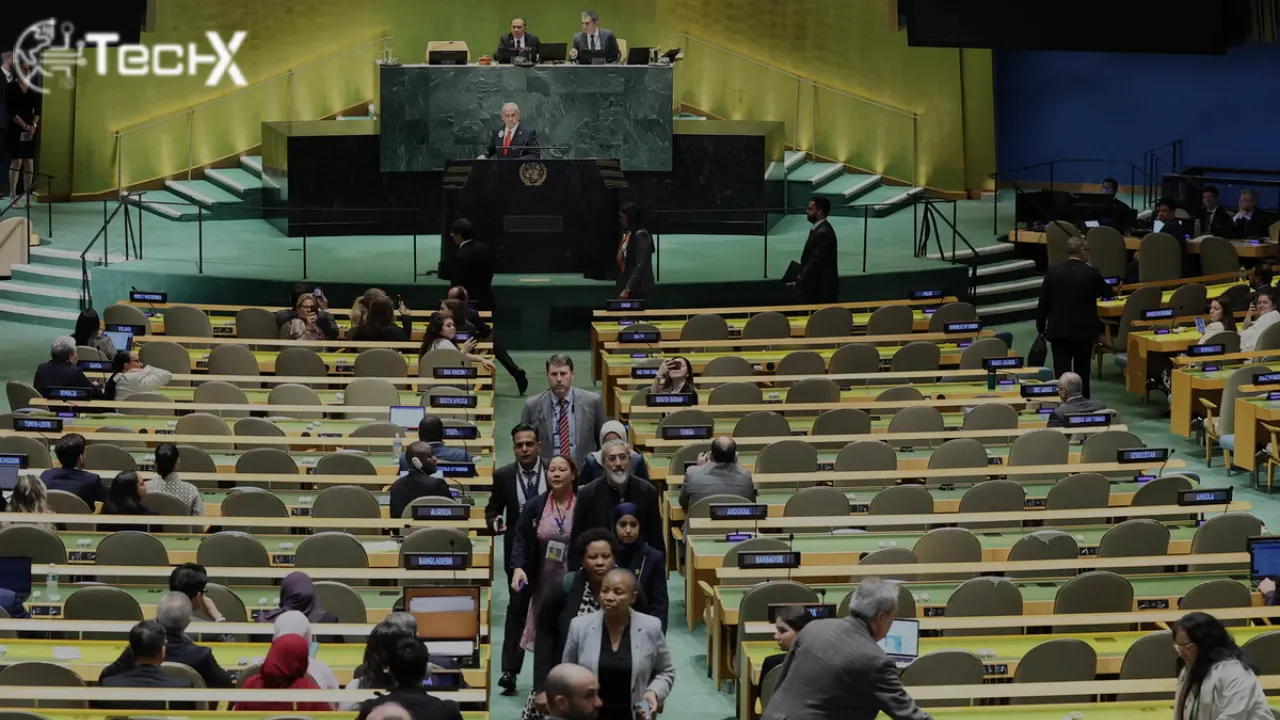
The United Nations General Assembly witnessed a historic moment when dozens of delegates walked out just as Israeli Prime Minister Benjamin Netanyahu prepared to address the gathering. The rare and coordinated act left swathes of empty seats in the hall, serving as a powerful symbol of the growing international outrage over Israel’s ongoing military actions in Gaza.
Symbolic Protest Against Gaza Offensive
Diplomats who participated in the walkout described their action as a collective protest against what they called Israel’s “brutal assault” on Palestinian civilians. The Gaza conflict, marked by widespread destruction, rising casualties, and humanitarian collapse, has triggered mounting calls worldwide for Israel to halt its operations. By leaving the chamber, delegates signaled that silence or passive listening was no longer acceptable in the face of escalating violence.
Netanyahu Addresses a Divided Assembly
Despite the walkout, Netanyahu proceeded with his speech, defending Israel’s actions and reiterating security concerns. However, the image of rows of vacant chairs stood in stark contrast to his words, underlining how isolated Israel appears in global opinion. Political observers noted that such a visible rebuke during a UN address is exceedingly rare and underscores deepening divisions between Israel and large parts of the international community.
Also Read: Punjab Extends Honhaar Scholarship Deadline to Oct 26
A Message of Defiance From the Global South
Reports suggest that a significant number of delegates who walked out were from the Global South, where solidarity with Palestine runs deep. Countries from Asia, Africa, and Latin America have consistently criticized Israel’s Gaza campaign, calling it disproportionate and devastating for civilians. Their absence during Netanyahu’s address reinforced a long-standing narrative of resistance against military aggression and the prioritization of humanitarian values over political rhetoric.
Western Nations Show Mixed Response
While many nations staged the walkout, some Western delegations remained seated, reflecting a more cautious stance. The divide revealed the geopolitical complexities of the Gaza conflict, as key allies of Israel continue to back its security arguments while facing increasing domestic and international pressure to demand restraint. Analysts note that even among Israel’s traditional supporters, public opinion is shifting as images of civilian suffering in Gaza dominate global headlines.
Humanitarian Crisis Deepens in Gaza
The walkout comes against the backdrop of a worsening humanitarian situation in Gaza. International aid agencies warn that basic necessities, including food, clean water, and medical supplies, are running dangerously low. Hospitals are overwhelmed, and thousands of families remain displaced by ongoing airstrikes. The symbolic protest at the UN served to amplify these humanitarian concerns, pressing for urgent intervention.
Diplomacy at a Crossroads
The dramatic UN walkout underscores the fragile state of global diplomacy regarding the Middle East. While calls for a ceasefire grow louder, divisions within the international community have hindered concrete action. The walkout, however, is seen by many as a turning point, an unprecedented public demonstration of diplomatic disapproval that could reshape upcoming negotiations and future UN resolutions.
A Defining Moment on the World Stage
In the history of the United Nations, public walkouts during speeches have occurred, but seldom on such a scale and symbolism. This latest action against Netanyahu marks not only discontent with Israel’s policies but also a broader demand for accountability and justice in Gaza. Whether it leads to concrete policy shifts remains uncertain, but the empty seats at the UN have already delivered a powerful message: the world is no longer willing to remain a silent spectator.