

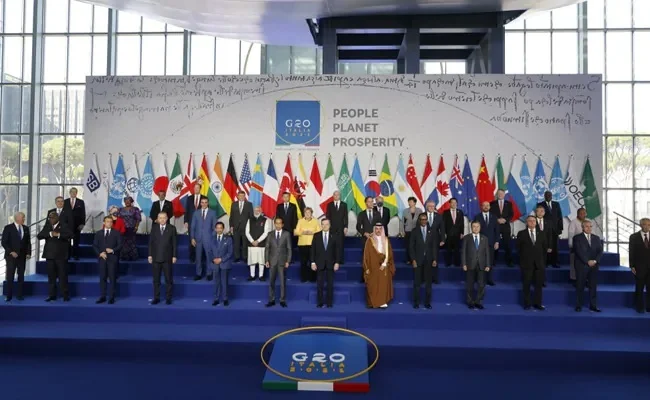
In an effort to prevent India from hosting any events or meetings of the G20 in the Indian Illegally Occupied Jammu and Kashmir, Pakistan will specifically reach out to the G20 nations with which it has close connections (IIOJK).
When it hosts the summit meeting in 2019, India intends to organize certain G20 events in the disputed territory.
In December of this year, India will take over as G20 president.
India is a member of the G20, a grouping of the world’s biggest economies that also includes South Africa, South Korea, Turkey, the United Kingdom, Argentina, Australia, Brazil, Canada, China, Germany, France, India, Indonesia, Italy, Japan, Mexico, Russia, Saudi Arabia, and the United States.
Pakistan has already declined the Indian initiative, but official sources said on Sunday that Islamabad would discuss the matter with G20 nations, according to The Express Tribune.
According to sources, Pakistan would express its worries to countries like China, Turkey, and Saudi Arabia in particular.
In order to oppose Indian ambitions, Islamabad will also communicate with the US, the UK, and other G20 participants.
According to sources, India is attempting to portray the disputed zone as normal by holding such events there.
The reality, however, is significantly different from what India asserts, as officials in the disputed territory are allegedly engaged in serious human rights violations.
There have been some hopes for a de-escalation of tensions since Islamabad’s administration changed. However, sources claim that such actions by India could defeat those initiatives.
When he emphasized that New Delhi would only talk to Pakistan on its terms, Indian National Security Advisor Ajit Doval also shattered prospects of any re-engagement, which did not sit well with Islamabad.
If India is successful, this will be the first major foreign gathering in the conflict zone since New Delhi unilaterally abolished the region’s special status on August 5, 2019.
The Indian move has heightened tensions with Pakistan, which has vehemently rejected the revisions and characterized them as a breach of both bilateral agreements between the two nuclear-armed neighbors as well as international law.
To read our blog on “Regional awards in Huawei Middle East Partner Summit won by Pakistan Companies,” click here.