
Google AI Seekho 2026 has wrapped up as one of Pakistan’s biggest AI developer programmes, drawing over 50,000 developers nationwide and awarding PKR 2.5 million to the top teams. A pair of students from DHA Suffa University in Karachi walked away with the PKR 1 million grand prize, beating out teams from Islamabad and Lahore in a national finale that showed just how fast Pakistani AI talent is growing.
What Was Google AI Seekho 2026?
Google for Developers, working with the Ministry of IT and Telecommunication (MoITT), Telenor Pakistan, and Innovista, launched AI Seekho 2026 as a free, nationwide initiative. The goal was simple: give Pakistani developers, students, and freelancers hands-on experience building real AI products.
The programme introduced participants to vibe coding, an approach where you build apps and tools using natural language and AI prompts rather than writing complex code line by line. Teams used Google AI Studio, Gemini APIs, and Google Antigravity to turn ideas into working products.
The competition ran in two main phases. First came an online challenge where teams built and submitted AI-powered apps. Then came physical hackathons in Karachi, Lahore, and Islamabad, where the best teams competed in person for the prize money.
The Numbers Behind Google AI Seekho
The scale of this programme stands out. Here is what it achieved across the full run:
- 50,000+ developers and innovators engaged nationwide
- 17,000+ registrations received
- 1,500+ AI-powered project submissions built using Google AI Studio and Google Antigravity
- 2,600+ teams formed during regional rounds
- 600+ project submissions across regional and national competitions
- 6 finalist teams reached the national finale
One number that often gets missed in the coverage: 40% of participants were professional developers, not just students. And 25% were women, which signals a broadening of who is showing up to Pakistan’s AI scene. This was not just a university student event.
Who Won the Grand Prize?
Team Struggler, two students from DHA Suffa University in Karachi, took first place at the national finale. Their project was an AI-powered single-player game that adjusts its difficulty level in real time based on how the player is performing, all built using Google Antigravity. The judges picked it for its creativity and technical skill.
Second place went to Team Nurture from Islamabad with their project Hazir, an AI platform that automates booking for everyday services like plumbers, tutors, and drivers by matching users with providers and handling the workflow automatically.
Third place went to Team Viberonix, two self-taught developers from Sahiwal, who built an AI-powered marketplace. Their finish is worth noting: Sahiwal is not a major tech hub, and two developers learning AI on their own made it to the national podium. That says something real about how far access to tools like Google AI Studio has spread beyond Karachi, Lahore, and Islamabad.
Builders Days in Islamabad and Karachi, August 8 to 9
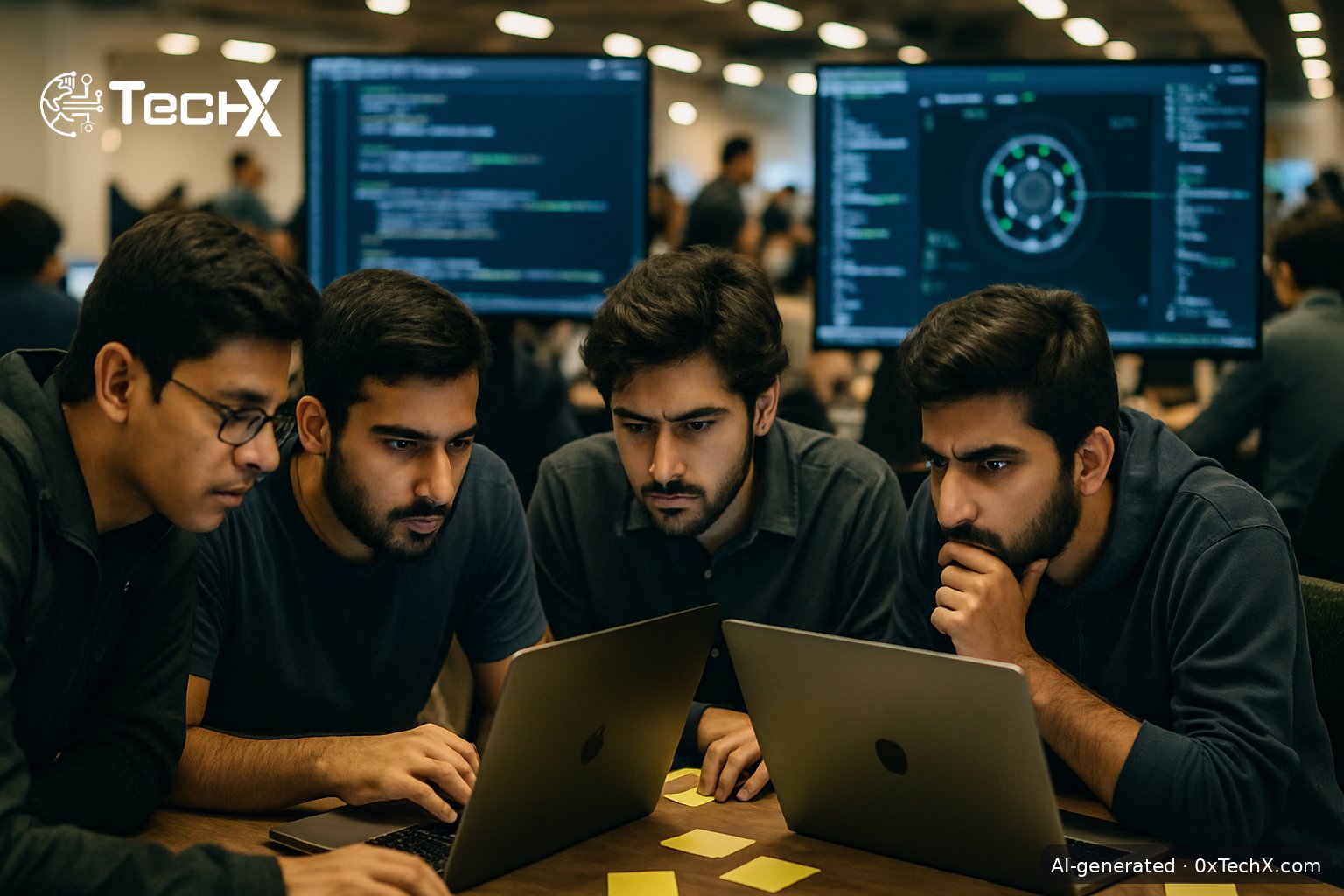
After the main finale, Google AI Seekho continued its momentum with dedicated Builders Days in Islamabad and Karachi on August 8 and 9. The Islamabad event was held at the National Incubation Centre (NIC) and was organised by Google Developer Group Islamabad in collaboration with NIC Islamabad and Mobilink Bank. It brought together more than 80 selected developer teams for roughly 36 hours of prototyping, mentorship, and live pitching.
Teams at the Builders Day worked on four challenge tracks tied to national priorities: health, economic efficiency, education, and green sustainability. Participants got direct mentorship from Google’s community team and technical experts, and built working prototypes before presenting them to evaluators.
The Karachi Builders Day was run by GDG Kolachi, keeping the same focus on building real products for real problems rather than just learning theory.
What Pakistan Actually Built With This Programme
Beyond the winners, the range of projects submitted shows where local AI interest is headed. Teams tackled productivity tools, health apps, education solutions, and service-booking platforms. The tools used, including Gemini APIs and Google Antigravity, are the same tools being used by developers in Silicon Valley, which means Pakistani builders are now working with globally current technology.
Participants who did well were also connected to National Incubation Centres, the Pakistan Startup Fund, and global freelancing platforms, giving them a path from winning a hackathon to actually launching a product or business. This pipeline from learning to earning is one of the more practical parts of the programme that does not get enough attention.
For developers who are worried about AI replacing their freelance work, initiatives like this point to a different path: use AI tools to build products, not just to take on gigs. If you want to understand how AI is already changing income for Pakistani freelancers, this article on how Pakistani freelancers are dealing with AI disruption gives useful context.
Federal Minister for IT Shaza Fatima Khawaja attended the closing ceremony. She has previously pointed out that with 65% of Pakistan’s population under 35, AI education is a core government priority so that young Pakistanis can compete in the global market.
Frequently Asked Questions
What is Google AI Seekho 2026?
Google AI Seekho 2026 is a free nationwide AI developer programme run by Google for Developers with MoITT, Telenor Pakistan, and Innovista. It trained over 50,000 participants to build AI-powered apps using tools like Google AI Studio and Google Antigravity, and awarded PKR 2.5 million in prizes.
Who won the Google AI Seekho grand prize?
Team Struggler, two students from DHA Suffa University in Karachi, won the PKR 1 million grand prize. They built an AI game that changes difficulty in real time based on player behaviour using Google Antigravity.
What is vibe coding and why does it matter for Pakistan?
Vibe coding means building apps and software using natural language prompts and AI tools instead of writing traditional code. It matters for Pakistan because it lowers the barrier to entry: developers and even non-coders can now build working products without needing to know complex programming languages from scratch.
What happened at the Builders Days in August 2026?
AI Seekho Builders Days were held in Islamabad and Karachi on August 8 and 9. The Islamabad event at NIC drew over 80 developer teams who spent 36 hours building prototypes across four tracks: health, economic efficiency, education, and sustainability. The Karachi event was run by GDG Kolachi with the same focus on shipping real products.