
Business digitisation got a big provincial push on Monday when Punjab Chief Minister Maryam Nawaz Sharif formally offered technical assistance to Pakistan’s federal government to help it move business processes online. The offer came during a high-level meeting in Lahore, and it could set a new direction for how Pakistan handles ease-of-doing-business reform across all provinces.
What Happened at the Meeting
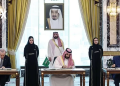
CM Maryam Nawaz offered technical assistance to the federal government for digitising business processes as a special committee led by Prime Minister’s Adviser on Industries and Production Haroon Akhtar Khan met her to discuss reforms aimed at improving the ease of doing business.
The meeting, also attended by Prime Minister’s Coordinator on Commerce Ehsan Afzal Khan, reviewed measures to promote investment, facilitate businesses and accelerate industrial growth.
The federal reform committee praised the Punjab government’s initiatives to attract investment and improve the business environment. That praise was not just polite talk. Haroon Akhtar Khan said Punjab had already implemented several measures recommended by the committee to facilitate businesses and promote industry.
Punjab’s Business Digitisation Tools in Numbers
So what exactly is Punjab offering to share? The province has quietly built one of the most advanced digital governance stacks in South Asia, and the numbers are striking.
The province’s eBiz platform provides 437 services through 28 departments under a single-window system, and more than 210,000 applications were being processed through the platform. That means a business owner in Lahore or Faisalabad can handle licences, permits and approvals in one place without visiting multiple government offices.
Under the Maryam Ki Dastak initiative, 4.5 million digital service deliveries to citizens have been completed, and lengthy documentation requirements for various services have been reduced to a few essential documents.
On the financing side, the Asaan Karobar Finance Scheme had provided Rs70 billion in interest-free loans, supporting 112,000 businesses. That is a direct lifeline for small traders and entrepreneurs who previously had to rely on informal lending at high rates.
Punjab’s Punjab Information Technology Board (PITB) sits at the centre of all this. More than 6,000 systems across the province had been connected with PITB’s central system, while 600 organisations and institutions had been digitally connected through e-FOAS. More than 25,000 suppliers had been connected with the province-wide e-Procurement system, under which digital purchases worth Rs6 trillion and 1.29 million tenders had been processed.
Why the Federal Government Needs This Help
Pakistan’s federal government has its own digital economy plans. The Connected Punjab Program is designed to operate in tandem with Pakistan’s broader national digital agenda, and the federal government is investing in national digital public infrastructure through the Digital Economy Enhancement Project (DEEP).
But federal-level implementation is harder than provincial. Punjab has the advantage of a focused technology board, years of iteration, and a single province to pilot new ideas before rolling them out. Sharing that toolkit with the Centre could compress years of trial-and-error into months.
The World Bank approved a $70 million Connected Punjab Program in June 2026, to help Pakistan’s Punjab province expand broadband internet access, improve digital service delivery, and enhance cashless transactions. That is international validation that Punjab’s approach is worth scaling.
Industrialisation and Skills Are Part of the Plan Too
Business digitisation is not the only topic the meeting covered. Maryam Nawaz said industrialisation was the fastest route to economic growth and stressed the need to strengthen local industries to generate employment opportunities.
The provincial government is revamping skills development programmes under a unified framework, with sector-specific training yielding positive results. The province had completed cluster mapping and planned to develop hubs for cottage industries. The government was also promoting livestock farming to increase meat exports and encouraging young people to start businesses through the Asaan Karobar Finance Scheme.
The chief minister said Punjab was broadening its tax base and improving revenue collection without imposing new taxes. This matters because digitisation is being used not just to cut red tape but to bring more businesses into the formal economy, which in turn grows the tax base without squeezing existing taxpayers.
A Model Other Provinces Could Copy
This is the angle that most coverage misses. If the federal government does take up Punjab’s offer, what gets built will not just help Islamabad. It will become a blueprint that Sindh, Khyber Pakhtunkhwa and Balochistan can then adapt for their own business environments.
For Pakistani entrepreneurs and SME owners, this collaboration matters for one simple reason: fewer forms, fewer visits, faster approvals. The eBiz platform’s single-window model and the Asaan Karobar loan scheme are the kinds of tools that can help a small manufacturer in Sialkot or a garment workshop in Karachi get formal faster, borrow cheaper and compete better.
You can also read about how Punjab’s tax digitisation got World Bank backing with a full reform roadmap, which complements today’s business process offer to the Centre.
The bigger picture is that Pakistan’s economic reform story is increasingly being written at the provincial level first, and Punjab is leading that shift. If the Centre plugs into what PITB has already built, the country could make a genuine leap on ease-of-doing-business rankings without starting from scratch.
Frequently Asked Questions
What did Punjab offer the federal government on 27 October 2026?
Punjab CM Maryam Nawaz Sharif formally offered technical assistance to help the federal government carry out business digitisation, sharing tools like the eBiz single-window platform and expertise from the Punjab Information Technology Board (PITB).
What is Punjab’s eBiz platform?
Punjab’s eBiz platform provides 437 services through 28 departments under a single-window system, and more than 210,000 applications were being processed through it. It lets business owners handle permits, licences and approvals without visiting multiple government offices.
How much money has Punjab given to small businesses so far?
The Asaan Karobar Finance Scheme had provided Rs70 billion in interest-free loans, supporting 112,000 businesses. The scheme is part of Punjab’s broader strategy to grow the formal economy and help young entrepreneurs start up without heavy debt.
How does this affect businesses in other provinces?
If the federal government adopts Punjab’s business digitisation model, it could be rolled out as a national framework. That would mean businesses in Sindh, KP and Balochistan could eventually access similar single-window services, faster approvals and digital loan schemes without each province building its own system from zero.