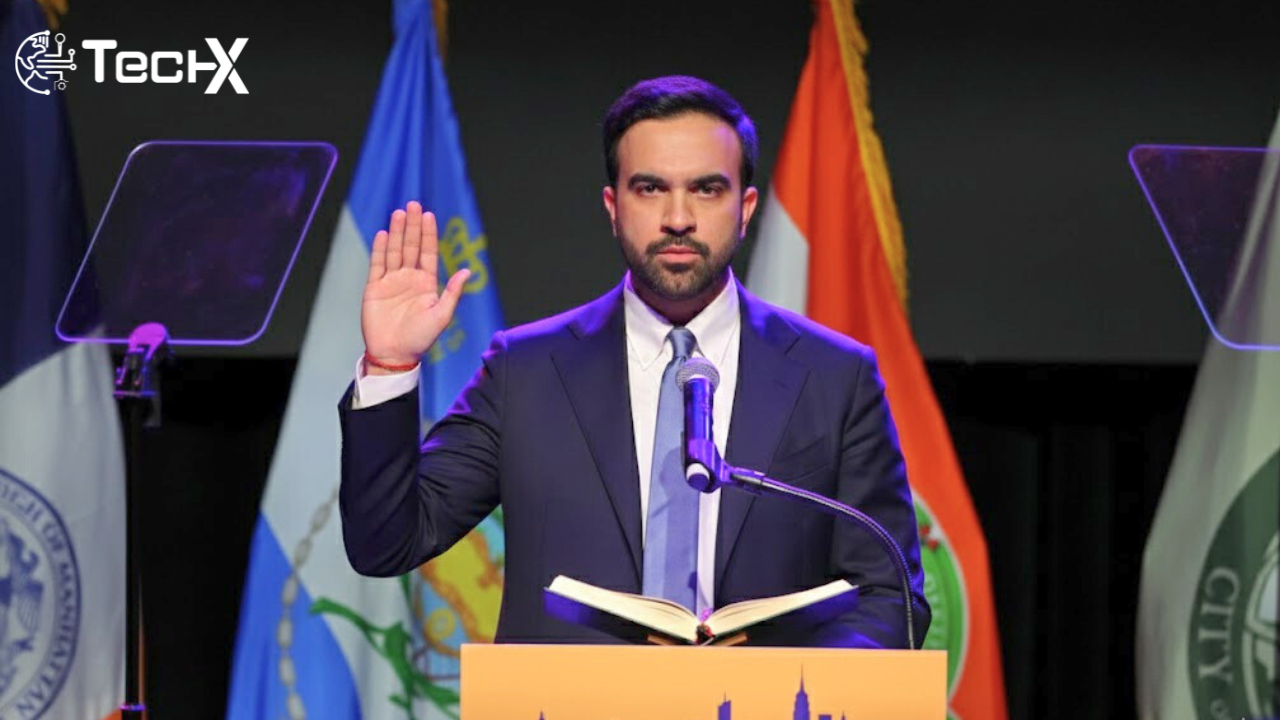
Zohran Mamdani has been officially sworn in as the Mayor of New York City. He took his oath of office with his hand on the Holy Quran. The ceremony took place just after midnight on January 1 2026 at the old City Hall subway station a symbolic location beneath Lower Manhattan. This marked the first time in New York City history that a mayor has sworn the oath on the Quran.
First Muslim and South Asian Mayor
At 34 years old Mamdani became the citys first Muslim mayor and the first mayor of South Asian descent as well as the first to be born in Africa. His inauguration represents a breakthrough in representation for Muslim immigrant and diverse communities in one of Americas largest and most influential cities.
Symbolic Use of Multiple Qurans
During his swearing in Mamdani placed his hand on multiple Qurans. For the private midnight ceremony he used his grandfathers personal Quran and a historical Quran once owned by Arturo Schomburg a Black Puerto Rican scholar whose collection is part of the New York Public Librarys Schomburg Center for Research in Black Culture. A later public ceremony was planned with additional family Qurans.
What Mamdani Said at the Ceremony
After taking the oath Mamdani described the moment as the honour and the privilege of a lifetime. He highlighted the symbolic importance of the venue and the inclusivity it represents for the citys diverse population. His remarks underscored his identity and faith reflecting his commitment to serve all New Yorkers.
Background and Campaign Message
Mamdani ran on a progressive platform focusing on affordability improved public transit community safety and social equity. During his campaign he spoke openly about his faith and identity saying he would not hide who he is or the faith he believes in and that he would find myself in the light rather than in the shadows.
Significance and Public Reaction
His oath on the Quran has been widely recognized as a powerful symbol of representation and inclusion. It reflects New York Citys multicultural identity and the enduring presence of Muslim communities in its civic life. While the moment has been celebrated by many as a milestone for diversity in leadership it has also drawn some criticism from political opponents highlighting ongoing debates about religion and public office in the United States.