
Transsion Pakistan manufacturing talks have moved up a gear after the Special Investment Facilitation Council (SIFC) met Transsion Holdings Chairman George Zhu and TECNO Group CEO Aamir Allawala on 16 November 2026 to explore deeper industrial investment in the country. The meetings signal that one of the world’s biggest smartphone makers is seriously looking at turning Pakistan from an assembly stop into a real manufacturing hub.
What Happened and Who Was in the Room
The Special Investment Facilitation Council (SIFC) held talks with Transsion Holdings, the Chinese parent company of Tecno and Infinix, on expanding its business and bringing more Chinese investment to Pakistan. The meeting at SIFC came just days after a separate high-level session in Islamabad.
Finance Minister Senator Muhammad Aurangzeb met George Zhu, Founder and Chairman of Transsion Holdings, along with his delegation, to discuss the company’s ongoing operations in Pakistan, future investment plans and opportunities to strengthen local manufacturing and Pakistan’s export potential.
The Transsion delegation included Pakistan Head Joe Hu, board member Arif Chowdhry, Head of Manufacturing Zakkary Zhou and General Manager of Manufacturing Center Eason Zhou, a lineup that shows this is not a courtesy visit. Having manufacturing chiefs in the room suggests Transsion is thinking seriously about what a bigger Pakistani factory would actually look like.
From Assembly to Transsion Pakistan Manufacturing
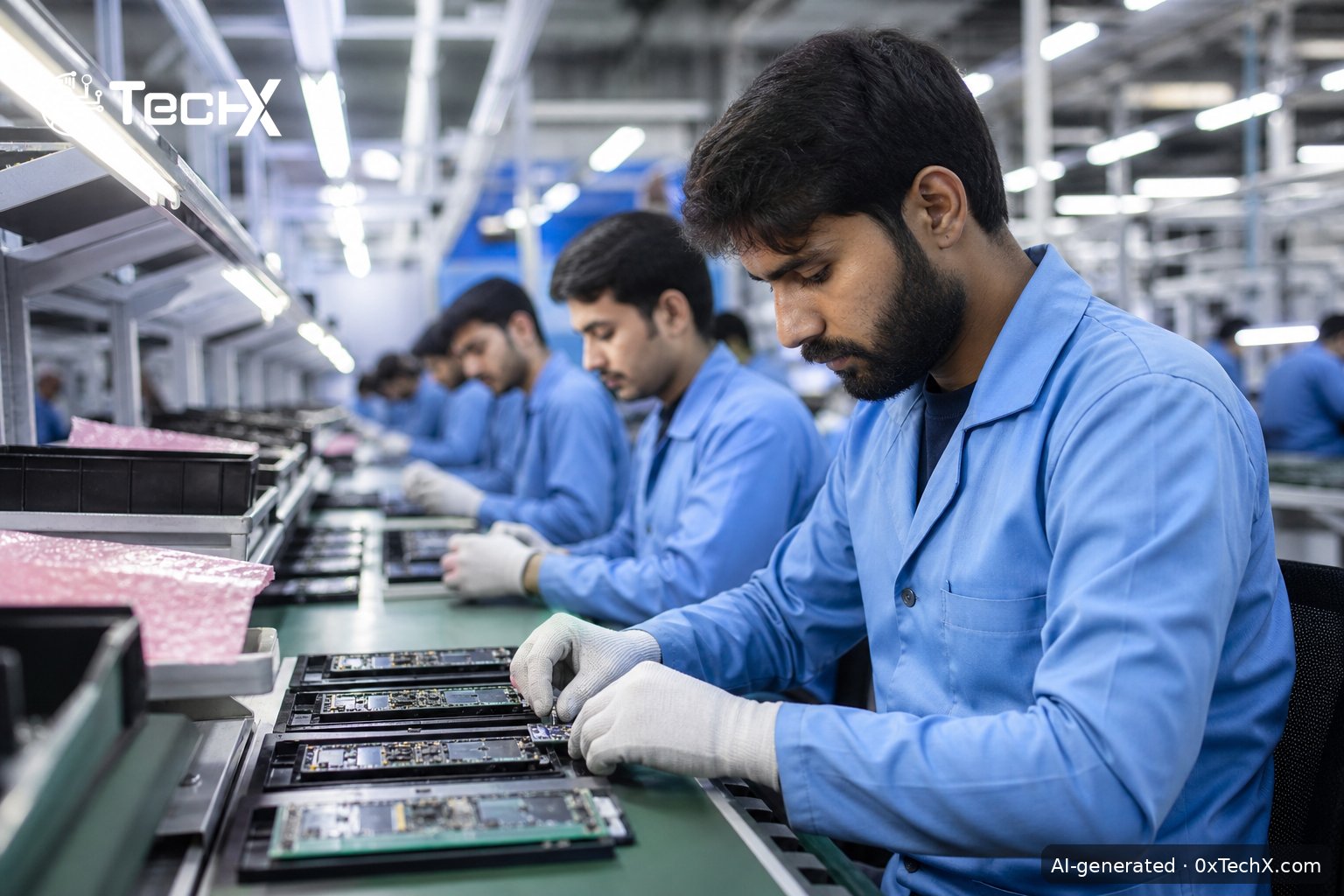
Right now Transsion’s Pakistani operation is mainly an assembly unit. The company puts phones together here, but most of the parts still come from elsewhere. The big shift being discussed is making those parts locally.
Transsion Holdings plans to expand its manufacturing in Pakistan beyond smartphone assembly to include component production, aiming for deeper localization and strengthening the country’s industrial ecosystem and export potential.
“Actually, the discussions are still at a relatively early stage, but they are very interestingly poised,” said Aamir Allawala, CEO of TECNO Group. “And I think that if the government supports us with some flexibility, we can bring a lot of deep manufacturing into Pakistan.”
The company also briefed the minister on its local operations in smartphones, electric bikes and energy storage, and discussed using Pakistan as a manufacturing and export base. That is a much wider footprint than most people realise, Transsion Pakistan manufacturing is not just about phones any more.
SIFC’s Role and What It Promised
SIFC is Pakistan’s civil-military body set up specifically to cut through the red tape that has historically scared off foreign investors. It acts as a one-window facilitator, meaning a company does not have to knock on ten different ministry doors to get approvals.
The discussions focused on promoting economic ties, fostering collaboration between business enterprises and identifying new avenues for investment. The SIFC reaffirmed its commitment to providing full support and facilitation for Chinese investment, business expansion and industrial development in Pakistan.
SIFC reaffirmed its commitment to extending institutional support and facilitation to Transsion Holdings and TECNO Group in exploring investment opportunities and expanding their business activities in Pakistan. The engagement reflects SIFC’s continued efforts to connect leading international enterprises with Pakistan’s investment potential and encourage productive industrial partnerships.
No Numbers Yet, But the Policy Backdrop Is Forming
One thing the top coverage of this story mostly skips is the policy context sitting right behind these talks. The government is not waiting passively.
Advisor to the Prime Minister for Industries and Production Haroon Akhtar Khan has said that the government was working on a Mobile and Electronics Device Manufacturing Policy (2026-33) to promote domestic manufacturing, attract investment and strengthen the industry, prioritising a move beyond assembly towards comprehensive manufacturing of mobile phones and devices.
That policy, once finalised, would give Transsion and other phone makers the regulatory certainty they need to commit capital. The commitment of Transsion to invest in local manufacturing of phone parts augurs well, but the policy should be finalised at the earliest to pave the way for accelerated localization. It is also a reality that chronic power crises, soaring electricity tariffs and volatile fuel prices inflate the cost of domestic manufacturing, eroding international price competitiveness.
So the opportunity is real, but it is not without risk. Energy costs are a genuine headache for any factory operating in Pakistan, and that challenge will need a direct answer before big capital moves.
Although the meetings have opened discussions on further investment and industrial cooperation, neither SIFC nor Transsion has announced a specific investment amount, new manufacturing project or implementation timeline following the latest engagement. Readers should treat this as a serious start, not a done deal.
Why This Matters for Everyday Pakistanis
Transsion manufactures its phones in China, Ethiopia, Bangladesh, India and Pakistan, so it already has a template for running emerging-market factories. Pakistan would not be a first experiment; it would be a scale-up of something Transsion already knows how to do.
If the talks succeed and component making starts here, the benefits could reach beyond the factory floor. Local suppliers would get new orders. Engineers and technicians would get new jobs. And if Pakistan eventually exports assembled phones or parts, it adds to foreign-exchange earnings, something the country badly needs. The Finance Minister encouraged Transsion to expand its investment in Pakistan and emphasised the importance of export-oriented manufacturing, local value addition and integration into international supply chains.
For ordinary phone buyers, deeper local manufacturing could also mean more competitive prices over time, since import duties on finished phones add cost that locally made parts would not carry.
Transsion’s global brands Tecno, Infinix and itel are already among the most popular budget smartphones in Pakistan. A manufacturing deepening here would tie the company’s fortunes more closely to Pakistan’s economy, which is exactly the kind of long-term commitment the government has been looking for. You can learn more about Transsion’s global operations on the official Transsion website, and track SIFC’s investment facilitation work through Radio Pakistan’s official portal, which carried the SIFC statement on 16 November 2026.
Frequently Asked Questions
What is Transsion Holdings and which phone brands does it own?
Transsion Holdings is a Chinese conglomerate that owns three popular smartphone brands: Tecno, Infinix and itel. All three brands focus on affordable, entry-level to mid-range devices and are widely sold across Africa, South Asia and the Middle East.
What exactly is Transsion Pakistan manufacturing planning to do differently?
Currently, Transsion’s Pakistani operation mainly assembles phones from imported parts. The new plan under discussion is to manufacture components locally, things like batteries, screens or circuit boards, rather than just putting imported parts together. This is called moving from assembly to deep manufacturing or localization.
What is SIFC and why is its involvement important?
SIFC stands for Special Investment Facilitation Council. It is a Pakistani civil-military body created to make it easier for foreign companies to invest in Pakistan by handling approvals through a single window. Its backing gives Transsion a faster, less bureaucratic path through government approvals.
Has any investment amount been confirmed?
No. As of 16 November 2026, no specific investment figure, project name or timeline has been publicly announced. Both sides have expressed strong interest and SIFC has pledged support, but concrete commitments have not yet been made public. The government is also still finalising its Mobile and Electronics Device Manufacturing Policy (2026-33), which will shape the terms for any deal.