

After building its foreign exchange reserves with the aid of inflows from the Fund and bilateral and multilateral partners, Pakistan has vowed to implement all prior IMF actions, including raising power and gas tariffs and announcing a mini budget of Rs. 170 billion new taxes to revive the loan program, in order to avoid the country’s default.
As the meetings between the two parties came to a conclusion last Thursday, Pakistan and the IMF were unable to come to a staff-level agreement. Prior steps for signing the staff-level agreement have been established by the IMF. Starting on Monday, both parties would hold virtual negotiations again.
Finance Minister Ishaq Dar promised to keep working to ensure Pakistan finished the IMF program during a press conference held here early on Friday.
He said that the text of the Memorandum of Economic and Financial Policies had been received by the government (MEFP).
“We will go through it on the weekend. A virtual meeting with the IMF will be held after that on Monday,” he added, explaining that after the MEFP has been finalized, the IMF has its own internal process before holding a board meeting. Finally, the [tranche] is distributed after approval is granted.
“It is a standard process which can neither be shortened, and hopefully they won’t extend it unnecessarily,” Dar added.
“We are working to revive the IMF’s program and currently there is no proposal for debt restructuring,” said an official of the ministry of finance.
He added that the Cabinet’s Economic Coordination Committee (ECC) adopted the Circular Debt Management Plan on Friday and would shortly issue a small budget to meet with IMF requirements.
In order to fulfil previous IMF actions, the government would announce a minibudget for Rs. 170 billion, according to the finance minister.
Ishaq Dar statement on imposition of new taxes
He stated, “Taxation measures of Rs. 170 billion will be taken as opposed to the rumors of Rs. 700-800 billion,” and added that the Rs. 170 billion taxes must be recovered in this fiscal year’s first four months. He made it clear that the administration would exempt oil products from the General Sales Tax.
He made it clear that taxes will affect the average person in a negative way. Depending on the circumstances at the moment, he said, the government will draft a finance law or ordinance to enact the taxes.
He explained that a bill would be introduced if both houses of parliament were in session at the time; otherwise, an ordinance would be issued.
According to the finance minister, the federal cabinet would also be used by the administration to carry out the agreed-upon energy changes.
The main emphasis would be on minimizing untargeted subsidies and bringing the “flow” in the gas sector to a complete stop so that the circular debt was not increased.
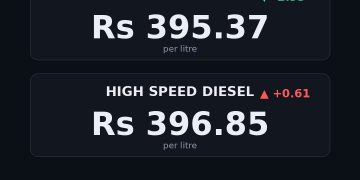
Ishaq Dar said that the government had already complied with its promise to increase the petroleum development levy (PDL) on gasoline to Rs. 50 per liter and that the PDL on diesel would be increased by Rs. 5 per liter over the course of the following two months to Rs. 50 per liter from Rs. 40 per liter.
“We have agreed to increase the allocation to the Benazir Income Support Program (BISP) to Rs. 400 billion from Rs. 360 billion currently to [help] the most vulnerable people hit by inflation.”
The country’s generation cost, according to the finance minister, was over Rs. 3 trillion, but only Rs. 1.8 trillion was recovered, leading to an increase in the circular debt or fiscal imbalance.
He added that raising the taxes would not, however, cover the total amount difference.
Regarding the issue with foreign exchange reserves, the minister stated that commitments with friendly nations would be kept, and inflows will occur.
“There is nothing to worry about. This country has also survived on $414 million in foreign reserves. The State Bank is managing,” he assured.
The IMF has also released a statement in the interim. Between January 31 and February 9, an IMF team headed by Mr. Nathan Potter was in Islamabad for talks related to the ninth review of the government program funded by the IMF Extended Fund Facility (EFF) arrangement.
At the end of the visit, Mr. Porter issued a statement: “The IMF team welcomes the Prime Minister’s commitment to implement policies needed to safeguard macroeconomic stability and thanks the authorities for the constructive discussions.
During the mission, significant progress was achieved on the policy steps needed to resolve both internal and external imbalances.
Key priorities include enhancing energy provision by preventing further accumulation of circular debt and ensuring the viability of the energy sector, as well as strengthening the fiscal position with permanent revenue measures and reducing untargeted subsidies, while scaling up social protection to help the most vulnerable and those affected by the floods. Other important measures include allowing the exchange rate to be determined by the market to gradually eliminate the foreign exchange shortage.
For Pakistan to successfully reestablish macroeconomic stability and promote its sustainable development, these policies must be implemented swiftly and decisively, along with unwavering financial support from official partners.
“Virtual discussions will continue in the coming days to finalize the implementation details of these policies.”
To read our blog on “Pakistan accepts IMF’s terms for $1.1 billion payout,” click here.