
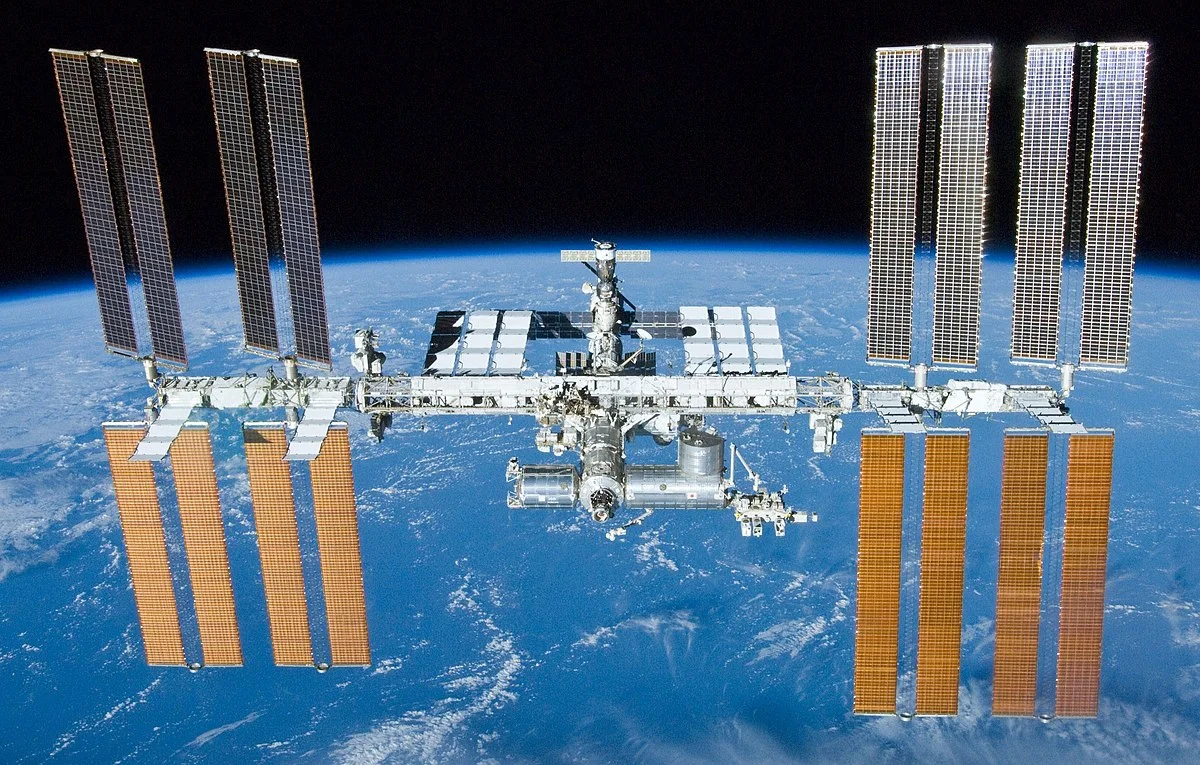
According to the newly appointed head of Moscow’s space agency, Russia has chosen to leave the International Space Station (ISS) “after 2024.”
The declaration comes amid heightened hostilities between Moscow and the West over Moscow’s military action in Ukraine and several rounds of previously unheard-of sanctions against Russia.
The International Space Station (ISS), which has been in orbit since 1998, has been jointly developed by Russia and the United States.
“Of course, we will fulfill all our obligations to our partners, but the decision to leave this station after 2024 has been made,” Yury Borisov, who was appointed Roscosmos chief in mid-July, told Putin.
“I think that by this time we will start putting together a Russian orbital station,” Borisov added, calling it the space program’s main “priority”.
“Good,” Putin replied in comments released by the Kremlin.
Dmitry Rogozin, a fiery nationalist politician renowned for his loud outbursts and unorthodox conduct, has been replaced by Borisov, a former deputy prime minister with a military background.
One of the few areas where the collaboration between Russia, the United States, and its allies had not been ruined by tensions over Ukraine and other issues up until now was space exploration. The space business, according to Borisov, is in a “difficult situation.”
In addition to mentioning navigation, communication, and data transfer, Borisov declared that he would work to “raise the bar” and first and foremost give the Russian economy access to essential space services.
One of the biggest achievements of the Soviet space program and a significant national icon in Russia is the launch of the first satellite in 1957 and the sending of the first man into space in 1961.
However, according to experts, the Russian space agency is still only a ghost of what it once was and has experienced a number of setbacks recently, including corruption allegations and the loss of several satellites and other spacecraft.
To read our blog on “Astronauts developed first time a lab module in a Chinese space station,” click here.