

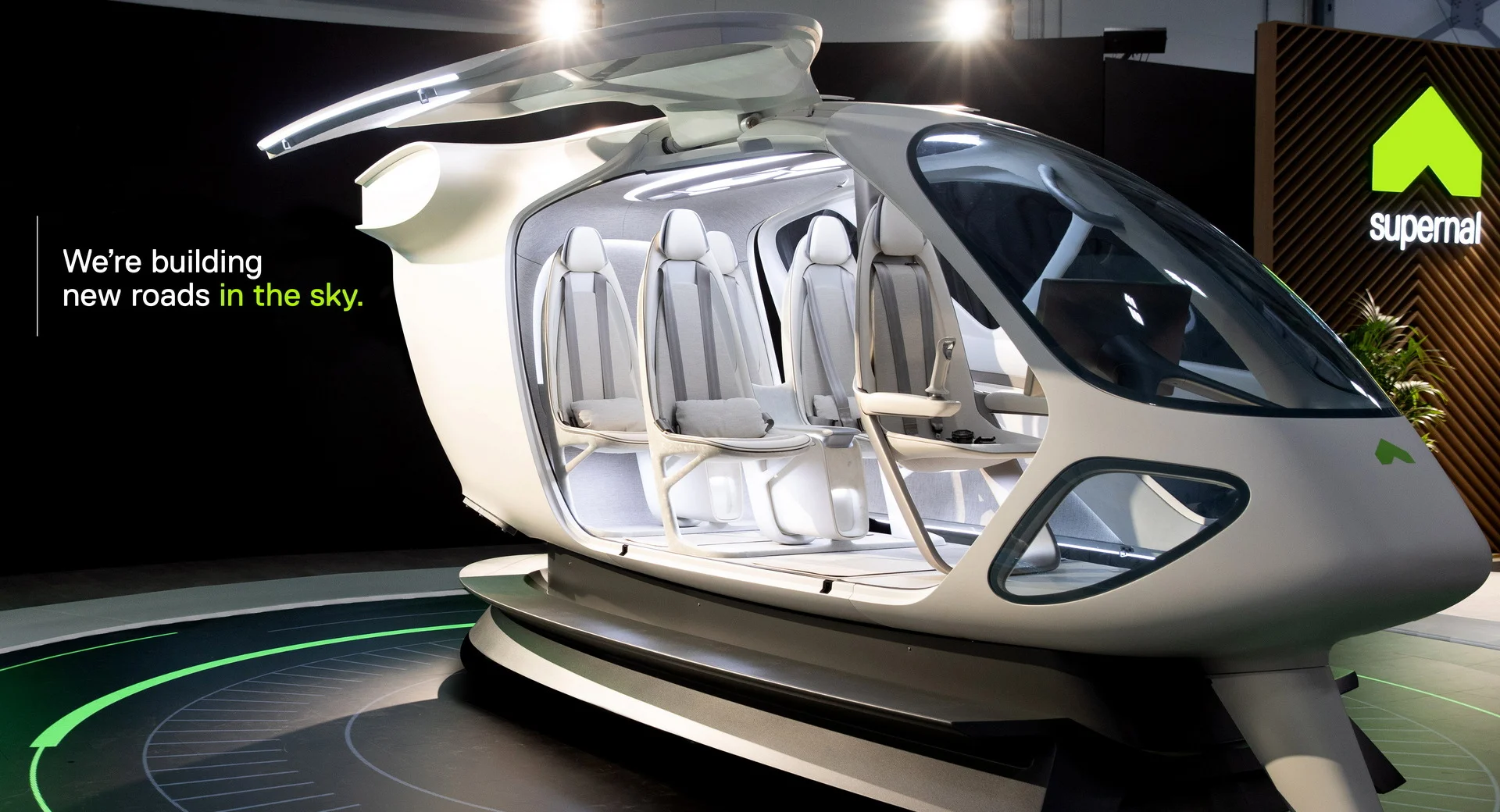
Additionally, the businesses are working to market a joint fuel-cell electric propulsion system. Future air taxis will be powered entirely by fuel cells and all-electric propulsion, according to a joint announcement from Hyundai and Rolls-Royce.
The British aviation company and the Korean automaker have signed a memorandum of understanding (MOU) to work together in the urban air mobility (UAM) and regional air mobility (RAM) markets. The British aviation company is a separate organization from the maker of ultra-luxury cars with the same name.
The MOU highlighting the partnership’s key objectives was released at the Farnborough Air Show in Hampshire, England.
These include working together to develop power and propulsion systems for Hyundai’s Advanced Air Mobility (AAM) division, industrializing Rolls-Royce power and propulsion systems for the AAM market, and creating electric propulsion systems based on hydrogen fuel cells as an energy source for Hyundai’s RAM platforms.
The intention to introduce a joint fuel-cell electric propulsion system to the larger AAM market, with a commitment to demonstrate an aircraft with the technology by 2025, is perhaps the most intriguing aspect.
It is appealing to use a hydrogen fuel cell system as the on-board power source for an all-electric aircraft because it has no emissions, is silent, and provides long flight range.
With the ix35 FCEV, also known as the Tucson FCEV in some countries, Hyundai became the first automaker to mass produce a fuel cell electric vehicle in 2013. Hyundai has been one of the leading proponents of hydrogen fuel cell technology in the automotive industry.
In a few markets, it currently offers the Nexo fuel cell SUV. Earlier this year, it was confirmed that additional research in this area would be part of a massive $5 billion investment in the U.S.
To read our blog on “Hyundai unveiled a retro-styled electric-hydrogen hybrid concept automobile,” click here