

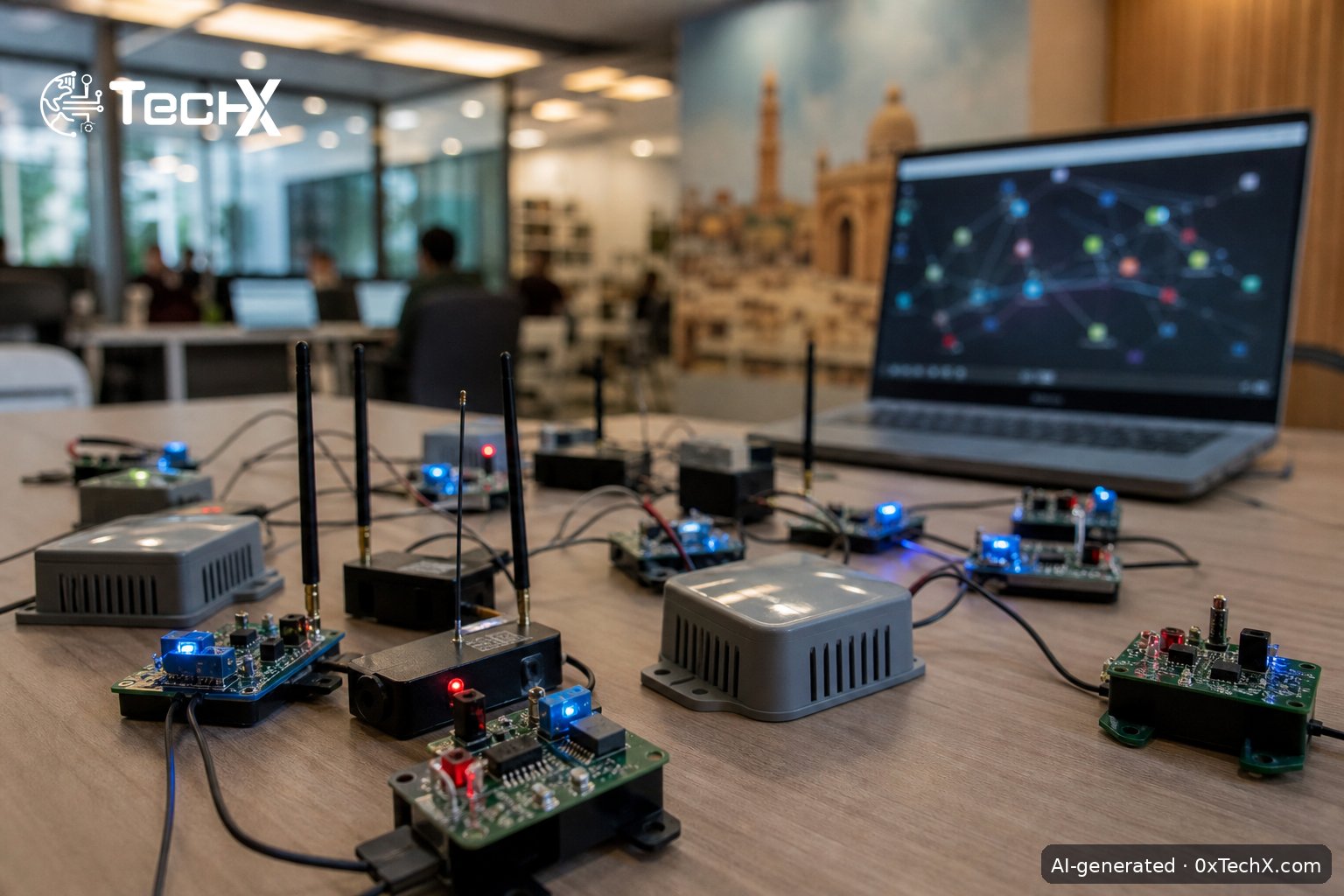
The new PTA IoT licensing rules give Pakistan’s connected-device industry its clearest regulatory map yet. The Pakistan Telecommunication Authority has released a draft called the Internet of Things and Low Power Wide Area Networks (IoT-LPWAN) Licensing Regulations 2026, and it touches every kind of business that wants to build, run or test IoT networks in the country.
IoT, or Internet of Things, simply means everyday objects, sensors on farms, smart meters in homes, trackers on delivery trucks, that talk to each other over wireless networks. LPWAN (Low Power Wide Area Network) is the radio technology that lets these devices work over long distances using very little battery power.
Three Tiers Under the PTA IoT Licensing Rules
Under the draft framework, IoT services will be divided into three categories: licence-exempt operations, registration and licensing. This tiered system means not every business needs a full licence, it depends on what you are doing with the network.
- Full commercial licence: Companies planning to provide LPWAN connectivity and related services to third parties, including consumers, will need to obtain a PTA licence. At the core sits a five-year commercial licence. It carries a non-refundable processing fee of Rs 5,000 and an initial licence fee of Rs 100,000.
- Registration for private networks and platforms: The draft regulations also introduce separate registration requirements for private IoT networks and companies providing IoT platforms or applications. These categories carry lower fees than the full commercial licence.
- Licence-exempt activities: Several categories remain exempt from separate licensing. IoT device importers also avoid separate licensing, though they must still comply with type-approval requirements.
A One-Year Sandbox for Testing New Ideas
One of the most useful additions in the new PTA IoT licensing rules is a dedicated research and testing category. Under its draft IoT and Low Power Wide Area Networks (IoT-LPWAN) Licensing Regulations 2026, the regulator has proposed a special registration category for research, development and testing of connected devices and networks.
The proposed registration will remain valid for one year and cover networks set up within a single premises for testing and research purposes. Applicants will have to pay an initial registration fee of Rs 2,000 and a non-refundable application processing fee of Rs 1,000. That is a very low cost of entry for a startup or university lab that wants to try out a new connected-device idea before committing to a full business launch.
The proposed one-year trial category is intended to allow organisations to test new connected-device technologies in a controlled environment before moving towards commercial operations.
Big Drop in Fees Compared to the Old System
For businesses already familiar with PTA’s older IoT framework, the cost comparison is striking. The new Rs 100,000 commercial licence fee is significantly cheaper than the Rs 300,000 fee under the earlier district-level framework. That reduction could encourage more businesses, especially smaller tech companies, to apply for formal licences rather than operating in a grey area.
The move follows previous efforts to tighten the regulatory framework for IoT and LPWAN services as connected technology gains importance in agriculture, manufacturing, transportation, healthcare and smart infrastructure.
Ten Sectors Covered by the New Rules
The PTA has not written these rules in a vacuum. The regulations identify ten major application areas spanning smart cities, energy utilities, agriculture, environmental monitoring, industrial automation, logistics, healthcare, education, and public safety. This tells businesses in these sectors that the regulator is thinking about their specific needs, not just writing general telecom rules.
For Pakistani companies working in precision agriculture (think soil sensors and irrigation controls), or health-tech firms connecting remote patient monitors, this framework means they now have a proper legal path to operate.
What Existing IoT Operators Must Do
PTA previously issued IoT licences to 23 companies under the earlier framework in April 2026. Those businesses are not left in limbo. Those existing licences will carry over under the new regulations for their remaining validity, provided operators comply with updated requirements within 90 days.
Companies applying for licences or registrations will need to provide technical deployment plans, geographical locations, indicative gateway details, network connectivity diagrams and other prescribed documents. On top of that, operators must submit quarterly reports on active IoT connections and gateway counts, with district-level breakdowns required for commercial licensees. This reporting requirement is new and means PTA wants real visibility into where these networks are growing.
The draft regulations also introduce conditions for companies using satellite connections and other services to transfer data between their network equipment. This satellite clause matters as more IoT deployments in remote areas rely on satellite backhaul to move data.
Why This Matters for Pakistan’s Digital Future
Pakistan’s IoT sector has been growing quietly across industries. Smart farming devices, connected utility meters and logistics trackers are already being used in parts of the country. But without clear rules, businesses faced uncertainty about compliance and investment. The new PTA IoT licensing rules change that.
For Pakistan, the proposed framework could provide greater regulatory clarity for businesses planning to deploy connected devices and smart infrastructure. The tiered structure, from a low-cost research sandbox all the way up to a full commercial licence, means the rules work for a solo developer testing an idea in a lab and a large operator running a city-wide sensor network alike.
According to the draft, the new framework would come into effect following publication of a notification in the official Gazette. That means the rules are not yet final. Businesses should track the consultation process and submit feedback before the framework is locked in. You can follow updates directly on the PTA official website.
The IoT-LPWAN framework is part of a wider pattern of PTA updating its telecom rules to keep pace with new technology, covering everything from local internet traffic routing to satellite broadband. Pakistan’s regulator appears determined to build a formal structure before connected-device deployments scale to a point where rules become impossible to enforce.
Frequently Asked Questions
What are the PTA IoT licensing rules proposed in 2026?
The PTA IoT licensing rules are part of the draft Internet of Things and Low Power Wide Area Networks (IoT-LPWAN) Licensing Regulations 2026. They create three tiers for businesses: a full commercial licence, a registration category for private networks and app platforms, and a one-year sandbox for research and testing. The rules are still in draft form and not yet in force.
How much does the new PTA IoT licence cost?
A commercial LPWAN licence costs Rs 100,000 as an initial fee plus a Rs 5,000 non-refundable processing fee, valid for five years. This is much lower than the old Rs 300,000 district-level fee. The research and testing sandbox costs only Rs 2,000 registration and Rs 1,000 processing, valid for one year.
Who needs a licence under these new rules?
Any company that provides LPWAN-based IoT connectivity to third parties or consumers needs the full commercial licence. Companies running their own private IoT networks, or offering IoT software platforms, fall under a separate registration category with lower fees. Some activities, such as importing IoT devices, are exempt from separate licensing but still need to meet type-approval standards.
What happens to businesses that already have IoT licences from PTA?
PTA issued IoT licences to 23 companies in April 2026 under the old framework. Those licences will stay valid for the rest of their current term. However, existing operators must register their gateways and meet updated requirements within 90 days of the new regulations coming into force.