

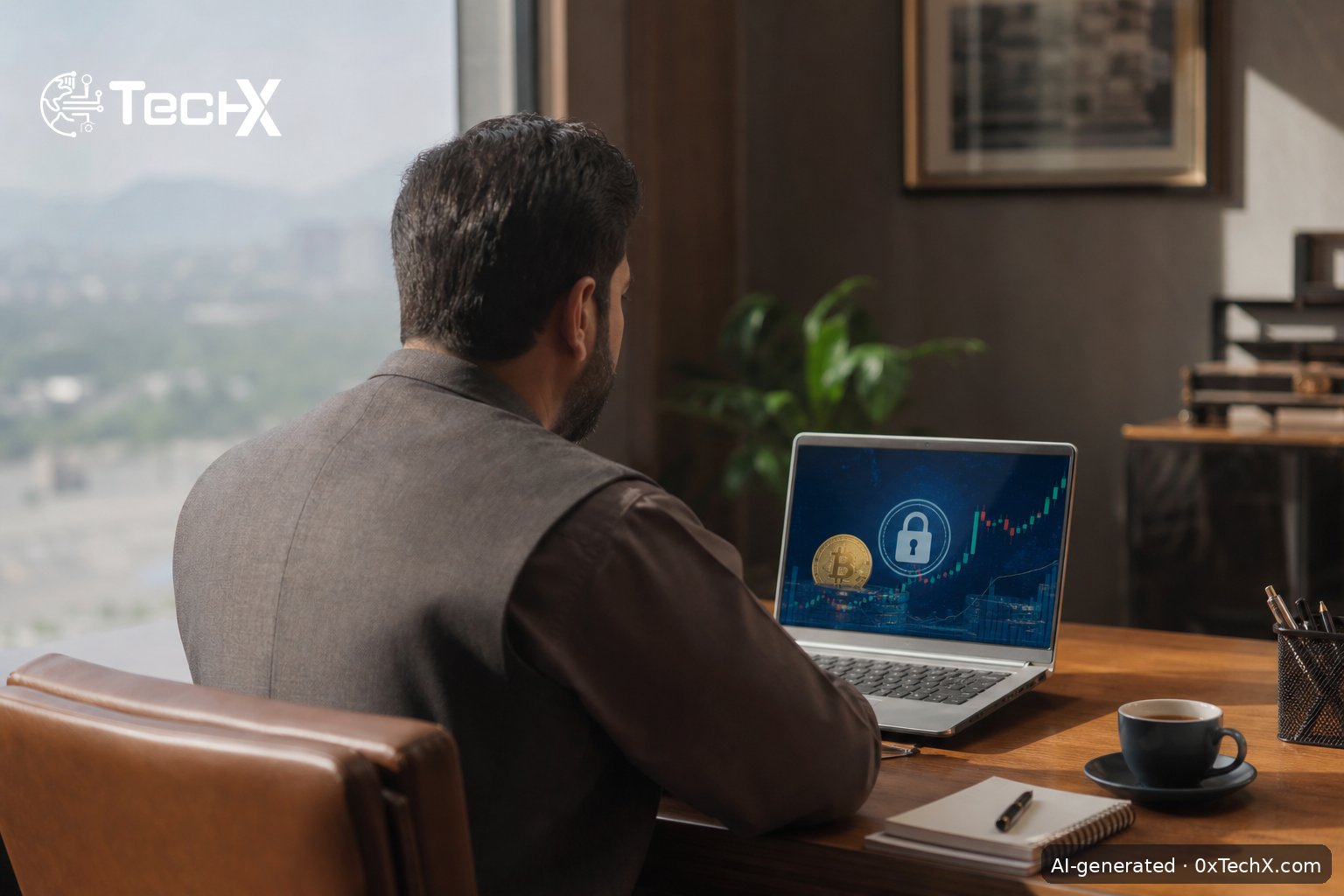
Crypto investor protection in Pakistan has moved to the centre of a serious policy debate, with a senior industry voice warning that tens of millions of digital asset holders could be left exposed the next time a major exchange faces a crisis. Hinza Asif, President of the Asia Web3 Alliance Japan (AWAJ), made the call on 2 November 2026, saying Pakistan needs a formal, unified industry body to stand up for investors, not just a licensing regulator.
Why Crypto Investor Protection in Pakistan Cannot Wait
Pakistan’s digital asset sector is held back by a lack of reliable investor data and the absence of an organised platform where industry players can coordinate or raise concerns during major incidents. That gap became painfully obvious after the multibillion-dollar Binance security breach shook global crypto markets and left Pakistani users with no clear point of contact to report losses or get answers.
The key question Asif raised is: who will represent and protect Pakistani investors if an international exchange faces a major cybersecurity or financial crisis, given that Pakistan currently lacks an established mechanism to coordinate investor complaints and engage with international exchanges in such circumstances?
Pakistan ranked third in Chainalysis’s 2025 Global Crypto Adoption Index, with estimates putting the number of crypto-linked accounts at around 40 million and digital asset exposure between $10 billion and $20 billion. However, these figures have not been officially verified as representing individual investors, which means regulators are essentially flying blind when it comes to the real scale of retail exposure.
PVARA Is a Regulator, Not an Investor Advocate
Many people hear ‘PVARA’ and assume the job is done. It is not, and this is the key point most coverage misses. The Virtual Assets Act 2026 formally established the Pakistan Virtual Assets Regulatory Authority (PVARA) as a permanent statutory body with full power to license, supervise, and enforce compliance across the country’s digital asset sector. That is a licensing and enforcement role, focused on businesses, not on individual investors.
Asif welcomed PVARA’s existence but stressed that a regulator and an independent industry association would have complementary roles. While PVARA handles regulatory matters within its legal mandate, an industry representative body could provide a platform for fintech companies, blockchain businesses, technology professionals and investors to raise concerns and engage with policymakers.
Think of it this way: PVARA is the traffic authority. The proposed body would be the motorists’ association, a place where ordinary users can complain, organise, and push for fair treatment. Right now, that second layer simply does not exist.
There is another gap worth noting. As of mid-2026, no exchange holds a full PVARA operating licence. That means millions of Pakistanis are trading on platforms that are not yet fully authorised, adding another layer of risk that a strong investor body could help address.
What the Proposed Unified Body Would Actually Do
Asif called for the establishment of a national digital finance platform, supported by reliable market research, coordinated investor grievance mechanisms, cybersecurity awareness and formal partnerships with international industry organisations.
In plain terms, this means:
- A single contact point when an exchange freezes withdrawals or is hacked.
- Verified investor data so the scale of losses can be measured quickly.
- Cybersecurity education to help retail investors protect their own wallets and accounts.
- A formal link between Pakistani users and the compliance teams at global exchanges.
Asif added that Pakistan’s digital finance potential goes well beyond crypto trading, extending to blockchain applications, digital payments, fintech entrepreneurship and international investment, all areas where a strong industry body could open doors that a regulator alone cannot.
How Pakistan Built Its Crypto Regulatory Framework
To understand why this call matters now, it helps to know how quickly things have moved. The Senate passed the Virtual Assets Bill on 27 February 2026, the National Assembly on 3 March 2026, and President Asif Ali Zardari signed it into law as the Virtual Assets Act 2026.
The legislation introduced mandatory licensing for virtual asset service providers, customer protection requirements, anti-money laundering and counter-terrorism financing compliance, market surveillance mechanisms, and coordination with the State Bank of Pakistan and the Securities and Exchange Commission of Pakistan.
Pakistan also took enforcement seriously. The Federal Investigation Agency established a cryptocurrency investigation unit to crack down on digital asset crimes. By assigning market regulation to PVARA and criminal enforcement to the FIA, Pakistan is establishing distinct responsibilities for supervising licensed businesses while investigating unlawful activity involving digital assets.
In August 2026, PVARA opened a full licensing portal, publishing roughly ten licence categories covering exchanges, custody, broker-dealer, derivatives and related activities, together with business-conduct, financial-control, technology and AML/CFT requirements.
All of this is real progress. But it is also all focused on businesses and compliance. The consumer side, the 40 million ordinary Pakistanis who simply want their digital assets to be safe, is still waiting for its own organised voice. You can read more about how Pakistan’s broader financial regulators are modernising the system in our piece on SBP’s open banking rules and what they mean for Pakistan’s fintech sector.
What This Means for Everyday Pakistani Crypto Users
If you hold crypto in Pakistan today, here is your practical reality. The government has a regulator. The FIA has an investigation unit. But if your favourite exchange gets hacked tomorrow and freezes your funds, there is no industry association you can call, no collective complaint process, and no body that can formally escalate Pakistani users’ concerns to the exchange’s compliance team.
As Asif put it, Pakistan cannot afford to wait for a major financial crisis before establishing the necessary mechanisms for investor protection and institutional coordination. The Binance incident was a warning shot. The next crisis may not be as manageable.
For crypto investor protection in Pakistan to be real and not just on paper, the regulatory layer (PVARA) needs to be matched by a strong, independent industry voice. That is the gap this proposal aims to close, and it is one that matters to millions of Pakistanis right now.
Frequently Asked Questions
What is PVARA and does it protect individual crypto investors?
PVARA is Pakistan’s official digital asset regulator, created under the Virtual Assets Act 2026. It licenses and supervises crypto exchanges and service providers. It sets investor protection rules as part of that process, but it is primarily a business regulator, not a dedicated consumer grievance body. The proposed unified industry body would fill that separate role.
How many Pakistanis hold cryptocurrency?
Estimates suggest around 40 million crypto-linked accounts in Pakistan with digital asset exposure ranging between $10 billion and $20 billion, although these figures have not been officially verified as representing individual investors.
Is crypto legal in Pakistan in 2026?
Crypto trading and services are now regulated rather than banned under the Virtual Assets Act 2026, but digital assets are still not recognised as legal tender in Pakistan.
What would a unified crypto investor body actually do in Pakistan?
It would give investors a formal platform to file complaints, coordinate responses during exchange crises, access cybersecurity guidance, and engage with policymakers through an organised voice. This is separate from PVARA’s licensing work and would focus on the needs of individual retail investors and fintech professionals.