
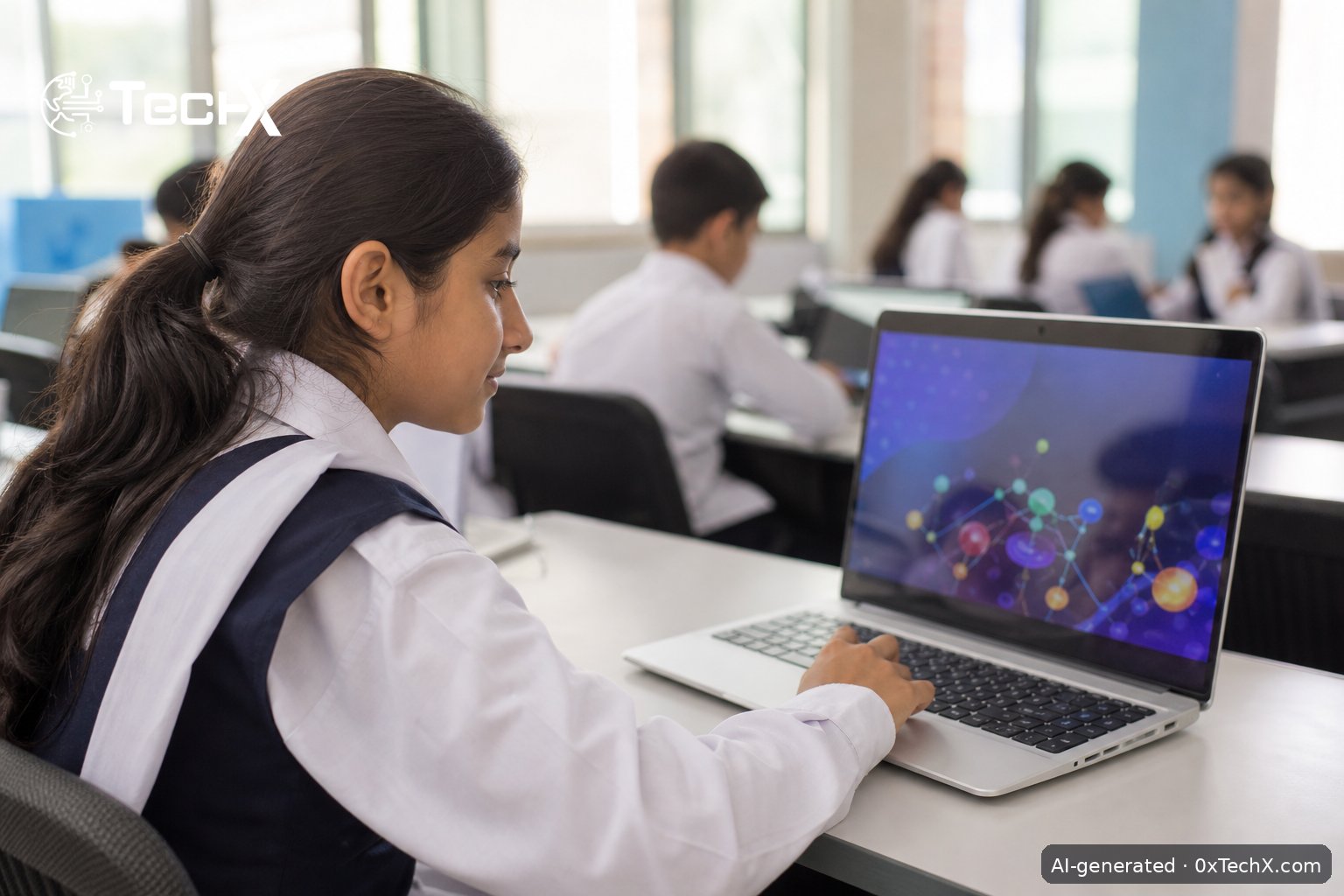
Pakistan is pushing forward with AI personalized education, selecting Daanish School Kuri in Islamabad as the country’s first federal pilot campus for an adaptive, AI-driven learning programme backed by the Prime Minister’s direct vision. The move brings together three key bodies and signals a serious national shift in how the government thinks about teaching and learning.
What Is the AI Personalized Education Plan?
Pakistan has moved towards introducing artificial intelligence and advanced digital technology in its education system, with Daanish School Kuri in Islamabad selected as the first pilot campus. The Pakistan Digital Authority (PDA), the Ministry of Federal Education and Professional Training, and the Daanish Schools Authority are working together to build a system that uses AI to provide personalised education according to each student’s needs, abilities, and progress.
The initiative is focused on advancing the Prime Minister’s directive for an AI-based personalised curriculum and adaptive learning system, with PDA providing technical facilitation, expert support, and guidance while the Ministry of Federal Education and Daanish Schools lead the project.
What makes this different from past edtech announcements is the depth of the technology being discussed. The meeting explored AI-assisted teaching, learning platforms, teacher training, and integrated learning management systems, as well as how international education models such as Singapore’s can be adapted to Pakistan. The Singapore comparison is telling: that country is considered one of the world’s leaders in blending structured curricula with adaptive digital tools.
Who Is Driving It and How?
PDA Chairperson Dr Sohail Munir chaired a high-level meeting at the Authority’s headquarters on November 4 with officials from the Education Ministry and Daanish Schools. They considered forming joint working groups to develop plans for adding AI to the curriculum, introducing new education technology, and improving digital facilities in schools.
The delegation included PDA officials, Tabadlab Director Shahab Siddiqi, Education Ministry Deputy Secretary Shah Jehan, and Daanish School Kuri Principal Asghar Awan. The presence of a policy think-tank like Tabadlab alongside ministry officials and the principal of the pilot school suggests the working group is designed to be practical, not just ceremonial.
PDA aims to help develop a model of technology-based education that can later be used in other schools across Pakistan. That scalability goal is central to the whole exercise. Daanish School Kuri is not the end-point; it is the testing ground.
The Bigger National Picture
This federal pilot does not exist in isolation. Pakistan has seen a wave of AI education activity in 2026 at every level of the system.
- The Higher Education Commission ordered all universities to include AI as a compulsory subject in both undergraduate and postgraduate degree programmes, with students required to complete a three-credit-hour course on AI.
- In September 2026, Punjab approved a new school curriculum that includes artificial intelligence from Classes 1 through 12, along with plans for AI labs and stronger digital literacy initiatives.
- The Khyber Pakhtunkhwa government launched the Global Virtual School (GVS), a public-sector initiative designed to provide AI-based education to students across the province, particularly those in remote and underserved areas, covering students from grades 6 to 12 with virtual classrooms, live and recorded lessons, digital learning materials, assessments, progress tracking, and virtual laboratory exercises.
- At the federal level, PM Shehbaz Sharif attended the signing of a memorandum of understanding between the Ministry of Education and Gauth AI (a ByteDance product), with the AI-powered platform offering personalised tutoring, step-by-step explanations, and interactive study tools.
The government has also committed to investing $1 billion in AI by 2030, introducing AI curricula in federal schools in AJK, Gilgit Baltistan, and Balochistan, awarding 1,000 fully funded PhD scholarships in AI, and training one million non-IT professionals in AI skills nationwide.
What the Tech Stack Looks Like So Far
No single vendor or platform has been confirmed for the Daanish pilot yet, and that is by design. The joint working groups will decide on the specific tools. But the meeting discussions point to a layered approach: an AI personalized education engine that tracks student progress and adjusts content difficulty, an integrated learning management system (LMS) for teachers to monitor classes, and AI-assisted lesson delivery so teachers are supported rather than replaced.
The Singapore model reference is significant. Singapore’s Ministry of Education uses a platform called the Student Learning Space, which combines adaptive content, analytics dashboards for teachers, and gamified exercises. If Pakistan adapts that model, the LMS and content layers would likely be built or localised domestically, with PDA handling the digital infrastructure layer through its National Digital Masterplan.
Teacher training is explicitly part of the plan, which addresses a gap that has tripped up earlier Pakistan edtech rollouts. While the government is portraying the initiative as a potential digital revolution, real-world questions remain, including how an AI-based education system will function in areas where internet connectivity itself is unreliable. The Daanish pilot is partly meant to generate answers to exactly those questions before any national rollout begins.
Why This Matters for Ordinary Families
The Daanish schools were designed to provide deserving students access to quality education purely on merit, with 29 schools planned across Pakistan, 15 already approved, and construction underway at 13 locations. If the AI personalized education model works at Daanish School Kuri, the government intends to export it to all those campuses and eventually to the wider public school system.
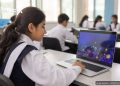
For Pakistani families, the promise is simple: a child in a Daanish school gets a learning experience that adapts to how fast or slow they learn, rather than a one-size-fits-all classroom. For a country where millions of children are out of school and teacher shortages are severe, an AI-assisted system could make a real difference, provided connectivity and device access keep up. The Higher Education Commission of Pakistan has also made AI a compulsory subject at university level, meaning students who come through this new school pipeline will enter a higher education system already oriented around the same technology.
Frequently Asked Questions
What is the AI personalized education pilot in Pakistan?
The Pakistan Digital Authority, the federal education ministry, and the Daanish Schools Authority are running a pilot at Daanish School Kuri in Islamabad. The goal is to build an AI-driven system that adjusts lessons and content to each student’s pace and skill level, with plans to scale it nationally if the pilot succeeds.
Which body is leading the project technically?
PDA is the technical facilitator, providing digital guidance and expert support. The Ministry of Federal Education and Professional Training and the Daanish Schools Authority are the lead organisations running the initiative on the ground.
What AI tools are already being used in Pakistan’s schools?
Khyber Pakhtunkhwa’s Global Virtual School uses an AI teacher available 24/7 in Urdu, English, and Pashto. The federal government signed an MoU with Gauth AI, a ByteDance product, to give 4,000 free subscriptions to Daanish students and teachers. Punjab has also approved an AI curriculum from Class 1 through 12.
When will the AI education model expand beyond the pilot school?
No firm timeline has been announced for a nationwide rollout yet. The November 4 meeting focused on forming joint working groups and designing the pilot framework first. PDA has stated it aims to build a replicable model that other schools across Pakistan can adopt once the Kuri pilot produces results.