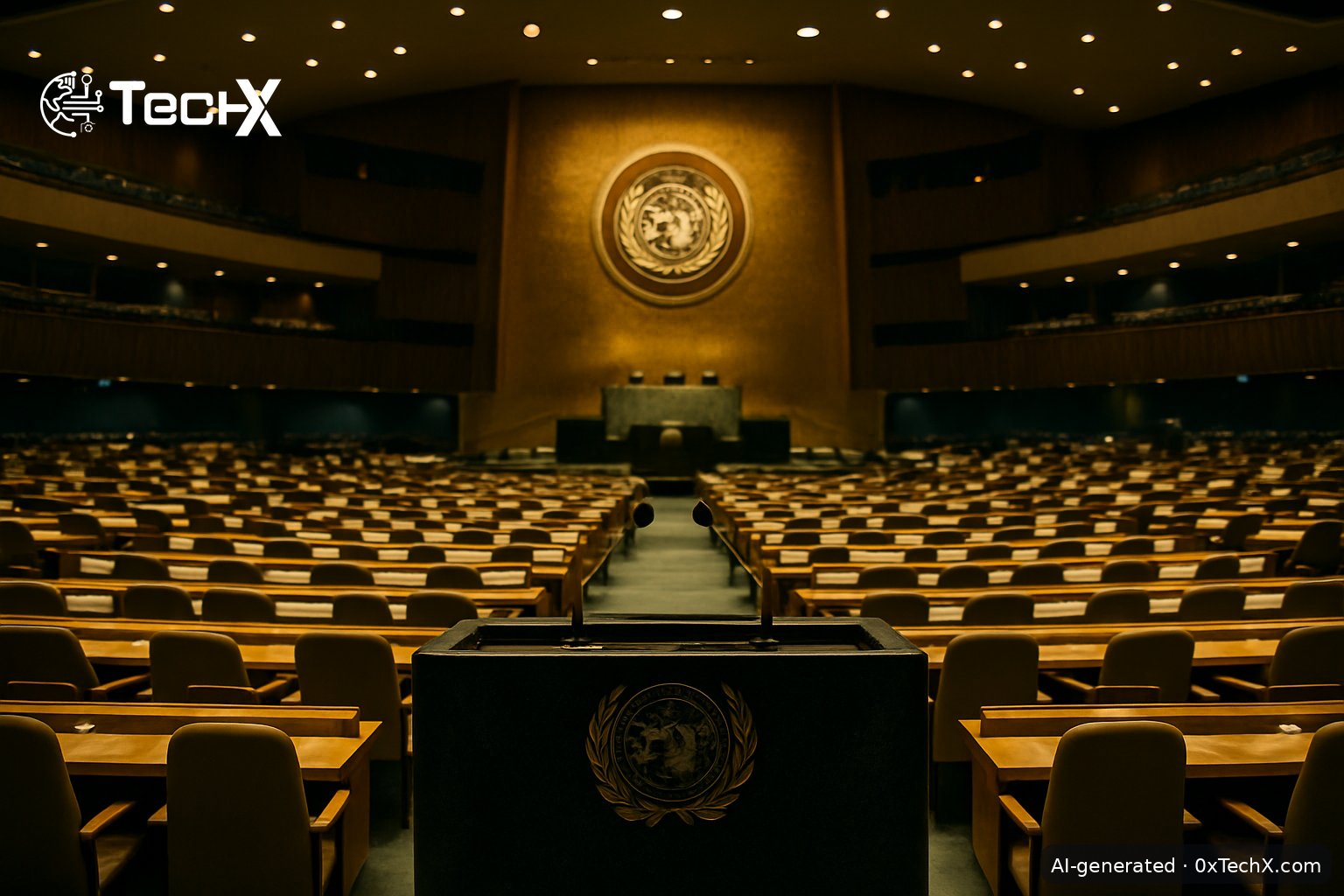
Pakistan AI governance stepped onto a global stage on August 12, 2026, when Balochistan Governor Sheikh Jaffar Khan Mandokhail addressed the UN Youth and Artificial Intelligence Summit at United Nations Headquarters in New York. The event marked the first time Pakistan held an official speaking role at a UN summit dedicated to youth and AI, and what was said there carries real weight for the country’s tech future.
What Happened at the UN Youth and AI Summit
The summit was held on International Youth Day, a date the United Nations has marked every August 12 since the year 2000. It was not a small side event. More than 600 young delegates from across the world gathered at UN Headquarters to debate how artificial intelligence can support the Sustainable Development Goals (SDGs).
The event was organised by the International Organization of Youth, with the Permanent Missions of the Bahamas and Dominica as co-organising partners. Pakistan and Tonga were among the member states that took part in official discussions on making sure developing nations are not left behind in the global AI shift.
Pakistan’s Permanent Representative to the UN, Ambassador Asim Iftikhar Ahmad, received Governor Mandokhail at UN Headquarters along with officials from the Pakistan Mission, giving the visit full diplomatic weight.
What Pakistan Said About AI Governance
Governor Mandokhail’s remarks were direct and pointed. He told delegates that technological progress will not automatically become human progress if developing countries keep missing out on AI infrastructure, computing power, skills, finance and knowledge. That single line captured the core of Pakistan’s position on global AI governance: access is not guaranteed, and the rules being written today will shape who benefits tomorrow.
He also stressed that young people in the Global South are underrepresented in the rooms where AI priorities and rules are decided. This is a real problem. Most of the large AI companies setting technical and ethical norms are based in wealthy countries. Pakistan AI governance, like that of most developing nations, risks being shaped by frameworks built without its input.
On Pakistan’s domestic targets, the Governor cited the National AI Policy and its goal to train one million AI professionals by 2030, while expanding AI education, research and closer ties between government, universities and industry.
The Balochistan Angle Nobody Is Talking About
Most coverage focused on the big-picture diplomacy. But there was a locally significant announcement buried in the Governor’s remarks: Balochistan has launched a Bachelor of Science degree in Artificial Intelligence at the University of Balochistan, described as the province’s first such programme. The next step, he said, is to roll out the same BS AI programme across all 11 public-sector universities in the province, alongside a push to make those universities fully paperless and digital.
That matters because Balochistan is Pakistan’s largest province by land area but one of its most under-served in terms of digital education. Governor Mandokhail put it clearly: a talented young person in Quetta, Gwadar, Turbat or any remote district of Balochistan deserves the same chance to learn, innovate and compete as any young person anywhere else in the world. Connecting that local commitment to a UN platform gives it more visibility and, hopefully, more accountability.
What Came Out of the Summit
The summit was not just speeches. After a full day of workshops and discussions, young delegates produced a Youth-led Declaration on AI Policy and Governance. This document is designed to feed directly into the UN’s broader work on the Global Digital Compact, the framework through which countries are trying to agree on shared rules for AI, data and digital public goods.
That matters for Pakistan AI governance because the positions taken in these early-stage multilateral forums tend to shape binding agreements later. Being present and vocal now is how a country earns a seat when the harder negotiations begin.
The broader context reinforces the urgency. A recent ILO report warned that more than six percent of jobs held by young people aged 15 to 29 are highly exposed to AI automation. At the same time, children are adopting AI tools more than three times faster than adults, which creates both opportunity and risk. Pakistan, with one of the youngest populations in the world and over 60 percent of its people under the age of 30, sits squarely at the centre of both realities.
Rhetoric or Real Action?
It is fair to ask whether a speech at the UN translates into change at home. Pakistan has announced AI ambitions before. The honest answer is that this visit alone changes nothing on the ground. What matters is whether the National AI Policy targets actually get funded, whether the Balochistan university AI programmes get launched on schedule, and whether Pakistan sends not just governors but also young technologists, coders and researchers to future global AI forums.
The choice to send the Balochistan Governor rather than the IT Minister raised some eyebrows locally. A youth-focused summit ideally features youth voices in prominent roles, and civil society observers noted that no young Pakistani technologist appeared to hold an official speaking slot. That gap between the message (youth must shape AI) and the messenger (a senior official in his seventies) is a tension Pakistan’s policymakers should address directly.
For anyone tracking where Pakistan AI governance is heading, this summit is one useful data point. The country knows the stakes. It has stated its targets publicly at the UN. The next step is execution. You can read more about the broader debate on AI infrastructure and sovereignty in our earlier analysis: Pakistan’s AI sovereignty debate goes deeper than a new data centre.
Frequently Asked Questions
What was the UN Youth and AI Summit 2026?
It was a summit held at UN Headquarters in New York on August 12, 2026, on International Youth Day. More than 600 young delegates from around the world met to discuss how AI can support the SDGs and to produce a Youth-led Declaration on AI Policy and Governance.
Who represented Pakistan at the summit?
Balochistan Governor Sheikh Jaffar Khan Mandokhail represented Pakistan in an official capacity. He was received at the UN by Pakistan’s Permanent Representative Ambassador Asim Iftikhar Ahmad.
What did Pakistan ask for at the summit?
Pakistan called for equitable access to AI infrastructure, computing capacity, skills and finance for developing countries. The Governor also promoted Pakistan’s National AI Policy target of training one million AI professionals by 2030 and announced a new BS Artificial Intelligence degree at the University of Balochistan.
What is the Youth-led Declaration on AI Policy and Governance?
It is a document produced by young delegates at the summit after a day of debates and workshops. It is intended to feed into the UN Global Digital Compact, the international framework being built to govern AI, data and digital public goods across member states.