

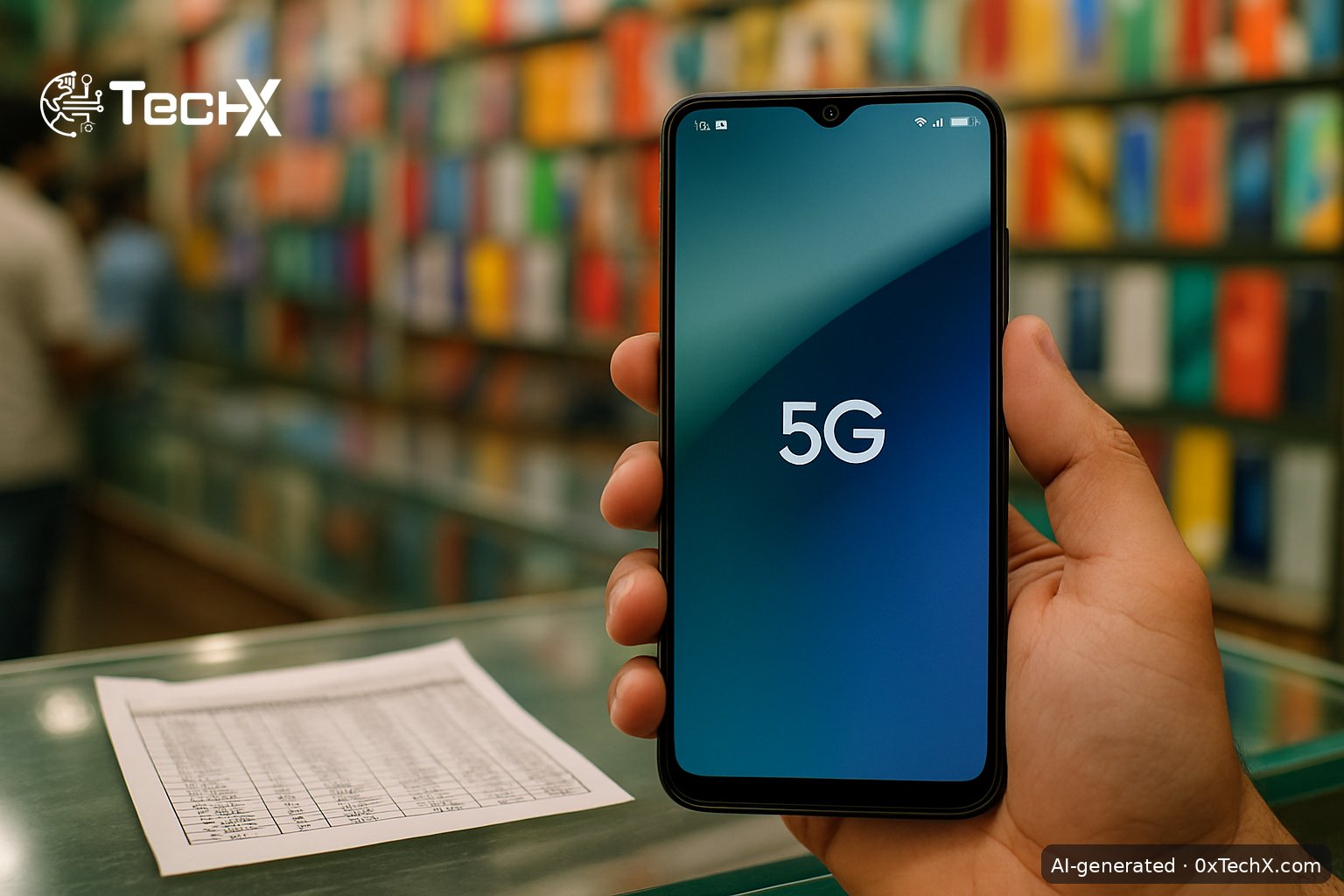
Pakistan’s 5G handset installment plan is closer to reality than ever, but a tough enforcement clause is splitting the telecom industry right down the middle. Operators have proposed letting consumers buy 5G smartphones on easy monthly payments, with one hard condition attached: miss your payments and you lose mobile connectivity on every network in the country.
Why a 5G Handset Installment Plan Is Needed Right Now
Industry officials say only around 5% of mobile handsets in Pakistan are currently 5G-enabled, which remains a significant challenge for operators preparing to launch the service. That single figure explains the entire policy conversation. Pakistan has already auctioned 5G spectrum, operators have live 5G sites in major cities, and yet the majority of the country’s roughly 196 million mobile subscribers cannot access those networks because their phones simply do not support 5G.
Smartphone adoption is constrained by cost, with 5G-compatible handsets accounting for less than 5% of the market due to entry prices of PKR 40,000 to 50,000 and taxes and duties that can reach 40%. For a middle-income family in Lahore or a young professional in Karachi, spending Rs75,000 or more upfront on a 5G device is not realistic.
Such devices are largely positioned in the mid- to high-price segment, starting at around Rs75,000. Even budget-oriented 5G options remain well above what most consumers can pay in a single transaction. A structured installment plan would break that barrier.
What the 5G Handset Installment Plan Actually Proposes
Telecom companies have proposed a mobile phone installment scheme to improve access to 5G devices. Industry officials said they had suggested that the government introduce such a programme with a condition that defaulters would be barred from obtaining a mobile connection from any telecom company.
This SIM-ban clause is the most controversial part. It is designed to solve a very real problem the industry has already experienced firsthand. An earlier effort by the telecom industry to offer handsets on installments ran into difficulties because the default ratio was 30-40%, amounting to millions. With no enforcement tool, operators had no way to recover losses on missed payments. The SIM ban is their proposed solution: default on your phone payments, and every operator in Pakistan is notified, so you cannot get a connection anywhere until the debt is cleared.
The installment policy would allow telecom operators, potentially in partnership with banks or financing companies, to offer 5G handsets on structured monthly payment plans. This mirrors models that have worked in other markets, where handset financing significantly accelerated smartphone adoption and network usage.
Jazz has been the most vocal advocate for the policy. Jazz President Kazim Mujtaba made clear that the scheme is not only for low-income groups. “Several people want to get a 5G-compatible phone set but cannot afford to buy it on cash payment,” he said, broadening the target audience to include middle-income consumers who are simply unwilling to make a large one-time payment for a new device.
This is an important point that most coverage misses. The installment plan is not purely a poverty-relief programme. It is aimed at a much wider group: anyone who would rather spread a Rs70,000 purchase over 12 months than pay it all at once.
Why the Plan Is Still Stuck
Pakistan’s smartphone installment policy has sparked debate within the telecom industry, with operators expressing concerns over its potential implications. While the initiative aims to boost digital accessibility, some mobile operators argue that enforcing SIM blocking for defaulters could have unintended consequences. Sources reveal that two out of four major telecom operators strongly oppose the clause that mandates suspending all SIM cards registered to a defaulter’s CNIC.
They believe this could violate citizens’ digital rights and hinder efforts to improve digital inclusion in Pakistan. Critics also point out that, in many countries, governments, not telecom firms, absorb the financial burden of defaults.
There is also a competition angle. The proposal faced resistance from Zong, which argued that operators such as Jazz and Ufone have their own banks and would therefore enjoy an additional financing advantage. In a market where all three operators compete for the same customers, one side having a built-in financing arm is a real structural imbalance.
The Ministry of IT has finalized the smartphone installment policy and shared it with telecom companies. However, ongoing disagreements over defaulter penalties and risk-sharing mechanisms are delaying its approval.
For context on where Pakistan’s 5G infrastructure actually stands, see our earlier report on Pakistan’s fibre backhaul gap and what it means for 5G quality across the country.
What Is Happening on the Ground Meanwhile
The Pakistan Telecommunication Authority (PTA) has announced that 3.81 million 5G-compatible smartphones are now registered across the country. That sounds large until you compare it to the total subscriber base of nearly 196 million. It means the overwhelming majority of Pakistani mobile users are sitting with phones that cannot connect to the 5G networks now going live in Islamabad, Rawalpindi, Lahore, and Karachi.
Locally manufactured 5G devices reached 961,326 units by May 2026. Samsung accounted for the largest share with 396,268 devices, followed by Vivo with 248,508 units. Infinix and Tecno together contributed 216,560 units. Local assembly is growing fast, and that should push entry-level 5G prices down over time. But without a financing mechanism, even a Rs45,000 phone is out of reach for millions.
There is also the iPhone problem. Officials said Apple is not prepared to activate 5G for Pakistani users immediately. They also said high taxes on imported mobile phones, particularly iPhones, have reduced Apple’s market size in the country. By contrast, 5G services are available on Samsung devices. Apple has reportedly informed authorities that it will reassess the market and may enable 5G support for iPhones in Pakistan by 2027. So if you are an iPhone user, the installment debate does not even apply to you yet.
If you are also curious how fintech companies are trying to fill the device affordability gap in a different way, our piece on Daira’s nano-lending BNPL model for smartphones shows one private-sector approach already in motion.
What Needs to Happen Next
The timeline now depends entirely on the Ministry of IT issuing the formal policy directive. Officials have said implementation will begin soon after the directive is released, language that is deliberately vague but suggests weeks rather than months.
Given that this scheme has been announced, delayed, renegotiated, and re-announced over nearly three years, healthy scepticism about “soon” is warranted. But the structural conditions for launch, including operator consensus, an enforcement framework, and a prepared policy directive, are in place in a way they were not during previous rounds.
The PTA and the Pakistan Telecommunication Authority will need to balance two things: making the SIM-ban enforcement strong enough that operators are willing to take on default risk, but not so punishing that a single missed payment cuts off a person’s only phone line. Getting that balance right is the last real obstacle between this policy and a launch. The Ministry of IT and Telecommunication holds the key, as a formal directive from them is all that is required to set the plan in motion.
Frequently Asked Questions
What is the 5G handset installment plan in Pakistan?
It is a proposed government-backed scheme that would let consumers buy 5G smartphones on monthly payments instead of paying the full price upfront. Telecom operators, possibly working with banks, would offer these structured payment plans. The policy has been drafted by the Ministry of IT but has not yet been officially launched.
What happens if you do not pay your installments?
Under the proposal, a defaulter would be blocked from getting a SIM card from any telecom company in Pakistan. This cross-network SIM ban is meant to act as an enforcement tool, since an earlier informal installment attempt by operators failed due to default rates as high as 30 to 40 percent.
Why is Zong against the plan?
Zong objects to the SIM-ban clause and also argues that operators like Jazz and Ufone, which have banking arms, would have an unfair financing advantage over a rival without one. This competition concern is one of the key sticking points delaying a final agreement.
Can iPhone users benefit from the plan?
Not right away. Apple has not yet enabled 5G on iPhones sold in Pakistan and is expected to review the market in 2027 before doing so. High import taxes have also shrunk Apple’s footprint in Pakistan. For now, the installment plan would apply mainly to Android devices, especially Samsung, Vivo, Infinix, and Tecno models that already support Pakistan’s 5G bands.