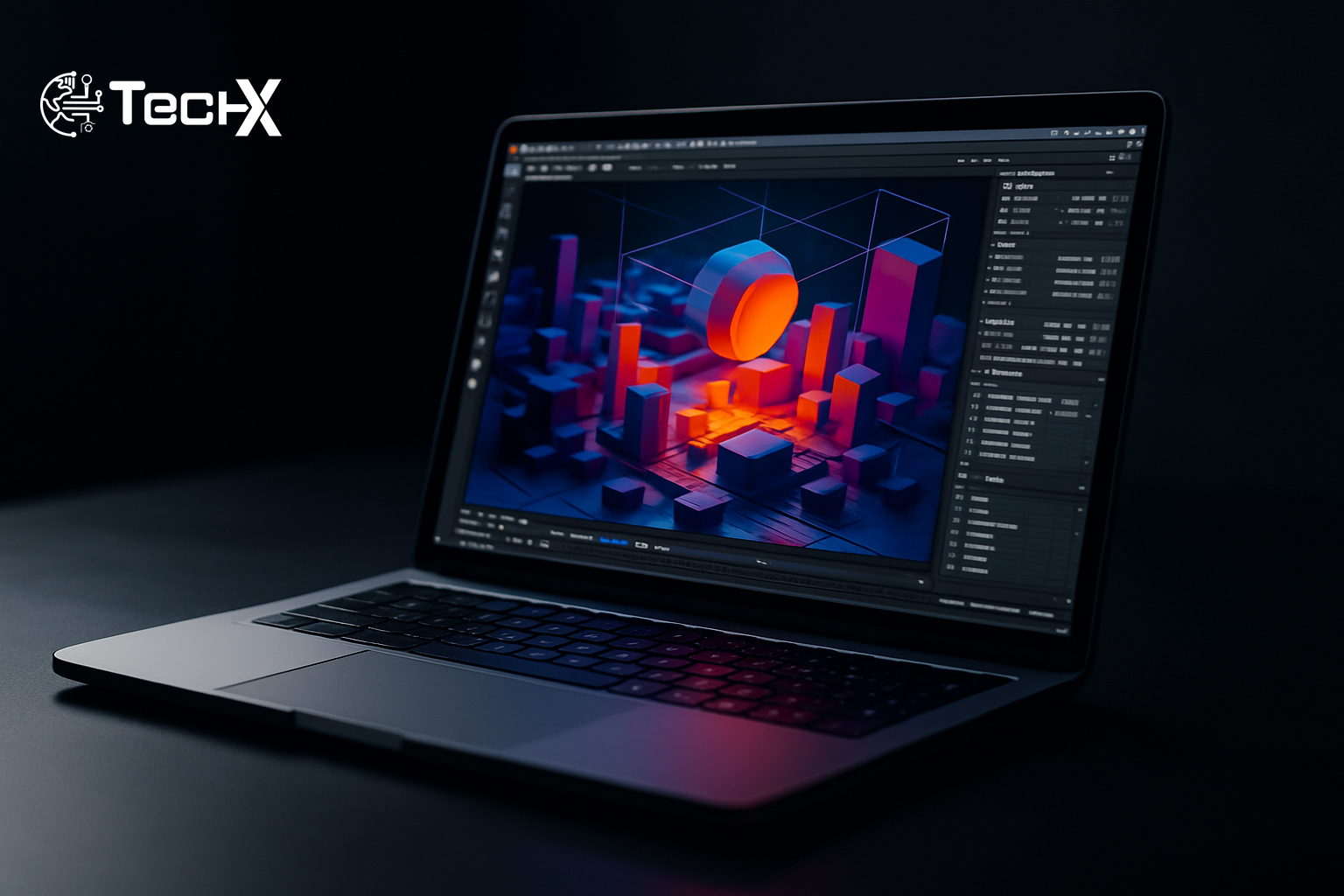
The Surface Laptop Ultra is Microsoft’s most powerful laptop ever, announced at Computex 2026 in Taipei on May 31 alongside Nvidia. Microsoft announced the Surface Laptop Ultra, powered by Nvidia’s latest RTX Spark Superchip, at Computex 2026. Claimed to be the most powerful Surface laptop device yet, the new Surface Laptop Ultra is essentially Microsoft’s answer to the current-gen MacBook Pro. For Pakistani tech enthusiasts, developers, and creative professionals, this laptop signals a big shift in what a Windows machine can do.
What Makes the Surface Laptop Ultra Different
Previous Surface laptops used chips from Intel, AMD, or Qualcomm. The Surface Laptop Ultra breaks that pattern completely. The Surface Laptop Ultra is the first to be built on the Nvidia RTX Spark platform, combining an N1x CPU, RTX GPU, and unified memory from the silicon up.
Nvidia RTX Spark is an ARM-based system on chip developed for Windows laptops and compact desktops. It combines a 20-core Nvidia Grace CPU with a Blackwell RTX GPU and unified memory, and is designed for local AI, creative, and gaming workloads on Windows on ARM devices.
The CPU is a 20-core ARM part made up of 10 high-performance Cortex-X925 cores paired with 10 efficiency-focused Cortex-A725 cores, co-developed with MediaTek. At full strength, this chip offers up to 20 ARM CPU cores, a Blackwell GPU with 6,144 CUDA cores, 128GB of LPDDR5X RAM, and up to 300 GB/s of memory bandwidth.
Think of it this way: this is Nvidia doing what Apple did with the M1 chip in 2020, but for Windows. The CPU and GPU share one big pool of fast memory instead of being separate. The CPU and GPU are interconnected using NVLink C2C, while the large pool of unified memory can be dynamically allocated between the CPU and GPU.
AI Performance That Runs Local Models
The headline number is one petaflop of AI compute. That is enormous for a laptop. The RTX Spark is capable of running up to 120 billion parameter models locally. This means a Pakistani AI developer or data scientist could run very large language models directly on the machine, without paying for cloud computing every time.
RTX Spark’s key differentiator is full CUDA ecosystem compatibility, which is the industry standard for AI development. CUDA is the software toolkit that most AI researchers and developers around the world rely on. Apple silicon does not support CUDA, which is a common pain point for developers who work with Nvidia-based tools and frameworks. The Surface Laptop Ultra changes that equation for Windows users.
RTX Spark offers significantly more raw AI compute than Apple Silicon, with roughly 1,000 TOPS compared to Apple’s 38 TOPS Neural Engine. However, Apple’s M-series chips currently hold advantages in memory bandwidth and single-core CPU performance. So this is not a clean sweep, but for AI workloads that rely on GPU muscle, the RTX Spark looks very strong on paper.
You can read more about the Surface Laptop Ultra on Microsoft’s official product page, and the full RTX Spark technical details are available on Nvidia’s official newsroom.
Display, Design, and Ports
The display is a 15-inch mini-LED PixelSense Ultra touchscreen with up to 2,000 nits peak HDR brightness and 262 PPI. Microsoft says this is the brightest display it has ever shipped on a Surface device.
The laptop weighs around 2kg, about as much as a 16-inch MacBook Pro. The Surface Laptop Ultra features a 15-inch mini-LED PixelSense Ultra display. It hits a staggering 2,000 nits of peak HDR brightness, making it the brightest display Microsoft has ever shipped. With a resolution of 2880 x 1920 and a density of 262 pixels per inch, the clarity is exactly where it needs to be for professional creators.
The Surface Laptop Ultra comes in either Black or Dark Silver, with Windows Hello face recognition and a replaceable SSD. Microsoft also confirmed HDMI, USB-C, USB-A, SD card, and headphone ports. The replaceable SSD is a practical win over the MacBook Pro, where storage is soldered and cannot be swapped.
Gaming on a Windows ARM Laptop
Gaming on Windows ARM has historically been a weak point. RTX Spark tries to change that. Nvidia promises the platform is good for ‘100 FPS 1440p gaming,’ potentially enabled by DLSS 4.5 upscaling and Multi Frame Generation. Microsoft says the improved Prism emulation layer has been specifically tuned for the RTX Spark microarchitecture, ensuring that x86 games not yet native still run with high performance. With the Blackwell GPU under the hood, players will have access to AAA titles with performance levels that rival traditional gaming laptops.
That said, there are real caveats. Because it is an ARM-based processor, x86-64 games and applications rely on Microsoft’s built-in Windows translation layer called Prism. Native ARM support is growing quickly among creative suites like Adobe and major engines, but older games, anti-cheat software, and legacy applications may face compatibility challenges at launch.
Who Else Is Getting RTX Spark Laptops
The Surface Laptop Ultra is not alone. Nvidia stated that RTX Spark laptops and compact desktops would be available in fall 2026 from Asus, Dell, HP, Lenovo, Microsoft, and MSI, with models from Acer and Gigabyte to follow. In total, Nvidia expects over 30 laptops and around 10 desktops to lead the charge when the platform launches.
This matters for the Windows on ARM race. Until now, Qualcomm’s Snapdragon X chips were the only real option for ARM-based Windows laptops. Nvidia’s entry erased over $10 billion from Qualcomm’s market cap within hours of the announcement. That tells you how seriously the market is taking this shift.
Nvidia has also committed to a multi-generation roadmap. CEO Jensen Huang laid out a three-generation roadmap at Computex: Grace Blackwell (current gen), followed by the Vera Rubin Spark with LPDDR6 memory, and then the Rosa Feynman Spark with stacked Feynman GPUs and next-generation memory.
What Pakistani Buyers Should Expect
No official price for the Surface Laptop Ultra has been announced yet. PC-maker estimates after Computex put flagship N1X systems around US $2,899, with lower N1 configurations near US $1,799. These figures are unconfirmed and likely to shift before retail availability.
At current exchange rates, a price of around $2,900 converts to roughly Rs 800,000 or more once import duties and local retailer margins are added. For context, the starting price for current Microsoft laptops in Pakistan is around Rs 435,000 as of June 2026. The Surface Laptop Ultra will almost certainly sit well above that range.
Microsoft does not have an official retail presence in Pakistan, so the device will likely arrive through grey market importers and specialist laptop shops in Karachi, Lahore, and Islamabad. Some industry observers have suggested that RTX Spark-powered machines may not be widely available until 2027, though Microsoft’s official messaging still points to a 2026 release. Pakistani buyers who need this kind of power should wait for independent benchmark results before committing, as pricing and availability will become clearer closer to launch.
Lower-tier N1 models from Asus, HP, and Lenovo may offer a more accessible entry point into the RTX Spark ecosystem. Nvidia confirmed that lower-tier SKUs will be available with reduced core counts and memory capped at 64GB, targeting more affordable price points.
Frequently Asked Questions
What chip does the Surface Laptop Ultra use?
The Surface Laptop Ultra uses the Nvidia RTX Spark superchip. It has a 20-core ARM-based Grace CPU, a Blackwell GPU with 6,144 CUDA cores, and up to 128GB of unified LPDDR5X memory on a single TSMC 3nm chip. The CPU and GPU share memory through an NVLink C2C link.
When will the Surface Laptop Ultra be available in Pakistan?
Microsoft has confirmed a fall 2026 global launch, but no Pakistan-specific date or price has been announced. Surface devices typically reach Pakistan through grey market importers several weeks after global release. Some analysts suggest a wider retail rollout could slip into early 2027.
Can it run AI models locally without the cloud?
Yes. Microsoft and Nvidia claim the Surface Laptop Ultra can run AI models with up to 120 billion parameters entirely on-device, without requiring cloud connectivity. This is enabled by the unified memory architecture, which dynamically allocates up to 128GB of RAM between the CPU and GPU.
How does it compare to a MacBook Pro?
The Surface Laptop Ultra matches the MacBook Pro in many areas and beats it in full CUDA GPU support. The Surface Laptop Ultra offers full Nvidia CUDA support and dedicated RTX GPU cores, making it potentially stronger for AI development. The MacBook Pro M5 Max, however, is already available with proven performance, a mature software ecosystem, and verified battery life. Real-world benchmarks will decide this more clearly once the Surface Laptop Ultra ships.