
Raxium, a firm focused on producing microLED displays for AR and VR applications, was recently bought by Google. The acquisition’s formal price tag has yet to be revealed, but it is expected to be in the neighbourhood of $1 billion.
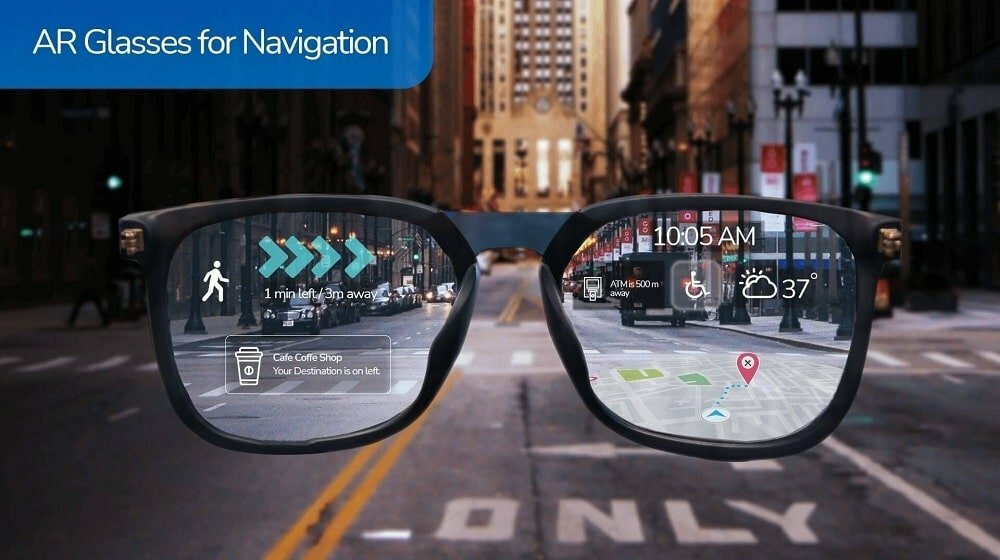
Google Glass was first introduced in 2013. By combining visual, audio, and location-based inputs, the glasses were designed to provide an augmented reality experience.
Despite being viewed as one of Google’s flops, the company hasn’t given up on the notion and continues to buy technology-focused firms.
Google previously bought North, formerly known as Thalmic Labs, an Amazon-backed firm that makes the same smart glasses as Google in June 2020.
Google’s recent acquisition is in line with its aims to broaden the notion of augmented reality glasses.
Raxium focuses on microLED technology, which is comparable to OLED in that it does not utilise a backlight and instead produces light from each pixel. MicroLEDs are brighter, use less power, and do not have the same concerns as OLEDs in terms of lifetime.
It’s been difficult to produce microLEDs small enough for headsets and other AR/VR devices, because they need to fill a large percentage of a person’s field of view.
Raxium claims to have achieved pixels as small as 3.5 m, which is much smaller than an OLED pixel. The startup, however, does not yet have its own device.
In the acquisition of firms that work in the field of augmented reality glasses, Google has been in a constant battle with Apple and Meta. They still have a long way to go before the technology is advanced enough for them.
To read our blog on “Google is working on a top-secret project called Project Iris: Report,” click here.