

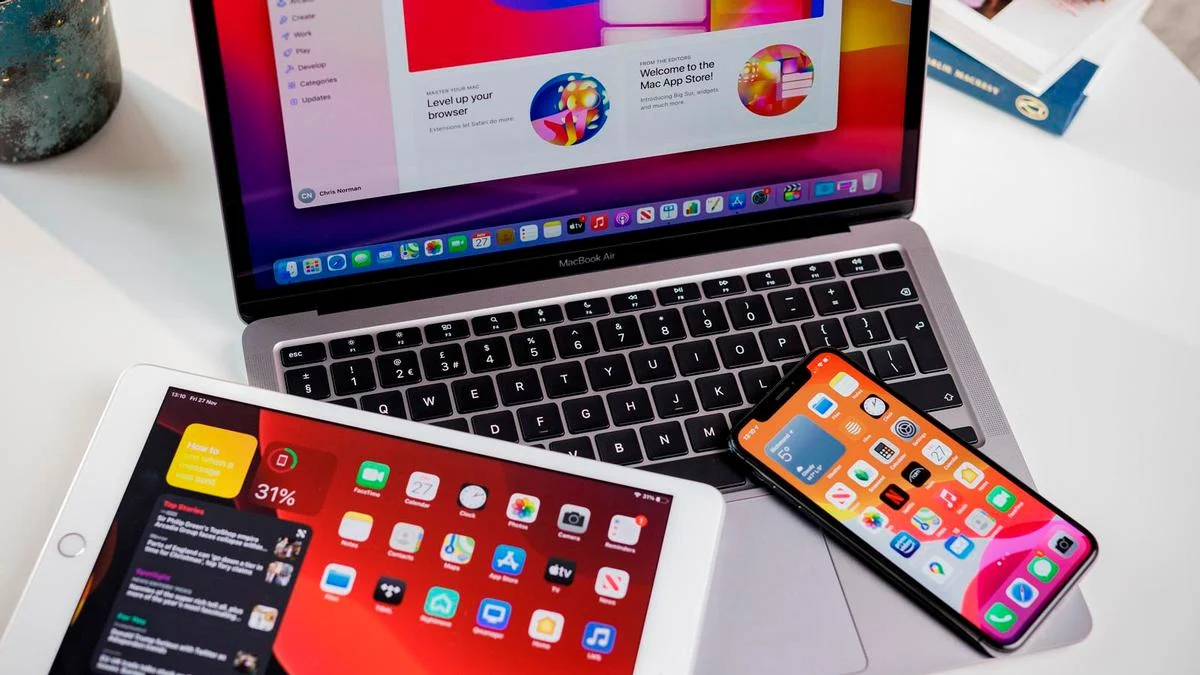
According to the grapevine, Apple appears to be on track to introduce 2nm CPUs in its flagship Apple iPhone and Mac products as early as 2025, making it one of the first companies to do so.
IBM only built the first 2nm chip prototype last year, so the method is far from ready for mass production.
According to DigiTimes Asia, semiconductor behemoth TSMC has stated that their 2nm node will not be ready for mass production until 2025.
The first customers in line for this new procedure will be Apple and Intel: For its part, Apple is planning to replace the current 5nm CPUs in its iPhones and Macs with the new 2nm processor.
TSMC is ramping up its 3nm FInFET process for the later part of 2022, just before it can get there, with Apple currently being a large customer of the upcoming 3nm chips.
There have been conflicting reports regarding whether TSMC’s 3nm output process is on track or not, so it’s unclear how any potential delays will affect the company’s 2nm chip schedule. After all, 2025 is a long way off, so it’s possible that something will happen.
As 2nm CPUs get closer to the user market, the question of what will be observed grows. At 2nm, you’re probably talking about transistors that aren’t much bigger than a string of atoms, and making them much smaller is becoming physically impossible.
The “conclusion of Moore’s Regulation,” named after famed Intel executive Gordon Moore, who famously quasi-predicted that personal computer transistor density would double nearly every two years, is an issue that we’ve known about for more than a decade.
That was the case for the previous six years, but now that we’ve reached the single-digit nanometer scale, the microprocessor market is facing significant headwinds.
We’re looking at a picometer, or a thousandth of a nanometer, which is roughly 100 times smaller than a single silicon atom.
It’s unclear where the market for fresh innovation and progress in the semiconductor industry goes, but it’s not there.
To read our blog on “Apple ordered to compensate a Brazilian man $1K for selling an iPhone,” click here.