
Part 5 of 5 in our Iqbal Day series.
A Day That Belongs to Every Pakistani
Every year on November 9, Pakistan pauses to remember a man whose words helped shape a nation. Iqbal Day, known in Urdu as Youm-e-Iqbal, is not just a date on a calendar. It is a moment for every Pakistani to look back at the life of Allama Muhammad Iqbal, to understand what he dreamed of, and to ask honestly: how close are we to that dream today?
Who Was Allama Iqbal?
Allama Sir Muhammad Iqbal was born on November 9, 1877, in Sialkot, a city that now proudly sits in Pakistan’s Punjab province. His family had Kashmiri roots, and from an early age, young Muhammad showed a sharp mind and a love for learning. He began his education at a traditional maktab and later attended Sialkot Mission School, where he passed his matriculation exams.
From Sialkot, Iqbal moved to Lahore, where he earned his Bachelor of Arts degree from Government College in 1897 and his Master’s degree two years later. He also taught at Lahore’s Oriental College as a lecturer of history, philosophy, and English. But his thirst for knowledge took him even further, in 1905, he left for Europe to study philosophy at Trinity College, Cambridge, in England. He later earned a doctorate from Germany and qualified as a barrister. His time in Europe sharpened his thinking, but it also deepened his identity as a Muslim and as a son of the East.
Allama Iqbal was not just a poet. He was, as history recognises him, a poet, philosopher, barrister, teacher, and political thinker, all in one remarkable person. He wrote poetry in both Urdu and Persian, and his works are considered among the greatest of the modern era. He is known by several proud titles: Shair-e-Mashriq (Poet of the East), Mufakkir-e-Pakistan (Thinker of Pakistan), and Hakeem-ul-Ummat (Sage of the Nation). He is officially recognised as Pakistan’s national poet.
His Philosophy: Khudi and the Awakening of the Self
What made Iqbal truly special was not just the beauty of his verses, it was the depth of thought behind them. At the heart of his philosophy was the concept of Khudi, or selfhood. Iqbal believed that every individual, and every nation, had the potential for greatness, but that potential could only be unlocked through self-awareness, faith, action, and courage. His poetry called on Muslims across South Asia to wake up, to believe in themselves, and to take their place in the world with confidence and dignity.
His first major book, Asrar-e-Khudi (The Secrets of the Self), published in 1915, laid out this philosophy. His poetry blended Eastern mysticism, he was deeply inspired by the great Persian Sufi poet Rumi, with Western philosophical thought. The result was a voice that spoke to both the heart and the mind, in a language that crossed borders. His Persian poetry is so beloved that in Iran he is honoured to this day as one of the great masters of the language.
The Dream: A Homeland for the Muslims of South Asia
Iqbal’s vision went beyond poetry. He became deeply involved in politics and the future of Muslims in British India. In December 1930, he delivered his famous Allahabad Address as president of the All-India Muslim League, where he gave voice to a powerful idea: that the Muslims of the subcontinent deserved a separate political space, a homeland where they could live by their own values, culture, and identity.
That idea planted a seed. A decade later, in March 1940, the All-India Muslim League under Quaid-e-Azam Muhammad Ali Jinnah passed the historic Lahore Resolution at Minto Park (now Iqbal Park) in Lahore, formally calling for independent Muslim-majority states in British India. Historians widely regard Iqbal’s 1930 Allahabad Address as the intellectual foundation that made the Lahore Resolution possible. Quaid-e-Azam himself acknowledged that his own conclusions on the constitutional future of Muslims were substantially in line with Iqbal’s vision.
Allama Iqbal passed away on April 21, 1938, nine years before Pakistan became a reality. He did not live to see his dream fulfilled. Yet when Pakistan was born in August 1947, the world understood that the country owed its very idea to this remarkable man from Sialkot. He rests today beside Lahore’s magnificent Badshahi Mosque, in a tomb that every Pakistani visits with deep respect.
How Pakistan Celebrates Iqbal Day
Iqbal Day is a gazetted public holiday in Pakistan. Schools, universities, and cultural institutions hold special programmes. Students recite Iqbal’s poetry, Urdu and Persian, and take part in debates, seminars, and essay competitions that reflect on his life and message. Government offices hold official ceremonies. The national flag is flown with pride. Pakistan’s vibrant literary community gathers in halls and mushairas to celebrate the poet who gave this nation its soul.
The day is observed across all four provinces as a tribute to Allama Iqbal, the “Poet of the East”, a unifying occasion that reminds every Pakistani, regardless of province or background, that they share one heritage and one dream.
Iqbal’s Dream in the Digital Age: What It Means for Young Pakistanis Today
Allama Iqbal’s philosophy of Khudi, of rising, believing, and acting, has never been more relevant than it is in today’s Pakistan. The country’s population is among the youngest in the world, and millions of young Pakistanis are building businesses, creating technology, writing code, and connecting with the global world through their smartphones. That spirit of striving, of refusing to give up, of believing that there are greater worlds yet to be reached, that is Iqbal’s message, alive in every startup founder in Lahore’s tech scene, every student coding late at night in Karachi, every girl breaking barriers to pursue science in Peshawar or Quetta.
Iqbal’s legacy continues to shape Pakistan’s identity. His poetry, easily found on apps and websites today, is shared millions of times across social media every November 9. Young Pakistanis who may never have read a formal book of his verse still find his couplets in their feeds, and those words still hit home. That is the power of a truly great voice: it does not age.
The Iqbal Academy Pakistan preserves and promotes his work, and his writings have been translated into multiple European and Asian languages. He is as relevant in a digital newsroom as he was in a colonial-era courtroom.
Frequently Asked Questions About Iqbal Day
When is Iqbal Day celebrated and why on November 9?
Iqbal Day is observed every year on November 9. This date marks the birth anniversary of Allama Muhammad Iqbal, who was born on November 9, 1877, in Sialkot. The Government of Pakistan officially declared November 9 a national public holiday to honour his contributions to the nation’s founding ideology and literary heritage.
What is Allama Iqbal’s most important contribution to Pakistan?
Allama Iqbal is widely regarded as the intellectual and spiritual father of Pakistan. His 1930 Allahabad Address first articulated a clear vision for a separate Muslim homeland in South Asia. This idea provided the ideological foundation for the Tehreek-e-Pakistan and ultimately led to the creation of Pakistan in 1947, though Iqbal himself passed away in April 1938 before seeing it happen.
What titles is Allama Iqbal known by?
Allama Iqbal carries several honourable titles. He is called Shair-e-Mashriq (Poet of the East), Mufakkir-e-Pakistan (Thinker of Pakistan), and Hakeem-ul-Ummat (Sage of the Nation). The Government of Pakistan has officially recognised him as the country’s National Poet.
Where is Allama Iqbal buried and can people visit his tomb?
Allama Iqbal’s tomb, known as Mazar-e-Iqbal, is located in Lahore, right beside the grand Badshahi Mosque. It is one of the most visited sites in Pakistan and is open to visitors throughout the year. On Iqbal Day especially, thousands come to pay their respects to the poet who gave Pakistan its dream.
A Hopeful Closing: His Dream Is Our Responsibility
On this Iqbal Day, as we remember a man who saw the future before it arrived, we do well to ask ourselves what we are building with the nation he helped imagine. The dream was never just about borders, it was about dignity, knowledge, faith, and the courage to be the best version of ourselves. That is a dream worth renewing every single year.
To every Pakistani reading this today: Allama Iqbal’s message lives in you. Keep learning, keep striving, keep dreaming. Pakistan Zindabad.
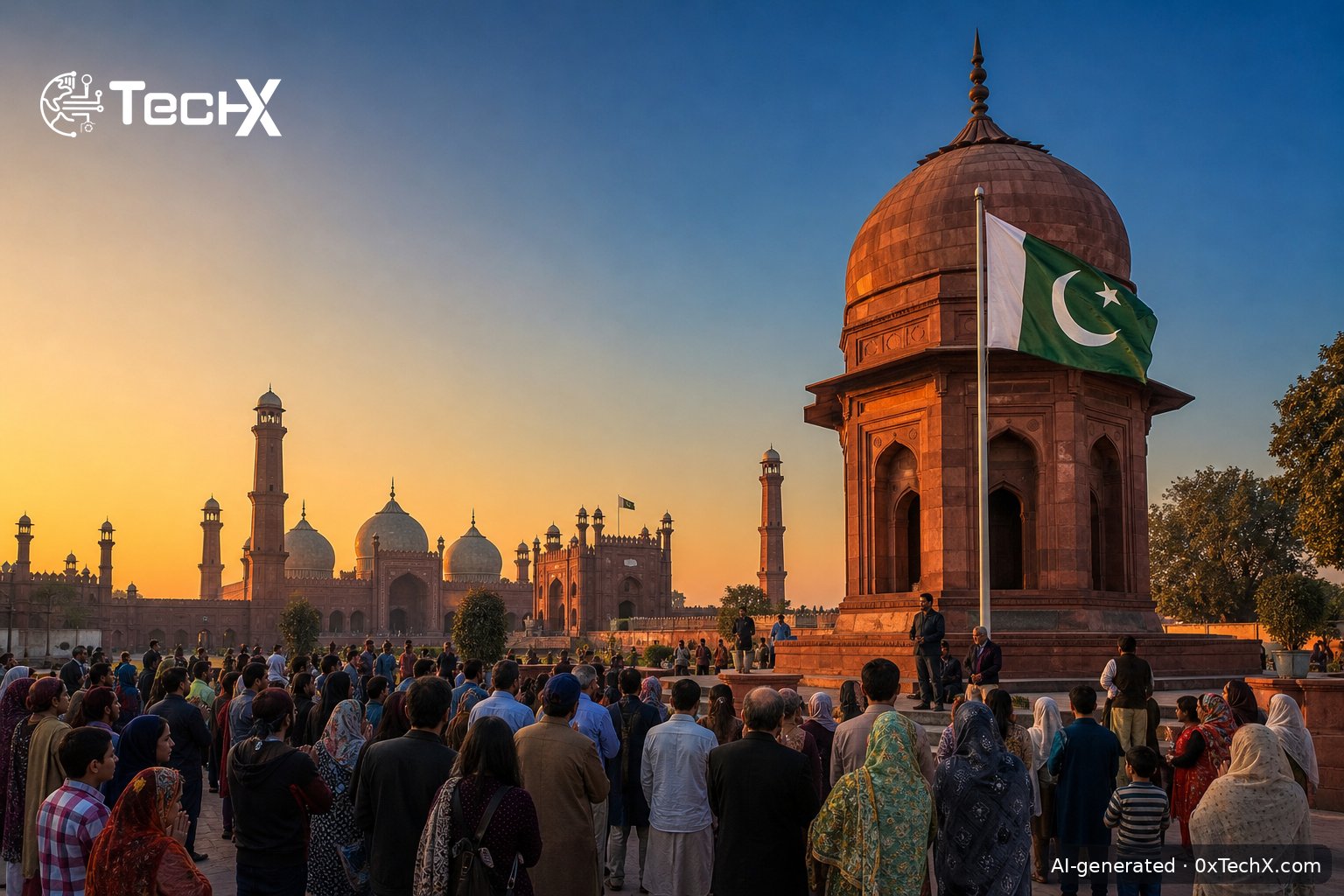
Disclaimer: This article has been compiled from information publicly available on the internet and from published sources. The featured image is AI generated and is for illustration only. If you notice anything that needs correction, please contact us.