
Part 4 of 5 in our Iqbal Day series.
What Is Iqbal Day and Why Does Pakistan Celebrate It?
Every year on 9 November, Pakistan pauses to remember a man whose words helped shape a nation. Iqbal Day, observed as a national public holiday, is the birthday commemoration of Allama Muhammad Iqbal, Pakistan’s officially declared national poet and one of the greatest philosophical minds of the modern era. Schools hold poetry recitations, universities organise seminars, and state ceremonies are held across all provinces. It is a day that belongs equally to the student memorising a couplet in Sialkot and the professional reading Iqbal on a smartphone in Karachi.
A Brief Life, a Lasting Legacy
Allama Iqbal was born on 9 November 1877 in Sialkot, in the Punjab province of British India, the land that is today proudly part of Pakistan. He received his early education locally, then went on to study at Government College Lahore. His hunger for knowledge took him further west: he earned a degree from Trinity College, University of Cambridge, and later completed his doctorate at Ludwig Maximilian University in Munich, Germany. When he returned, he brought with him not just degrees, but a transformed worldview, one that would blend Eastern spirituality with Western philosophy in a way no one had done before.
Iqbal was knighted in 1922, earning the title Sir. During the 1930s he became a leading voice in the All-India Muslim League, and it was his famous presidential address in December 1930 that first gave shape to the idea of a separate homeland for the Muslims of the subcontinent. He never lived to see Pakistan, he passed away on 21 April 1938, nine years before independence. But the dream he articulated became the dream of millions. Today, countless institutions carry his name: the Allama Iqbal International Airport in Lahore, Allama Iqbal Open University, Allama Iqbal Medical College, and many more, a living tribute woven into the fabric of daily Pakistani life.
The Philosophy That Powered His Poetry: Khudi
To understand Iqbal’s poems, you must understand one word: Khudi. It is usually translated as selfhood or the realisation of one’s inner strength. Iqbal believed that every human being carries unlimited potential within, but most people never discover it. His poetry, in Urdu and Persian alike, is essentially one long, passionate call to awaken that inner power. Khudi is not about pride or arrogance. It is about self-respect, sincere effort, and the deep belief that greatness begins from within. This single idea runs like a golden thread through almost everything he ever wrote.
His Major Works at a Glance
Allama Iqbal’s literary output was remarkable in both depth and diversity. Here are his most celebrated collections:
- Asrar-e-Khudi (Secrets of the Self, 1915): Published in Persian, this was Iqbal’s first major poetry book. In it, he laid out his entire philosophy of Khudi, describing the growth of the self as a journey through stages of discipline, love, and mastery. It introduced the world to Iqbal as a thinker, not just a poet.
- Rumuz-e-Bekhudi (Mysteries of Selflessness, 1918): The companion piece to Asrar-e-Khudi. If the first book was about building the individual self, this one was about how that strong individual gives back to the community and to humanity.
- Bang-e-Dra (The Call of the Marching Bell, 1924): This was Iqbal’s first Urdu poetry collection and it brought together the poems of his early and middle years. It contains some of his most beloved works, including Shikwa, Jawab-e-Shikwa, and the patriotic nazm Tarana-e-Milli.
- Bal-e-Jibril (Gabriel’s Wing, 1935) and Zarb-e-Kalim (The Rod of Moses, 1936): These later Urdu collections are considered the peak of his Urdu poetry, rich, dense, and urgently addressed to the Muslims of his time.
- Javid Nama (The Book of Eternity, 1932): Written in Persian, this is Iqbal’s most ambitious poem, a spiritual journey through the heavens, in the tradition of Dante’s Divine Comedy, with the great Persian poet Rumi as his guide.
Famous Poems of Iqbal Day, And What They Mean
1. Shikwa and Jawab-e-Shikwa, The Dialogue with God
Shikwa (Complaint), first recited by Iqbal in April 1909 at a gathering of the Anjuman-i-Himayat-i-Islam in Lahore, is one of the boldest poems in all of Urdu literature. In it, Iqbal speaks on behalf of the Muslim Ummah and raises heartfelt complaints before Allah, why are believers suffering when they were once the standard-bearers of civilisation? The poem was so daring that some orthodox clerics of the time were shocked. But the genius of Iqbal was that he followed it up four years later in 1913 with Jawab-e-Shikwa (Response to the Complaint), in which God Himself answers, gently but firmly: the promise was never broken; it is the believers who have strayed from the path of knowledge, unity, and sincere faith. Together, the two poems form a mirror that shows the community its own reflection, and challenges it to do better. Both were later published in his famous Urdu collection Bang-e-Dra.
2. Lab Pe Aati Hai Dua, A Prayer for the Young
Perhaps the most widely memorised poem on Iqbal Day, Lab Pe Aati Hai Dua Ban Ke Tamanna Meri (My wish comes to my lips as a prayer) is a gentle, sincere nazm written for children. In it, the young speaker asks God to make his life like a candle, giving light and warmth to all around, burning itself to illuminate others. It is a poem of humility, service, and hope. Generations of Pakistani schoolchildren have recited it at morning assemblies, and it remains as fresh today as the day Iqbal penned it.
3. Asrar-e-Khudi, The Poem That Unlocks the Self
When Asrar-e-Khudi was published in 1915, it caused a stir in literary circles. Here was an Iqbal who was not just writing beautiful verses, he was building a complete philosophy of human potential in poetic form. The core message: a person who discovers and strengthens their inner self becomes unstoppable. Iqbal argues that Khudi is not ego, it is the divine spark within every human being, the same word used for Rooh (soul) in the Quran. The poem urges the reader to nurture this spark through faith, action, and love, and to never surrender it for comfort or convenience.
4. Bal-e-Jibril, The Eagle and the Shaheen
Iqbal’s 1935 collection Bal-e-Jibril gave us some of his most stirring imagery, none more famous than the Shaheen (falcon or eagle). For Iqbal, the Shaheen was the symbol of the ideal Muslim youth: soaring high, never resting in someone else’s nest, feeding on what it hunts itself, and always keeping its gaze on distant horizons. The Shaheen does not circle low, it climbs. This image was Iqbal’s direct message to the young people of his time: do not settle for a small life. Aim high. Work hard. Depend on yourself and on God, not on others.
Powerful Quotes of Allama Iqbal, With Their Real Meaning
Iqbal’s couplets are recited at every Iqbal Day ceremony across Pakistan. Here are some of the most beloved, with an explanation of what he really meant:
- “Amal se zindagi banti hai jannat bhi jahannum bhi”, By its deeds, life makes its own heaven and its own hell. Iqbal is telling us that our fate is not simply handed to us, we build it, every day, through our choices and our actions. Neither paradise nor disaster falls from the sky; we create them ourselves.
- “Nations are born in the hearts of poets; they prosper and die in the hands of politicians.”, One of his most quoted lines in prose. Iqbal believed that true national energy begins with vision and inspiration, the kind that poetry and thought provide. What happens to that energy afterwards depends on the wisdom of those who lead.
- “Khudi ko kar buland itna ke har taqdeer se pehle, Khuda bande se khud pooche, bata teri raza kya hai”, Raise yourself so high that before every decree of destiny, God Himself asks you: tell me, what is your wish? This is Iqbal’s most famous couplet on Khudi. It is not arrogance, it is the highest aspiration of a person who has worked so hard, believed so deeply, and grown so much in character that they become worthy of God’s special attention.
- “Agar ho ishq to har quwwat kafi hai”, If there is love, every power is enough. Iqbal saw love, love of God, love of truth, love of one’s people, as the ultimate fuel. When love is real, it multiplies every other ability a person has.
- “Firm faith, ceaseless action, and world-conquering love, these are the swords of true men in the struggle of life.”, Iqbal’s three pillars for a meaningful life: Iman (faith), Amal (action), and Muhabbat (love). He preached all three together, not one without the others.
Iqbal’s Words in the Digital Age, Still Alive, Still Relevant
On every Iqbal Day, Pakistani social media fills up with his couplets, shared on WhatsApp, posted as reels on Instagram, turned into calligraphy art on Twitter and Facebook. Young Pakistanis are discovering Iqbal through apps like Rekhta, YouTube lectures, and translated editions. University students discuss his philosophy of Khudi in the same breath as modern self-improvement books. His call for self-reliance, critical thinking, and belief in one’s own potential resonates with every generation that picks it up, because the human struggle he described in 1909 or 1915 has not fundamentally changed in 2026. The names and tools are different; the need to awaken is exactly the same. Pakistan’s growing start-up culture, its young engineers and entrepreneurs striving to build something from scratch, they are, in many ways, living out Iqbal’s Shaheen ideal without perhaps even knowing it.
How Pakistan Marks Iqbal Day
Iqbal Day is a federal public holiday. Across all provinces, the day is marked with poetry recitation competitions, mushairas, educational seminars, and special ceremonies at schools, colleges, and government offices. The national flag is flown at full mast in honour of the Poet of the East. Special programmes are broadcast on radio and television. Perhaps most meaningfully, students recite Lab Pe Aati Hai Dua in school assemblies, keeping Iqbal’s voice alive in the youngest generation of Pakistanis.
Frequently Asked Questions About Iqbal Day
When is Iqbal Day celebrated in Pakistan?
Iqbal Day is celebrated every year on 9 November, which is the birthday of Allama Muhammad Iqbal, who was born on 9 November 1877 in Sialkot. It is a national public holiday in Pakistan.
What is Allama Iqbal’s most famous poem?
Iqbal wrote many celebrated works, but among the most widely recognised are Shikwa and Jawab-e-Shikwa (from Bang-e-Dra), Lab Pe Aati Hai Dua (a beloved children’s prayer-poem), and the philosophical long poem Asrar-e-Khudi (Secrets of the Self). His Shaheen imagery from Bal-e-Jibril is also among the most quoted on Iqbal Day.
What does “Khudi” mean in Iqbal’s poetry?
Khudi is Iqbal’s central philosophical idea. It means selfhood, the discovery and development of one’s own inner strength, potential, and dignity. It is not ego or pride; Iqbal used it to mean the divine spark within every human being. He believed that a person who truly discovers and builds their Khudi becomes morally strong, self-reliant, and capable of serving both God and humanity.
Why is Allama Iqbal called the “Poet of the East”?
Allama Iqbal earned the title Shair-e-Mashriq (Poet of the East) because his poetry, written in both Urdu and Persian, spoke to and inspired people across the entire Eastern world, from the subcontinent to Central Asia and beyond. His themes of faith, selfhood, justice, and the revival of spiritual values gave voice to the aspirations of millions across the Muslim world. The Government of Pakistan has officially declared him the national poet of Pakistan.
A Hopeful Closing: His Dream, Our Responsibility
Allama Iqbal passed away in April 1938, a full nine years before the country he dreamed of came into being. He never stood on Pakistani soil as a Pakistani citizen. Yet no Pakistani can read his poetry and feel like a stranger to it. His words are written into our national consciousness, recited at our flag-hoisting ceremonies, painted on our school walls, and carried in the hearts of our children.
This Iqbal Day, as we remember his birthday, let us do more than simply quote him. Let us try to live the message, build our Khudi, pursue knowledge without limits, serve others with sincerity, and work for a Pakistan worthy of the dream its Poet of the East gave his entire life to imagine. Pakistan Zindabad.
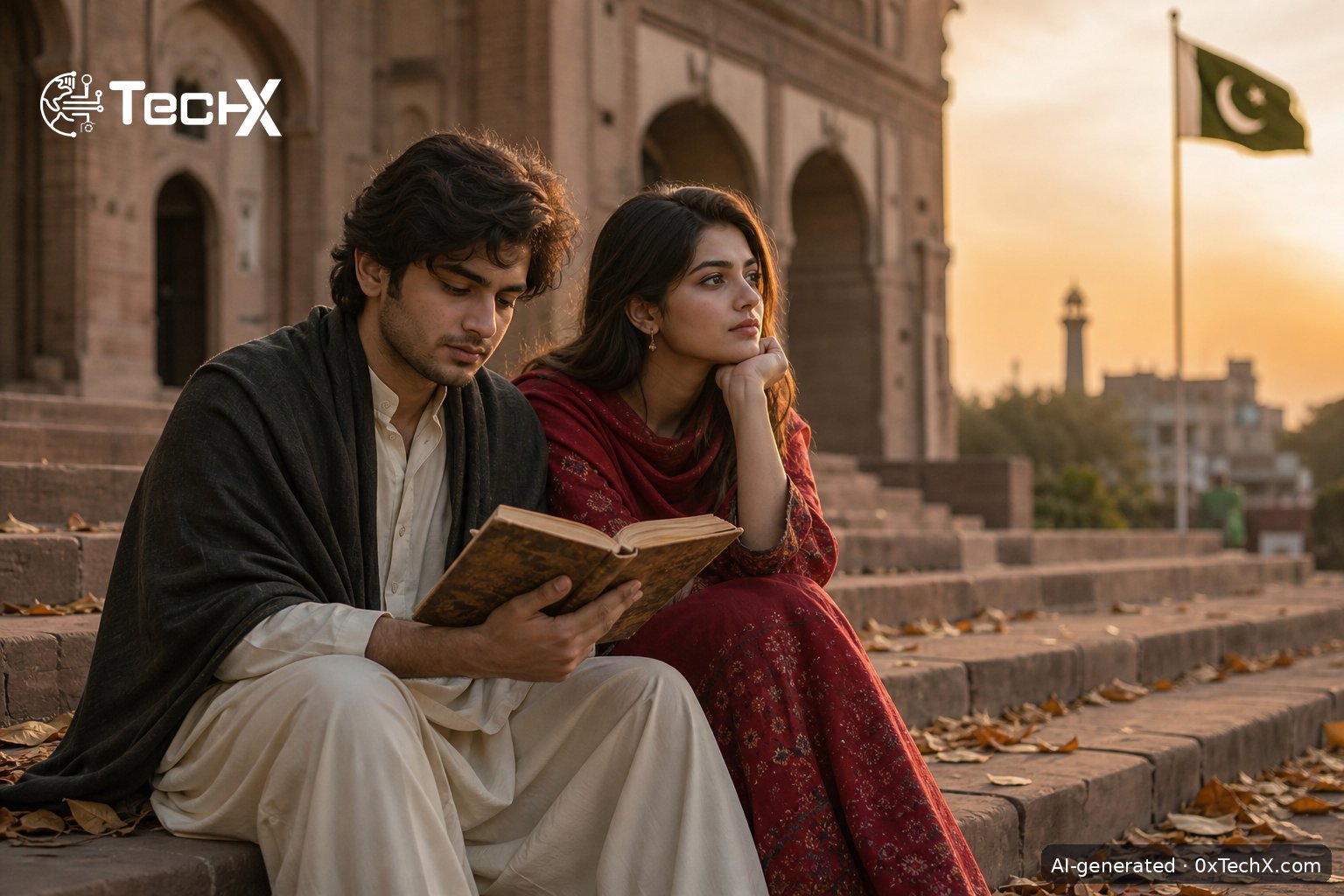
Disclaimer: This article has been compiled from information publicly available on the internet and from published sources. The featured image is AI generated and is for illustration only. If you notice anything that needs correction, please contact us.