
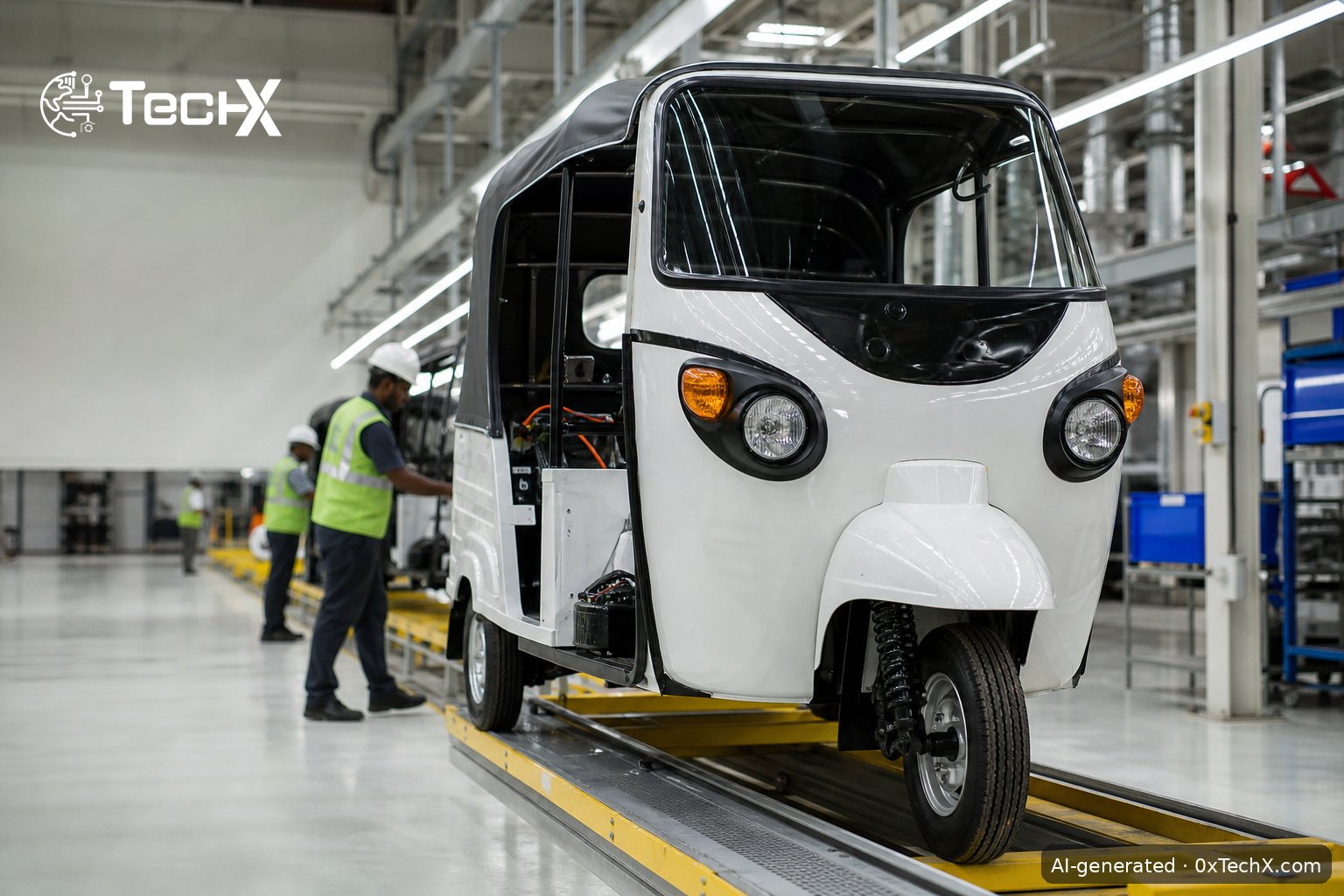
Sazgar Pakistan auto export has reached a new milestone: the Lahore-based three-wheeler maker Sazgar Engineering Works Limited (PSX: SAZEW) has opened its first ever overseas assembly plant, located in Biñan, Laguna in the Philippines. The plant was inaugurated in October 2026 and has an annual assembly capacity of approximately 12,000 three-wheelers. It was inaugurated by Philippine President Ferdinand Marcos Jr. This is not just a company milestone. It is one of the clearest signs yet that a Pakistani manufacturer can compete and build abroad.
What Sazgar Pakistan Auto Export Looks Like on the Ground
The facility in Laguna province is designed to assemble approximately 12,000 three-wheeled vehicles annually, covering both electric and internal combustion engine models. Of that planned output, the production mix will initially comprise 60 per cent electric rickshaws and 40 per cent conventional engine-powered models. That split matters: the Philippines is pushing cleaner transport, and Sazgar’s electric three-wheelers fit that goal well.
Philippine President Marcos highlighted that the plant’s electric three-wheelers can cover between 100 and 210 kilometres on a single charge. That range is competitive with many affordable EVs in the region and should make the vehicles attractive to Filipino tricycle operators who worry about running costs.
The plant is 60 per cent Filipino-owned and will serve as Sazgar’s regional hub for Southeast Asia. That ownership structure is smart: it gives the venture local credibility, reduces political risk, and opens doors to Filipino supplier networks for parts like batteries, rubber, and lubricants.
Pakistan Embassy Helped Make It Happen
The Pakistan Embassy in the Philippines announced the development through a post on social media platform X, stating that Pakistani-made three-wheelers had officially entered the Philippine market. Pakistan’s Ambassador to the Philippines, Dr. Asima Rabbani, congratulated Sazgar Engineering Works on the achievement. The embassy’s active role is a good example of how diplomatic missions can support real trade, not just exchange pleasantries.
The plant is also expected to create employment opportunities for Filipino workers and business opportunities for local suppliers, including those involved in battery-related components, rubber, and lubricants. This local job creation gives the project political support inside the Philippines and makes it harder to dislodge in the years ahead.
Who Is Sazgar and Why Does This Win Matter?
Sazgar Engineering is recognised as one of Pakistan’s largest rickshaw manufacturers, with manufacturing plants in Lahore. As of February 2026, Sazgar holds approximately a 30 per cent share of the Pakistani rickshaw market, producing around 3,350 units monthly. That domestic dominance gave the company the cash flow and engineering know-how to push outward.
Historically, the company has exported three-wheelers to Japan, Ethiopia, Qatar, Dubai, Mauritania, and Afghanistan. In 2024, Sazgar exported its three-wheelers to Japan, Liberia, Tanzania, and Afghanistan. The Philippines plant, however, is a different level of commitment. Exporting finished vehicles is one thing; setting up an overseas assembly line is quite another. It means Sazgar believes the Southeast Asian market is big enough to justify long-term capital spending.
In September 2025, Sazgar announced plans to expand into new export markets, specifically targeting the Philippines, Mexico, and Afghanistan, as part of its strategy to strengthen growth and diversify revenues. The Philippines plant shows that at least one of those three targets has moved from plan to reality in just over a year. Mexico and Afghanistan may follow.
A Bright Spot in Pakistan’s Broader Auto Export Picture
Production of two- and three-wheelers in Pakistan rose 31.4 per cent to 1.43 million units during July to March of financial year 2026. Sazgar’s overseas plant is the logical next chapter of that growth: when domestic production scales up, the best manufacturers start looking outward for new buyers.
With a reported range of 100 to 210 kilometres on a single charge, Sazgar’s electric three-wheelers fit neatly into Pakistan’s New Energy Vehicles Policy, which aims for new-energy vehicles to account for 30 per cent of all new vehicle sales by 2030. So the same product line serving Southeast Asia also helps Pakistan hit its own clean transport targets at home.
This kind of industrial export win also fits squarely into broader efforts to grow Pakistan’s non-traditional exports. Punjab’s PIVOT Plan targets a further $6.8 billion in exports by 2029, and physical manufacturing wins like Sazgar’s show that the ambition is not purely digital. Pakistani factories can reach global markets too.
For investors watching SAZEW on the Pakistan Stock Exchange, the Philippines plant signals that management is serious about international growth. An overseas assembly footprint diversifies revenue away from a single domestic market and opens the company to regional demand cycles that do not always move in the same direction as Pakistan’s economy.
Frequently Asked Questions
What did Sazgar open in the Philippines?
Sazgar Engineering Works Limited inaugurated its manufacturing plant in the Philippines, marking the Pakistani automaker’s expansion into Southeast Asia and strengthening its international manufacturing footprint. The plant is in Biñan, Laguna province.
How many vehicles will the Philippines plant make each year?
The plant has an annual capacity of 12,000 petrol and electric three-wheelers. Initially, about 60 per cent of output will be electric models and 40 per cent will be petrol-powered.
Who inaugurated the Sazgar plant in the Philippines?
Philippine President Ferdinand R. Marcos Jr. inaugurated the company’s new assembly facility in Biñan, Laguna. The Pakistan Embassy in Manila facilitated the deal.
Has Sazgar exported vehicles before?
Yes. Historically, the company has exported three-wheelers to Japan, Ethiopia, Qatar, Dubai, Mauritania, and Afghanistan. In 2024, export destinations included Japan, Liberia, Tanzania, and Afghanistan. The Philippines plant is the first time the company has set up an overseas assembly line rather than simply shipping finished vehicles. You can read more about Pakistan’s electric vehicle manufacturing momentum in our coverage of the NEVO Hunter REEV rolling off its Karachi line.