
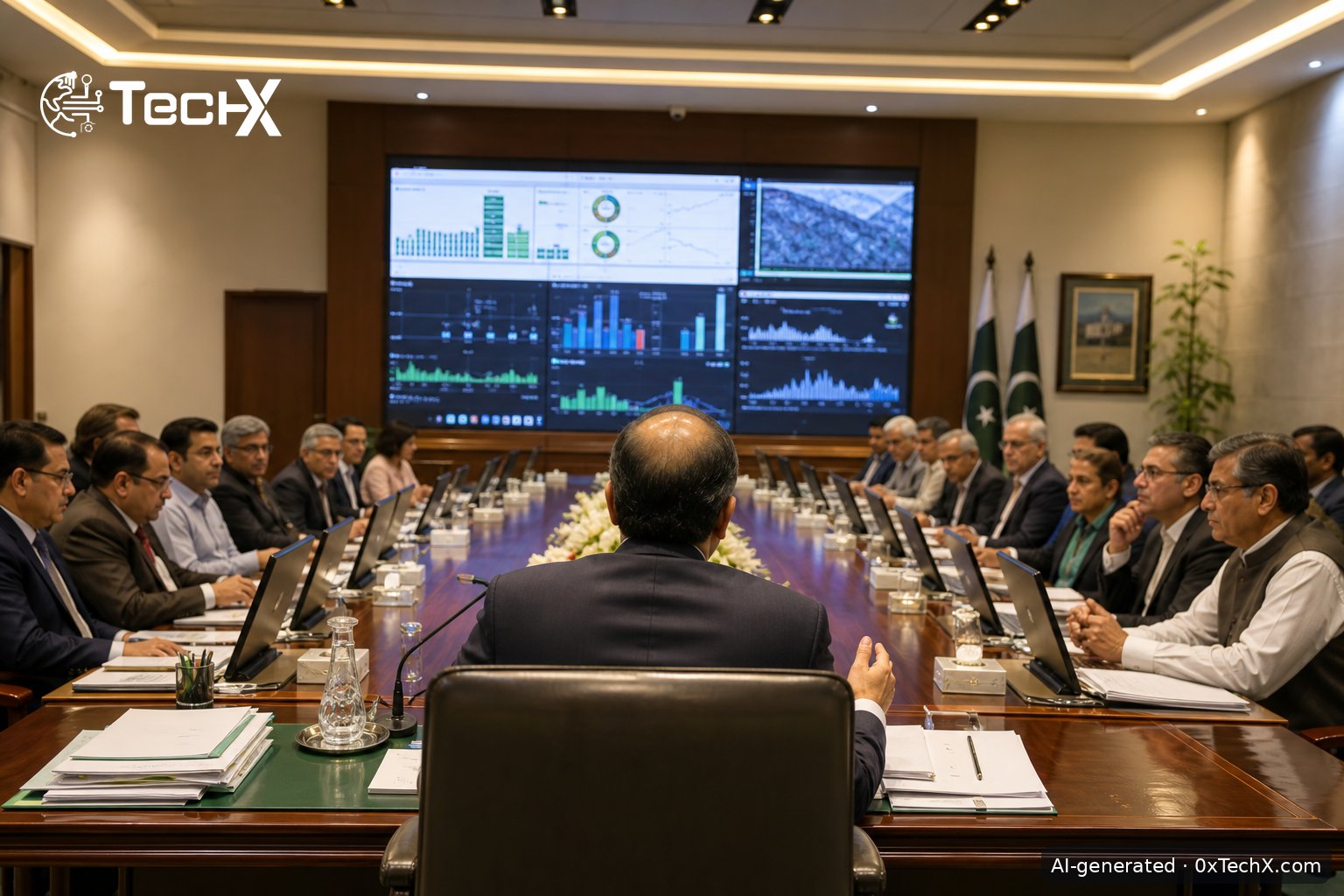
Alibaba AI projects in Pakistan now have a firm government deadline. Prime Minister Shehbaz Sharif chaired a review meeting in Islamabad on 28 October 2026 and told all relevant ministries to wrap up their necessary steps under the Pakistan-Alibaba partnership by November, with written progress reports to follow. The meeting covered everything from AI-powered cancer detection to digital platforms for fruit exports and a new analytics system for fuel supply chains.
Why PM Shehbaz called this review meeting
An MoU was signed with Alibaba Group at its Hangzhou headquarters during the PM’s visit to China, with AI and digitisation described as central to national development. Since then, progress has been uneven. The projects are at different stages, with some systems already operational and others still being developed or considered as pilots. That gap between signed agreements and real delivery is what pushed the PM to call a formal review and put a hard date on completion.
Chairing the meeting, the prime minister stressed that the effective use of AI and modern technology was essential to improving trade, exports, agricultural productivity, business facilitation and public services. He also made clear he wants accountability, not just activity. All projects under the partnership should be implemented with clear targets, timelines and effective monitoring, and ministries must submit a progress report after completing the required measures by November.
What the Alibaba AI projects actually cover
This is not a single project. It is a broad basket of initiatives touching health, farming, trade and taxation. Here is what is on the table.
Digital exports and SME access
Agreements signed during the PM’s Hangzhou visit envisaged digital transformation and support for at least 2,000 Pakistani small and medium enterprises accessing international markets. To back this up practically, a two-year programme with the Small and Medium Enterprises Development Authority (SMEDA) and Alibaba is being launched to help small businesses access international markets, training and e-commerce opportunities.
The meeting was also briefed on a dedicated Pakistan Pavilion on Alibaba’s platform to promote local products in international markets, as well as digital platforms for exporting Pakistani citrus and olive products. On the trade paperwork side, a trade-document verification system is already operating through Pakistan Single Window, making it one of the few deliverables that is genuinely live right now.
For Pakistani businesses trying to reach global buyers, these tools matter. You can learn more about how Pakistan is pushing digital upgrades across government in our article on Pakistan’s 10 digital government services getting a big upgrade.
AI in health and cancer detection
The PM directed the early implementation of an AI-assisted cancer detection system in collaboration with Alibaba Group. At the moment this remains a proposed pilot, but the government wants it moved into active rollout quickly. Early detection technology powered by AI can meaningfully cut delays in diagnosis, which is a real problem in Pakistan’s public health system.
Fuel supply chain monitoring with OGRA
The PM directed the Oil and Gas Regulatory Authority (OGRA) to introduce an analytics system, in partnership with Alibaba Group, to monitor the petroleum products supply chain. OGRA is being equipped with AI and business intelligence tools to analyse fuel supply chain data. This matters for ordinary Pakistanis because fuel adulteration and supply-chain leakages drive up prices at the pump. A real-time monitoring system could help regulators catch problems faster.
Agriculture, tobacco and farming automation
The meeting was briefed on progress in several areas including AI-based agricultural models, tobacco track-and-trace technology and digital platforms for citrus fruit and olive exports. The PM welcomed Alibaba’s cooperation in promoting Pakistani agricultural exports to Chinese markets and called for modernising the agriculture sector through automation.
FBR data hub and AI training for graduates
The meeting reviewed progress on a central data hub for the Federal Board of Revenue (FBR) and Pakistan Revenue Automation (PRAL). A modern data platform here could improve tax collection and reduce fraud. Separately, the PM directed authorities to expedite the launch of an AI training programme for IT graduates under the Ministry of Information Technology’s Ignite programme in collaboration with Alibaba, with the programme providing 15-day training. This is a direct opportunity for young Pakistani tech graduates to gain certified AI skills backed by one of the world’s largest cloud and e-commerce companies. Digital and AI initiatives in higher education, railways, postal services and urban management are also nearing completion.
The bigger picture for Pakistan
The cooperation expands Pakistan’s technology ties with China beyond their longstanding partnership in energy and transport infrastructure. For a country that has long relied on textiles as its export backbone, digitising trade channels and giving SMEs direct access to a platform like Alibaba is a genuine structural shift, if the projects actually land on time.
The November deadline is tight, and the PM’s own words signal he knows delivery has been slow. The accountability mechanism he has put in place, requiring written progress reports from each ministry, is the detail most other coverage has glossed over. It means each ministry now has something on paper to answer for, which is different from a general commitment. Pakistan’s AI Hackathon earlier in 2026, which Alibaba Cloud supported, showed there is no shortage of local AI talent. The question now is whether government systems can move fast enough to meet the PM’s schedule.
Frequently Asked Questions
What is the November deadline about?
PM Shehbaz Sharif has told all relevant ministries to complete their required steps under Pakistan’s partnership with Alibaba Group by November 2026. Each ministry must also submit a written progress report once its measures are done.
Which sectors do the Alibaba AI projects cover?
The projects span exports and e-commerce for SMEs, AI-assisted cancer detection, fuel supply-chain monitoring through OGRA, agricultural automation and digital export platforms for crops like citrus and olives, a data hub for FBR and PRAL, and a 15-day AI training programme for IT graduates.
Are any of these projects already working?
Yes. A digital trade-document verification system is already live through Pakistan Single Window. Most other projects, including the cancer detection pilot and OGRA analytics system, are still in development or awaiting final approvals.
How does this affect Pakistani SMEs?
A two-year joint programme between SMEDA and Alibaba aims to help at least 2,000 small and medium businesses access international markets through e-commerce, training and a dedicated Pakistan Pavilion on Alibaba’s platform. This could open export channels that were previously out of reach for smaller traders.