
A Date Every Pakistani Knows by Heart
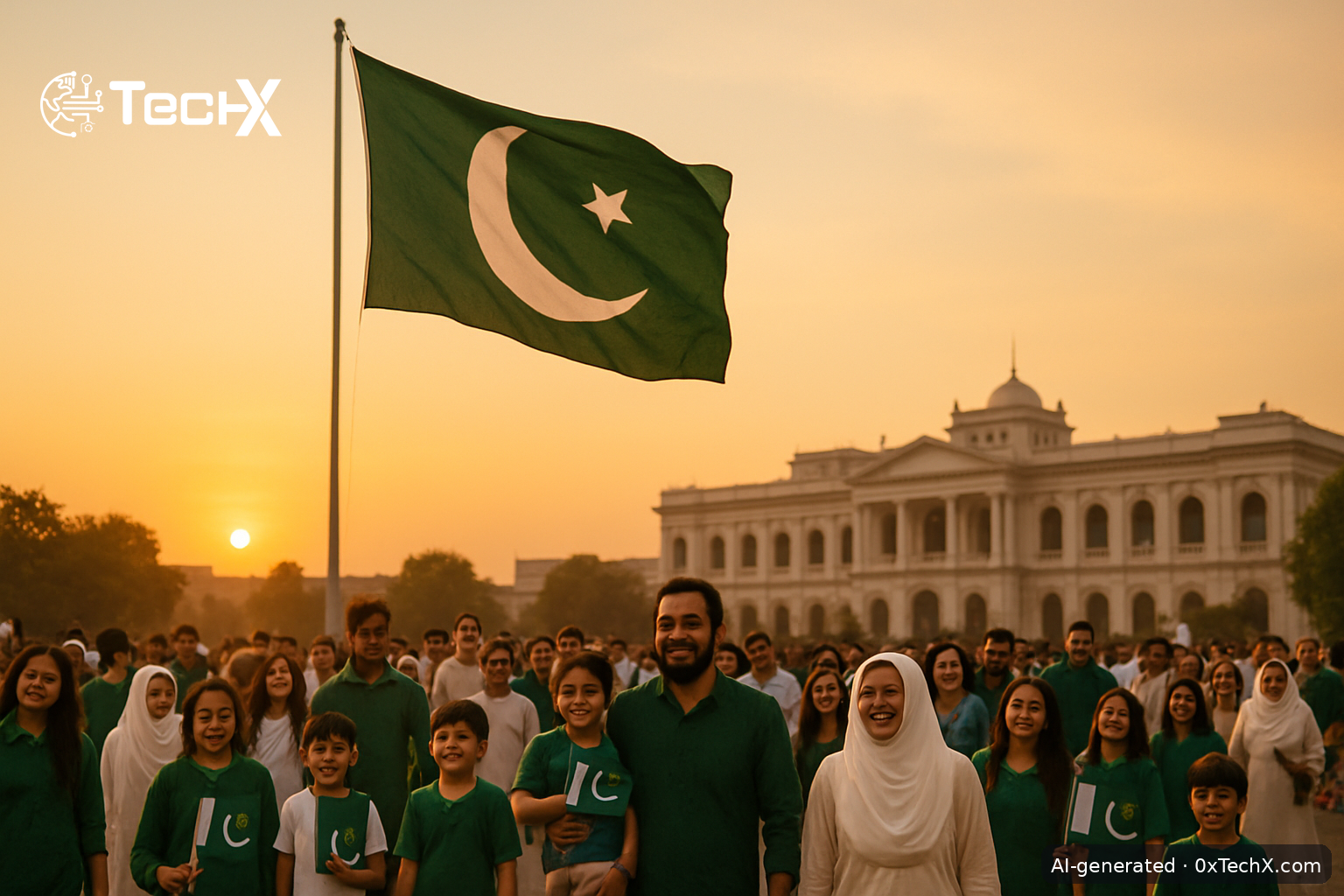
Every year on the 14th of August, the green-and-white flag goes up on buildings across the country, children wear green ribbons, and the air fills with the sound of Pakistan Zindabad. Pakistan Independence Day is more than a public holiday, it is the birthday of a nation that millions of people gave everything to build. But how exactly did Pakistan come to exist? What was the long road that led to that historic morning in 1947? Let us walk through it together, simply and clearly.
Life Under British Rule
To understand Pakistan Independence Day, you have to go back well before 1947. The British had been ruling the Indian subcontinent for roughly two centuries. British rule in the subcontinent began in 1757 when the British East India Company started exercising control over the region. The East India Company ruled for about 100 years until it was replaced by direct British rule, the British Raj, after the Indian Rebellion of 1857.
Over the decades that followed, people across the subcontinent grew increasingly unhappy with colonial control. A series of rising social pressures and events came together into what is known as the Indian independence movement, which saw various groups, including Muslims, Hindus, and Sikhs, fighting for the right to self-rule. However, those different communities did not always agree on what a free subcontinent should look like.
The Muslim League and the Demand for a Separate Home
Pakistan Independence Day commemorates the creation of Pakistan as a homeland for Muslims of the Indian subcontinent, a cause championed by Mohammed Ali Jinnah and the All-India Muslim League.
The demand for a separate homeland for Muslims was based on the principle of safeguarding their religious, cultural, and political rights. At the heart of this movement was one remarkable man. Quaid-e-Azam Muhammad Ali Jinnah played a pivotal role in leading the Pakistan movement. As the leader of the All India Muslim League from 1913, he came to believe that Hindus and Muslims constituted two distinct nations and could not live together in an independent, united India.
What is interesting is that Jinnah did not always hold this position. Originally, Quaid-e-Azam was not in favour of a new Muslim state. From 1909 to 1921, Muhammad Ali Jinnah remained a part of both the Muslim League and the Congress. He left the latter in 1921 but still believed that Hindus and Muslims could cooperate. It was only after he saw that Muslim political rights could not be properly protected within a united India that he committed fully to the idea of a separate state.
The Lahore Resolution of 1940: The Moment Everything Changed
The Lahore Resolution of 1940, also known as the Pakistan Resolution, was a pivotal moment in this struggle, formally articulating the demand for an independent state. This resolution laid the foundation for a separate Muslim state, reflecting the Muslim League’s concerns about political marginalisation in a Hindu-majority India.
Jinnah’s leadership led to the passing of the Lahore Resolution in 1940, which called for independent states for Muslims. After March 1940, the movement had a clear, formal goal: a sovereign homeland named Pakistan. The seven years that followed were intense, negotiations, elections, and rising tensions across the subcontinent all pushed toward an inevitable conclusion.
The Final Steps Toward Freedom
In the aftermath of World War II, Britain’s financial constraints made it increasingly difficult to continue ruling India. The urge for self-governance also surged, setting the stage for the partition. In 1947, the last British viceroy, Lord Mountbatten, accelerated the process, aiming to grant India its independence as quickly as possible.
Lord Louis Mountbatten assumed the role of the last viceroy on 24 March 1947. He announced the Partition Plan on 3 June 1947, declaring that the British had decided to transfer power to the Indian and Pakistani governments by mid-August 1947. The Indian Independence Act of 1947 was then passed by the British Parliament, setting the date for independence as 15 August 1947.
However, Pakistan chose to celebrate its independence on 14 August 1947, as the transfer of power took place during the day in Karachi, while India’s transfer occurred at midnight in New Delhi. In Karachi, the Constituent Assembly met for its first session on 14 August. Muhammad Ali Jinnah, now Governor-General of Pakistan, addressed the assembly, emphasising the challenges ahead and the necessity of tolerance and law.
The Birth of Pakistan, and Its Painful Cost
The new national flag, green with a white vertical stripe and a crescent and star, was raised. Streets were decorated, processions held, and slogans of “Pakistan Zindabad” filled the air. Radio Pakistan broadcast patriotic speeches and music, marking the new nation’s birth to the world.
But independence also came with tremendous pain. While 14 August was a day of national pride, it was also overshadowed by one of the largest and most tragic mass migrations in history. The hurried drawing of boundaries left millions uncertain about which side of the border they would fall on. Punjab and Bengal were divided, uprooting communities overnight. An estimated 10, 15 million people crossed borders, Hindus and Sikhs moving toward India, Muslims toward Pakistan, and the migration was accompanied by terrible violence that claimed up to a million lives.
As the first Governor-General of Pakistan, Jinnah led efforts to lay the foundations of the new state, frame national policies, and rehabilitate millions of Muslim refugees who had migrated from India. The new country faced enormous challenges from its very first day, but it stood.
Why Pakistan Independence Day Still Matters Today
Independence Day is not only a reminder of the struggles and sacrifices made by countless individuals but also a celebration of the nation’s identity, culture, and aspirations. When we raise the flag on 14 August, we are honouring every person who marched, who voted, who migrated, and who built something new out of nothing.
In today’s Pakistan, Independence Day has also taken on a modern dimension. Young Pakistanis celebrate online, social media fills with green-and-white filters, documentary clips, and national songs. Pakistani tech startups, artists, and creators use the day to showcase what the country has achieved in 78 years: from a fledgling state with no established capital to a nation of over 240 million people with a growing digital economy, a young population, and enormous potential. The dream that Jinnah spoke of on that first 14 August, of a country built on law, tolerance, and hard work, is still very much alive in the hands of this generation.
Frequently Asked Questions About Pakistan Independence Day
Why does Pakistan celebrate Independence Day on 14 August and not 15 August?
Pakistan chose to celebrate its independence on 14 August 1947 because the transfer of power took place during the day in Karachi, while India’s transfer occurred at midnight in New Delhi. Because the transfer of power took place at midnight between 14 and 15 August, some documents originally recognised Pakistan’s Independence Day as 15 August. The following year, however, the date was officially set as 14 August, and it has continued that way ever since.
What was the Lahore Resolution and why was it important?
The Lahore Resolution of 1940, also known as the Pakistan Resolution, was a pivotal moment in the struggle for independence, formally articulating the demand for an independent state. It was the first major official declaration by the All-India Muslim League that Muslims of the subcontinent needed a separate sovereign homeland, and it gave the Pakistan movement a clear political direction for the seven years that followed.
Who was Pakistan’s first Governor-General?
On 14 August 1947, Muhammad Ali Jinnah was sworn in as the first Governor-General of Pakistan. He is revered as the Quaid-e-Azam, the “Great Leader”, and is the founding father of the nation. As the first Governor-General, Jinnah led efforts to lay the foundations of the new state of Pakistan, frame national policies, and rehabilitate millions of Muslim refugees who had migrated from India.
What originally happened to East Pakistan?
Originally, Pakistan was divided into two states: East Pakistan and West Pakistan. Eventually, East Pakistan became Bangladesh in 1971, and West Pakistan is now simply called Pakistan.
A Hopeful Look Forward
Pakistan’s story did not end on 14 August 1947, it began. Every generation has added its own chapter: rebuilding after partition, surviving natural disasters, producing Nobel laureates and Olympic champions, launching satellites, and building one of the world’s fastest-growing tech sectors. The sacrifices of those who came before us were not made so that we would simply remember them, they were made so that we would build on them.
This Pakistan Independence Day, as the flag goes up and the national anthem plays, take a moment to think about what an extraordinary thing it is to have a home. Then think about what you will do to make it better. That is the truest way to honour the dream of 14 August 1947. Pakistan Zindabad.