

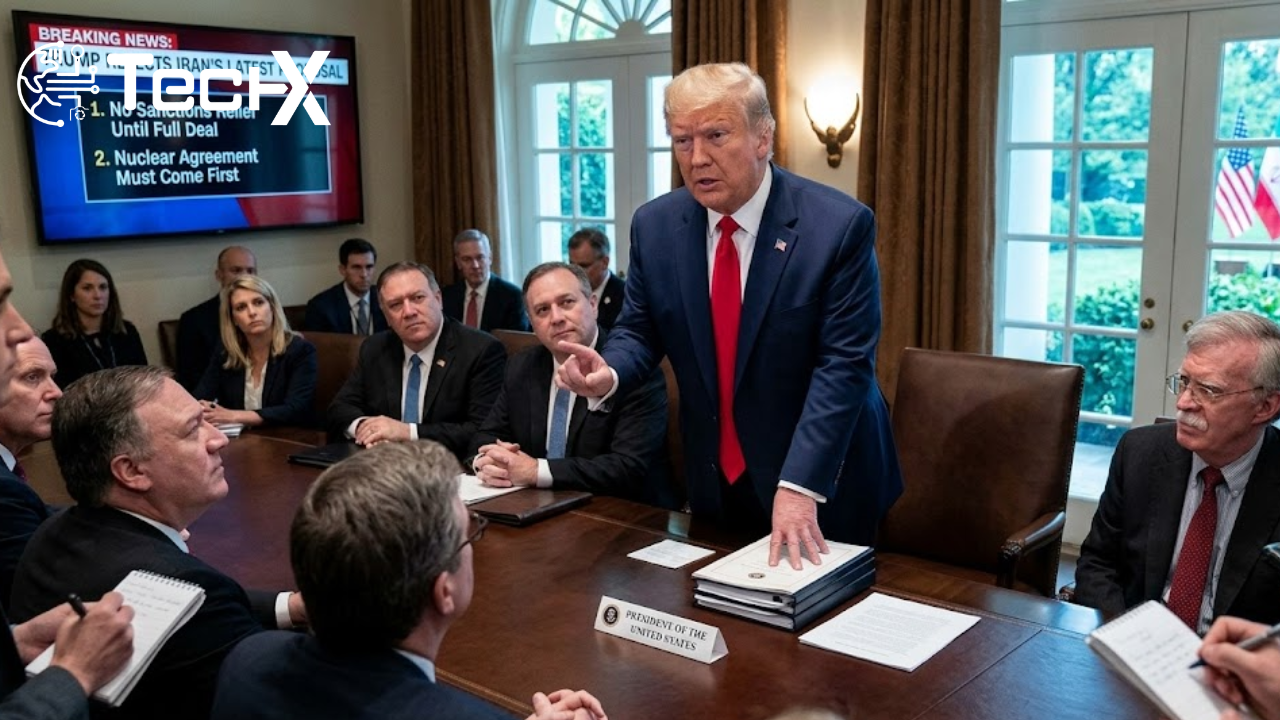
Recent geopolitical developments between United States and Iran have escalated after U.S. President Donald Trump rejected Iran’s latest diplomatic proposal. The proposal was aimed at easing certain pressure measures in exchange for progress on negotiations, but it was not accepted under current terms.
U.S. Position on Nuclear Agreement
Trump’s stance remains that any relaxation of economic or strategic pressure must come only after a comprehensive nuclear agreement is reached. He emphasized that partial or phased arrangements would not be sufficient and that a complete resolution of nuclear-related concerns is necessary before any policy shift.
Iran Proposal and Response
Iran reportedly suggested a more flexible or step-by-step approach to negotiations, where certain conditions could be eased in phases. However, this proposal was rejected by the U.S. side, which insists on a full and final agreement as a precondition for any easing of restrictions.
Ongoing Regional Tensions
The disagreement highlights continuing tensions between the two countries, particularly regarding nuclear capabilities and regional influence. Issues such as sanctions, maritime security, and strategic control in the Middle East continue to influence diplomatic relations.
Global Diplomatic Implications
This development has broader implications for global stability, as nuclear negotiations involving Iran are closely monitored by international powers and organizations such as the International Atomic Energy Agency. Any breakdown in talks could further increase uncertainty in global energy and security markets.
Conclusion
In conclusion, the rejection of Iran proposal by Donald Trump reflects the ongoing hardline U.S. position that prioritizes a full nuclear agreement before any easing of pressure measures. The situation remains part of a broader and evolving geopolitical dispute between United States and Iran.