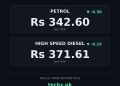

in a significant move to provide relief to the inflation-hit public, Prime Minister Shehbaz Sharif has announced a massive reduction in fuel prices, effective from April 11, 2026. The most notable change is in the price of High-Speed Diesel (HSD), which has been slashed by an unprecedented Rs. 135 per litre. Additionally, the price of Petrol has been reduced by Rs. 12 per litre, further easing the burden on commuters and transporters.
Revised Rates for Petrol and Diesel
According to the official notification issued by the Petroleum Division:
-
High-Speed Diesel: The price has reportedly dropped from Rs. 520.35 to Rs. 385.54 per litre (a decrease of Rs. 134.81).
-
Petrol (Motor Spirit): The new price is reportedly Rs. 366.58 per litre, down from Rs. 378.41 (a decrease of Rs. 11.83).
-
Kerosene and LDO: Kerosene oil has been reduced by Rs. 17.33, while Light Diesel Oil (LDO) saw a cut of Rs. 25.31.
Impact on Agriculture and Transport Sectors
Reportedly, the steep reduction in diesel prices is strategically timed with the wheat harvesting season. Farmers, who rely heavily on diesel for tractors and machinery, are expected to benefit immensely from this cut, potentially leading to lower food production costs. Furthermore, the transport industry is expected to reduce freight and public transport fares, which would have a cascading effect on the prices of daily essential commodities.
Reasons for the Price Drop
Reportedly, the Prime Minister attributed this relief to the cooling of international oil markets and the successful diplomatic efforts in Islamabad. The recent US-Iran ceasefire and the progress made during the ongoing Islamabad Peace Talks have reportedly stabilized global energy supplies, particularly through the Strait of Hormuz. PM Shehbaz Sharif reportedly stated that he rejected a proposal to use these savings for government expenditure, insisting that the full benefit must be passed on to the common man.
Continued Subsidies and Economic Stability
Despite the overall price cut, the government has reportedly confirmed that the targeted fuel subsidy for motorcyclists and public transporters (up to Rs. 100 per litre for eligible users) will remain in place. This move is seen as a part of a broader economic stabilization plan to curb inflation, which had reached record highs in early April. The government reportedly spent over Rs. 129 billion recently to cushion the impact of high global oil prices before this relief could be materialized.
Implementation and Public Reaction
The new prices became effective at midnight on April 11, 2026, and district administrations across Sindh, Punjab, and other provinces have been directed to ensure the new rates are displayed at all petrol pumps. While the public has reportedly welcomed this “biggest-ever” single-day reduction in diesel prices, business analysts suggest that the long-term sustainability of these rates depends on the final outcome of the Islamabad Accord and continued stability in the Middle East.