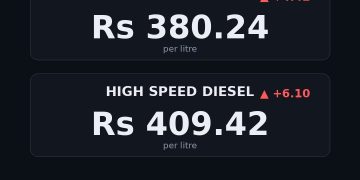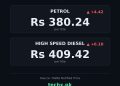

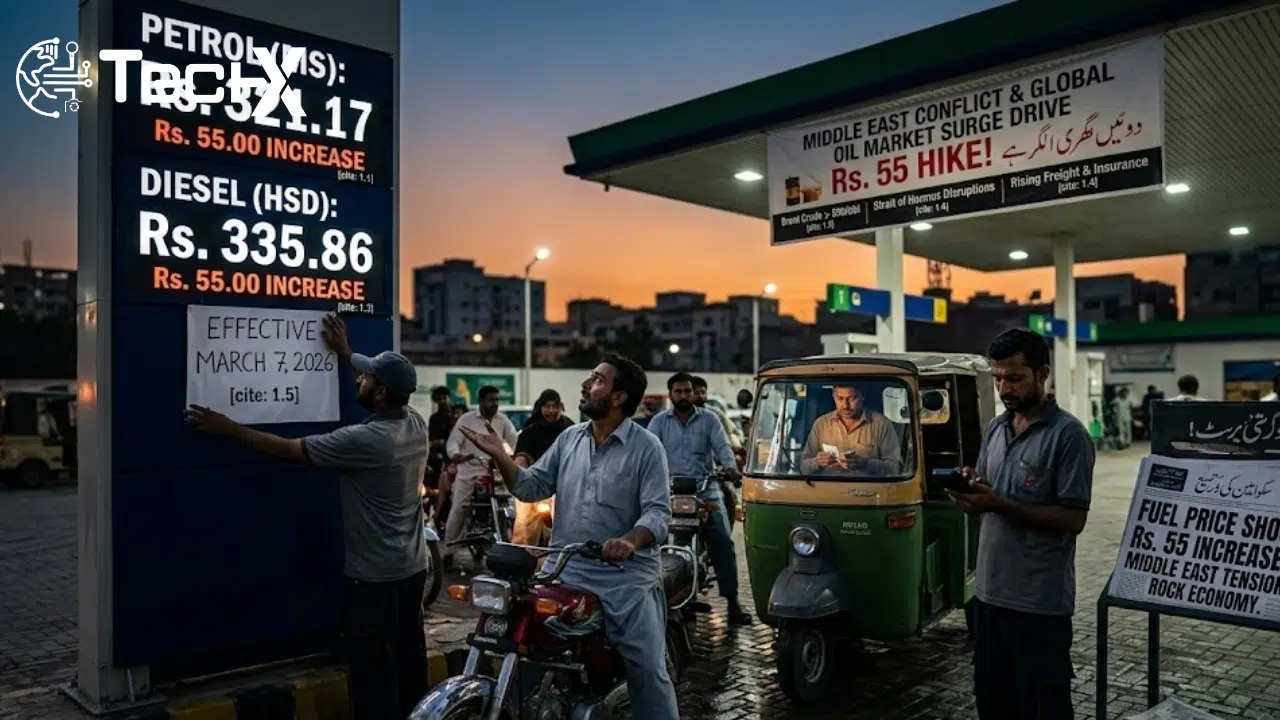
The government has announced a Rs. 55 per litre increase in domestic fuel prices, pushing petrol (MS) to Rs. 321.17 per litre and high-speed diesel (HSD) to Rs. 335.86 per litre. This adjustment comes amid a sharp rise in international oil prices and escalating tensions in the Middle East, affecting energy-dependent economies like Pakistan.
Price Breakdown for Petrol and Diesel
According to data from Arif Habib Limited, the ex-refinery price of petrol increased by Rs. 36.29 per litre, while the petroleum levy rose by Rs. 20.97, totaling Rs. 105.37 per litre. For diesel, the ex-refinery price surged Rs. 78.24 per litre, though the petroleum levy was reduced by Rs. 20.97 to Rs. 55.24 per litre. Overall, both fuels saw a net increase of Rs. 55 per litre.
Impact of Global Oil Market
The price hike is driven by disruptions in international oil markets following the ongoing conflict involving Iran, Israel, and the United States. These tensions have led to a surge in crude oil prices, with Brent crude exceeding $90 per barrel, directly influencing domestic fuel rates.
Rising Shipping and Insurance Costs
In addition to crude price increases, freight rates for oil shipments have surged sharply. Tankers operating in the region face elevated insurance premiums due to heightened security risks, further contributing to higher import costs for oil-importing countries like Pakistan.
Strait of Hormuz Concerns
The conflict has also disrupted traffic through the Strait of Hormuz, a vital corridor through which nearly 20% of global oil supply passes. Any prolonged disruption in this region raises concerns about oil shortages, higher international prices, and the potential impact on Pakistan’s domestic fuel market.
Outlook and Effective Date
Officials confirmed that the new fuel prices took effect on March 7, 2026. Further adjustments will depend on global oil market trends and the evolving security situation in the Middle East, making monitoring of international developments crucial for energy pricing in Pakistan