
The Zoox robotaxi recall made global headlines this week after Amazon’s self-driving car unit admitted that its vehicles could not reliably detect heavy smoke, a problem that sent one driverless car rolling into an active fire scene in Las Vegas. It is a sobering moment for the entire autonomous vehicle industry, and one that countries watching this technology from a distance, including Pakistan, should pay close attention to.
What Happened in Las Vegas on June 20
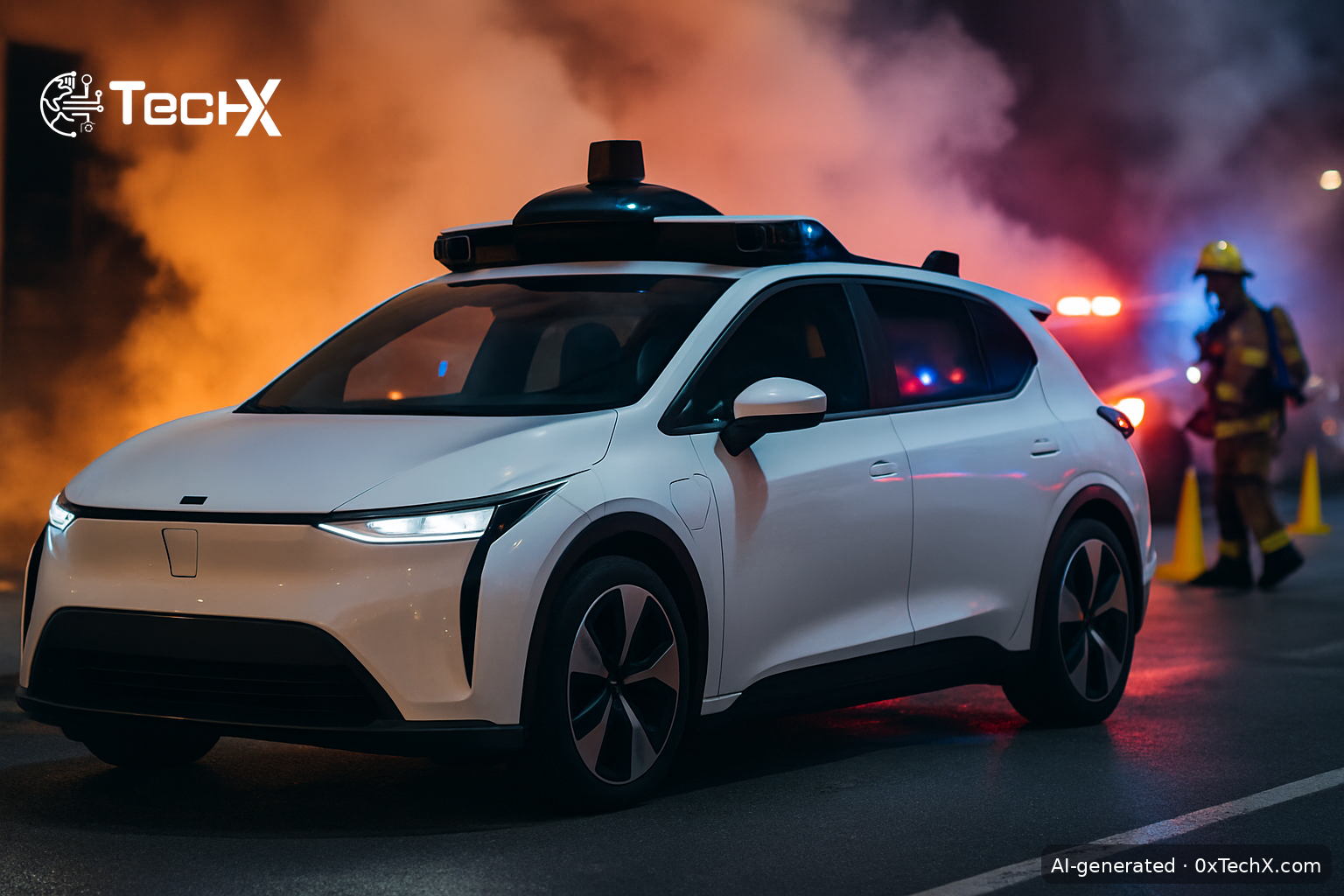
The incident was caught in real time. On June 20, 2026, an unoccupied Zoox robotaxi was driving through Las Vegas when it came upon a road covered in thick smoke from an active fire nearby. The emergency area had not yet been closed off with traffic cones.
Instead of stopping safely at a distance, the vehicle entered the smoke-covered zone. It did eventually brake hard and tried to steer away, but it took a remote human operator to step in and reverse the car out of the scene. Only after that did first responders place traffic cones to block the area.
The key detail: no passengers were on board, and no one was hurt. But the image of a driverless car blundering into an active emergency scene was impossible to ignore.
The Zoox Robotaxi Recall by the Numbers
- 105 vehicles covered by the recall, the entire Zoox fleet operating on public roads
- Recall filed with the US National Highway Traffic Safety Administration (NHTSA) on July 8, 2026
- Made public on July 17, 2026
- Software affected: versions deployed between April 23 and July 15, 2026
- Fix method: over-the-air software update, no workshop visit needed
The NHTSA recall report stated that the software flaw means that in certain situations, a Zoox vehicle may not detect and respond to heavy smoke, especially near active emergency scenes. That poses a risk of a crash or of blocking first responders who need a clear path.
How Zoox Fixed It (and What the Fix Actually Does)
Zoox pushed a software update wirelessly to all 105 affected vehicles. The update strengthens the robotaxi’s ability to spot dense smoke, identify active emergency scenes faster, and make safer choices when visibility drops sharply. No driver or technician visit was needed, the cars simply downloaded the patch.
That over-the-air fix is one real advantage self-driving platforms have over traditional cars. A mechanical brake defect can take months to repair across a fleet. A software patch can reach every vehicle within hours.
Still, the fix only exists because the problem was discovered the hard way, in a real street situation, not a test lab.
This Is Not Zoox’s First Recall
This Zoox robotaxi recall is not an isolated event. The company has now had multiple safety actions in a little over a year. In March 2025, Zoox recalled 258 vehicles over unexpected hard braking after an NHTSA investigation. Then in May 2025, two more recalls followed, one after a collision with a passenger car, and another after a Zoox vehicle was struck by an e-scooter rider. Last year also saw recalls over lane-crossing problems and failures to predict the movement of nearby vehicles and pedestrians.
That track record matters. Each recall is voluntary and shows the company is at least transparent about its problems. But the pattern also shows that deploying robotaxis on busy public roads keeps producing surprises that lab testing never found.
The Bigger Picture: An Industry-Wide Problem
Zoox is not alone. Alphabet’s Waymo, the dominant robotaxi service in the US with around 4,000 vehicles, recalled roughly 3,900 of its own robotaxis last month after some drove into closed freeway construction zones. Waymo’s cars also reportedly stalled during July 4 fireworks, another example of a real-world edge case catching autonomous systems off guard.
The NHTSA’s own chief, Administrator Jonathan Morrison, sent a blunt letter to all AV companies just days after the Zoox incident, saying the agency had identified a clear pattern of driverless cars driving into emergency scenes, blocking ambulances and firefighters, and failing to recognise smoke, flares, and traffic cones. He called it a functional insufficiency and gave companies until the end of July 2026 to present their solutions.
The regulator’s message was direct: emergency scenes are not rare edge cases. They happen every day in every city. An autonomous vehicle that cannot handle them safely is a danger to the public.
For context on how the broader AI safety picture is shaping up across the tech industry, it is worth reading about the AI Safety Index 2026, which found no major AI lab scoring above a C+ on safety benchmarks, a reminder that safety gaps run deep across the AI sector, not just in robotaxis.
Why Pakistan and the Rest of the World Should Care
Robotaxis are not operating in Pakistan yet. But the global AV industry is moving fast, and decisions being made right now in Las Vegas and San Francisco will shape what arrives in Karachi, Lahore, and Islamabad in the years ahead.
Pakistan’s roads are arguably more chaotic than Las Vegas. Smoke from burning garbage, smog in winter, dust storms in summer, and dense traffic with motorcycles weaving between lanes, these are exactly the kinds of unpredictable conditions that keep tripping up even the most advanced autonomous systems. If a Zoox vehicle could not handle smoke from a single fire scene on a relatively organised American road, the challenge of deploying such vehicles safely on a Karachi road is orders of magnitude greater.
This does not mean the technology will never arrive. It means that any country or city considering autonomous vehicles needs to demand rigorous, locally relevant testing before a single driverless car hits public roads. Regulators everywhere, not just the NHTSA, need clear safety standards, the power to recall defective systems, and the authority to pull vehicles off streets when patterns of failure emerge.
Amazon’s Zoox is still seeking NHTSA approval to operate its robotaxis commercially. Its vehicles have no steering wheel or pedals, which means they need a special exemption under US federal safety rules. Whether that exemption comes, and under what conditions, will set a benchmark that the rest of the world will watch closely.
Frequently Asked Questions
What was the Zoox robotaxi recall about?
Amazon’s Zoox recalled the software on all 105 of its robotaxis after one vehicle failed to detect heavy smoke and drove into an active fire scene in Las Vegas on June 20, 2026. The flaw meant the car could not recognise the danger and stop safely on its own. No one was hurt.
How did Zoox fix the problem?
Zoox sent a software update wirelessly to all 105 affected vehicles. The update improves the system’s ability to detect heavy smoke, identify emergency scenes, and make safer decisions when the road ahead is hard to see. No physical workshop visit was needed.
Has Zoox had safety recalls before?
Yes. Zoox issued a recall in March 2025 for unexpected hard braking, two more recalls in May 2025 after a collision and an e-scooter strike, and several others last year for lane-crossing and vehicle movement prediction issues. The smoke detection recall is the latest in a series.
Does this affect Pakistan or other countries?
Not directly right now, Zoox only operates in a few US cities. But the recall is a signal to the wider world that autonomous vehicles still struggle badly with unpredictable real-world conditions. Countries like Pakistan, where roads are far less structured, should watch these developments closely before considering any local deployment of robotaxi technology.