
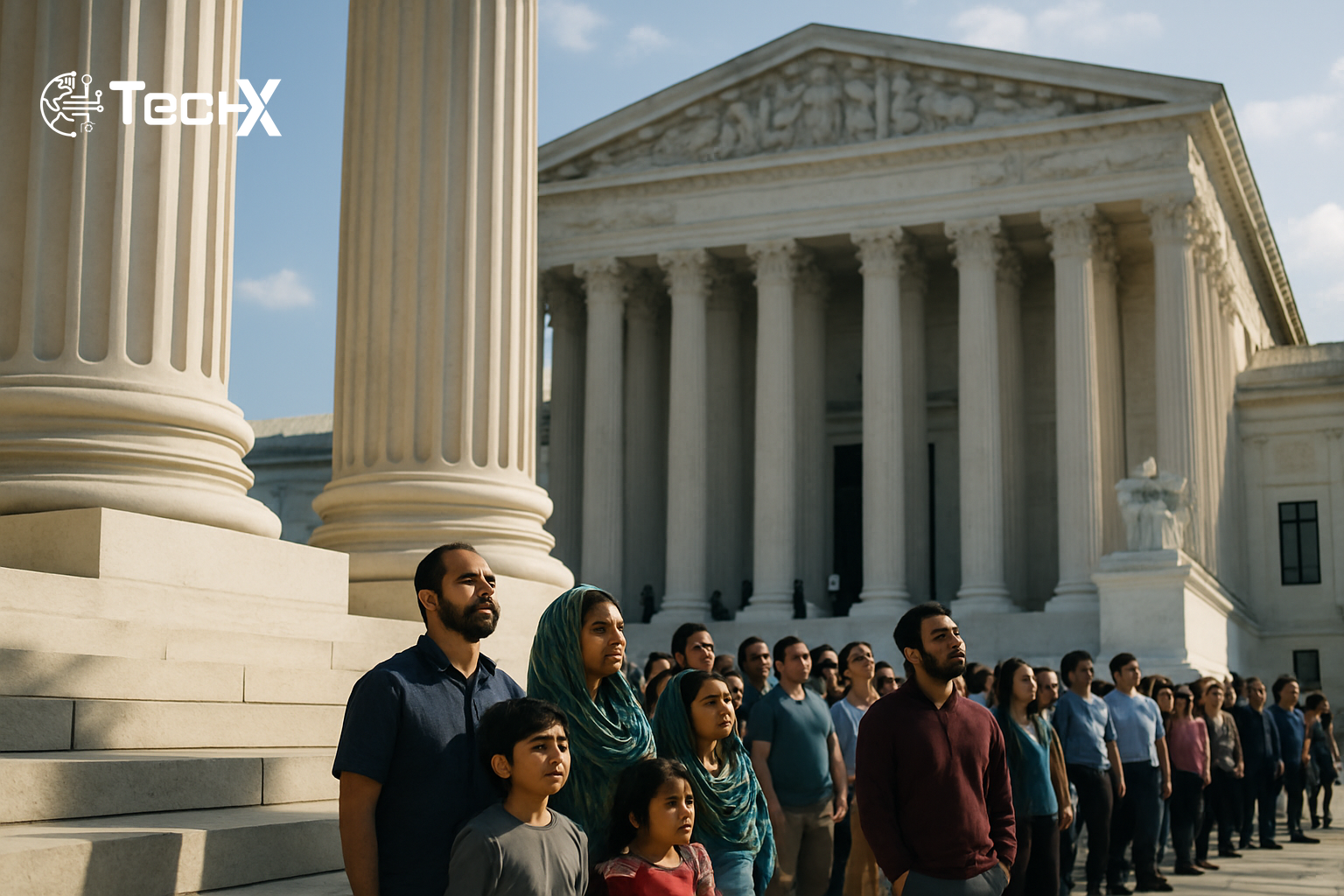
The birthright citizenship ruling issued by the US Supreme Court on June 30, 2026 settled one of the biggest legal battles in recent American history. The court voted 6-3 to strike down President Donald Trump’s executive order that tried to end automatic citizenship for babies born in the United States to non-citizen parents. Any child born on American soil, including babies born to Pakistani parents on student, work, or tourist visas, remains a US citizen from the moment of birth.
What the Birthright Citizenship Ruling Actually Says
Birthright citizenship, also called jus soli (Latin for ‘right of the soil’), means that a baby born in a country automatically becomes a citizen of that country, no matter where its parents come from or what their visa status is. The 14th Amendment, which was ratified in 1868 to address the legal status of former slaves and their descendants, says plainly that all ‘persons born or naturalized in the US and subject to the jurisdiction thereof’ are citizens.
Chief Justice John Roberts, writing for the majority, said that children born to parents who are in the United States unlawfully or temporarily are ‘born in the United States’ and ‘subject to the jurisdiction thereof.’ ‘Under the Constitution, they are citizens at birth,’ Roberts wrote, in an opinion joined by Justices Sonia Sotomayor, Elena Kagan, Ketanji Brown Jackson, and Amy Coney Barrett.
Five justices said the order fell afoul of the Constitution’s 14th Amendment. One justice, conservative Brett Kavanaugh, said the order violated federal law but not the Constitution. The other three conservatives on the court, Clarence Thomas, Samuel Alito, and Neil Gorsuch, all wrote dissenting opinions.
How Trump’s Order Would Have Changed Things
On the first day of his second term, President Trump signed an executive order purporting to end birthright citizenship by redefining the meaning of the 14th Amendment. He claimed that children born to noncitizen parents who are either unlawfully in the country or who possess temporary legal status, such as tourists or foreign students, are not ‘subject to the jurisdiction’ of the US and therefore ineligible.
Under Trump’s proposal, birthright citizenship would have been limited to those with at least one parent who is a US citizen or permanent resident. Babies born to temporary visitors or people who entered the country illegally would not be citizens at birth.
An estimated 255,000 children born every year to noncitizen parents would have lost legal status under the order, according to the Migration Policy Institute. Some may have faced difficulty establishing citizenship in any country, effectively being born as ‘stateless.’
The executive order has never been in effect; lower courts quickly blocked it after Trump signed it. Federal courts repeatedly blocked the administration from implementing the executive order, finding it violates the Constitution, over a century of Supreme Court precedent, and a longstanding federal statute.
What This Birthright Citizenship Ruling Means for Pakistani Families
There are hundreds of thousands of Pakistanis living in the United States, many on H-1B work visas, F-1 student visas, or other temporary status. For years, many of these families had children who automatically became American citizens at birth. Trump’s order would have stopped that.
With the Supreme Court’s final birthright citizenship ruling, those rights are safe, at least for now. A Pakistani doctor working in Houston, a student studying in New York, or a visitor whose child is born in Chicago, all of their US-born children remain full American citizens. They are entitled to a US passport, and their citizenship cannot be taken away by executive action.
The Trump administration said the executive order was not retroactive and would only apply to babies born after it took effect. However, some legal experts feared that any legal reasoning upholding Trump’s reinterpretation of the 14th Amendment could potentially be used by a future administration to pursue efforts to strip citizenship from some people. The court’s ruling removes that risk for now.
What Happens Next
Trump called the ruling ‘too bad for our country’ and appealed to Republicans in Congress to pass legislation restricting birthright citizenship. That will likely prove an uphill battle, with public opinion polls regularly suggesting strong public support for the practice and the Supreme Court’s majority opinion suggesting a constitutional amendment would be required.
Ending birthright citizenship could have increased the population of unauthorized immigrants by an estimated 2.7 million by 2045, according to a 2025 joint analysis by the Migration Policy Institute and Pennsylvania State University’s Population Research Institute. These findings suggest the policy Trump pushed for would not have solved the problems he claimed it would fix.
For now, the law is clear. The Supreme Court decided that birthright citizenship applies to all children of immigrants who are born in the United States. The Supreme Court struck down the Birthright Citizenship Executive Order, and decided that the order is unconstitutional.
You can read the full text of the 14th Amendment to the US Constitution on the official US Congress website. For information on how US citizenship affects travel documents, visit the US State Department travel site.
Frequently Asked Questions
Is a baby born in the US to Pakistani parents automatically a US citizen?
Yes. Under the US Supreme Court’s June 30, 2026 ruling, any baby born on US soil is a US citizen from birth, regardless of whether the parents are on a work visa, student visa, or even undocumented. The birthright citizenship ruling confirmed this right under the 14th Amendment.
Did Trump’s executive order affect babies already born in the US?
The Trump administration said the executive order was not retroactive and would only apply to babies born after it took effect. Since the order never actually went into effect, no existing citizen was affected. The Supreme Court has now struck the order down entirely.
Can Congress still change birthright citizenship laws?
Justice Kavanaugh wrote that Congress could amend or enact ‘new legislation establishing exceptions to birthright citizenship for children born to foreign citizens unlawfully or temporarily in the country.’ However, public opinion polls regularly suggest strong public support for the practice and the Supreme Court’s majority opinion suggests a constitutional amendment would be required. Changing the Constitution needs support from two-thirds of Congress and three-fourths of US states, which is very hard to achieve.
Does Pakistan allow dual citizenship for US-born children of Pakistani parents?
According to GLOBALCIT’s 2025 report, acceptance of dual citizenship has risen sharply over time: only 6% of countries accepted it in 1960, compared with 51% by 2024. Pakistan does allow dual nationality for its citizens in a number of countries, but families should check the latest rules with the Pakistani Ministry of Foreign Affairs or the nearest Pakistani consulate, as rules can change.