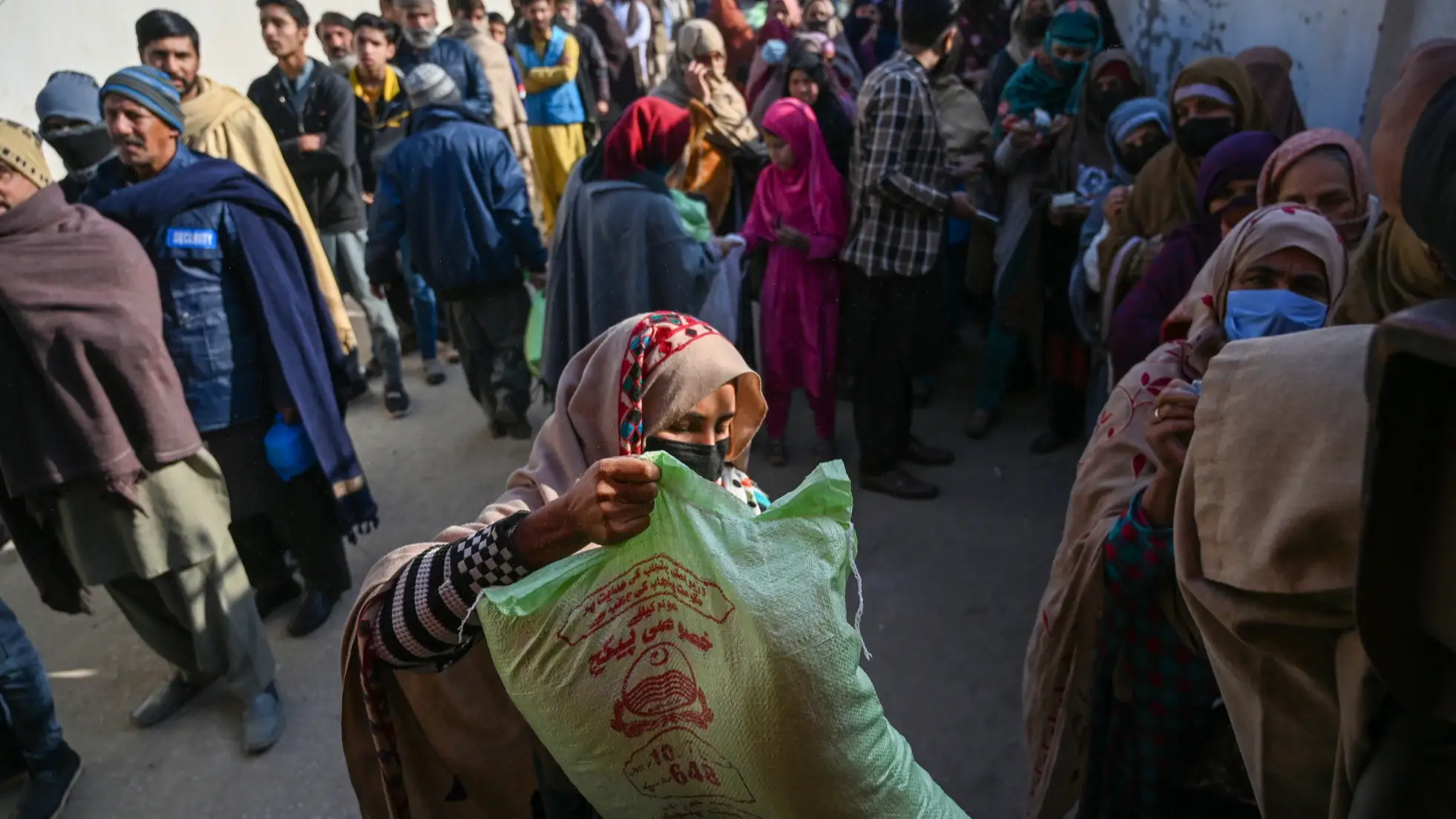
According to a new United Nations research released on Monday, if the economic and political crisis worsens even further, the consequences of the floods of 2022 in Pakistan are expected to be amplified in the coming months.
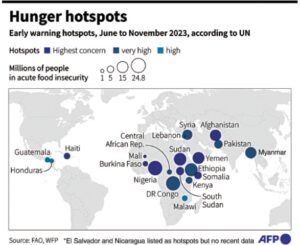
The Food and Agriculture Organization (FAO) and the World Food Program (WFP) together produced a research titled Hunger Hotspots: FAO-WFP early warnings on acute food insecurity that spans the months of June and November 2023.
It mentions how Pakistan’s ongoing financial crisis has been made worse by rising governmental debt in the midst of the present global economic recession.
It notes that the government of Pakistan will have to pay back $77.5 billion in external debt between April 2023 and June 2026, a sizeable sum given the nation’s $350 billion GDP in 2021.
Pakistan and IMF Loan
The International Monetary Fund (IMF) is unable to issue a key new loan line, and bilateral partners are unable to provide extra support because of growing political instability and sluggish reforms in Pakistan, according to the study.
In light of escalating instability in the nation’s northwest, the political crisis and civil unrest are projected to get worse prior to the general elections slated for October 2023.
According to the research, a lack of foreign reserves and a weakening currency are making it harder for the nation to import necessary food and energy supplies, which raises the cost of those commodities and results in nationwide energy cuts.
The situation has been made worse by the aftermath of the floods from the previous year, which cost the farm sector Rs. 30 billion in damages and economic losses.
The analysis predicted that between September and December 2022, over 8.5 million people would likely experience severe acute food insecurity.
Given that households’ purchasing power and capacity to purchase food and other necessities are being affected by economic and political crises, it is anticipated that the condition of food insecurity and malnutrition would increase throughout the forecast period.
The destructive effects of floods, which resulted in livestock losses and negatively impacted food production, food availability, and livelihood prospects, are to blame for the expected worsening of the situation with regard to food security throughout the projection period.
It also mentions that if Pakistan, Kabul’s key trading partner, and the security situation in border areas continue to deteriorate, Afghanistan’s coal and food export revenues may decrease.
Building the capability of national and provincial disaster management organizations is recommended in order to incorporate forecast-based finance and risk insurance into sectoral contingency plans for disaster management.
In order to enable efficient anticipatory action and humanitarian response through social protection systems, the research recommends enhancing the shock-responsive character of current social protection measures (such as the Benazir Income Support Program).
The two UN agencies also caution that during the outlook period from June to November 2023, acute food insecurity is anticipated to get worse in 81 “hunger spots,” which include a total of 22 nations.
At the highest worry level, Afghanistan, Nigeria, Somalia, South Sudan, and Yemen continue to be. The level of concern for Haiti, the Sahel (Burkina Faso and Mali), and the Sudan has been raised to the highest level.
This is because of the severe limitations on the movement of people and products in Haiti, Burkina Faso, Mali, and the recently erupted conflict in the Sudan.
Given that they already have extreme food insecurity and are dealing with significant aggravating factors, all of the hotspots at the highest level include populations that are either expected to face famine or who are at risk of deteriorating towards catastrophic conditions. The most immediate assistance is needed for these nations.
The alert is expanded to Myanmar as well as Pakistan, the Central African Republic, Ethiopia, Kenya, Syria, the Congo, and the Central African Republic.
To read our blog on “Food price Inflation is on the increase,” click here.