

The SK Hynix Nasdaq debut is one of the biggest stock-market events of 2026, and it matters far beyond Wall Street. The South Korean firm that makes the memory chips powering Nvidia’s AI processors began trading on the Nasdaq on July 10, 2026, raising up to $28 billion in what analysts say is the largest foreign listing in stock-market history. For everyday consumers in Pakistan, the ripple effects are already showing up as higher prices on phones, laptops, and tablets.
What Is SK Hynix and Why Does It Matter?
Most people have never heard of SK Hynix, yet they almost certainly use its products every day. The company makes the memory chips, called RAM and storage, that go inside smartphones, PCs, tablets, and the servers that run AI tools like ChatGPT.
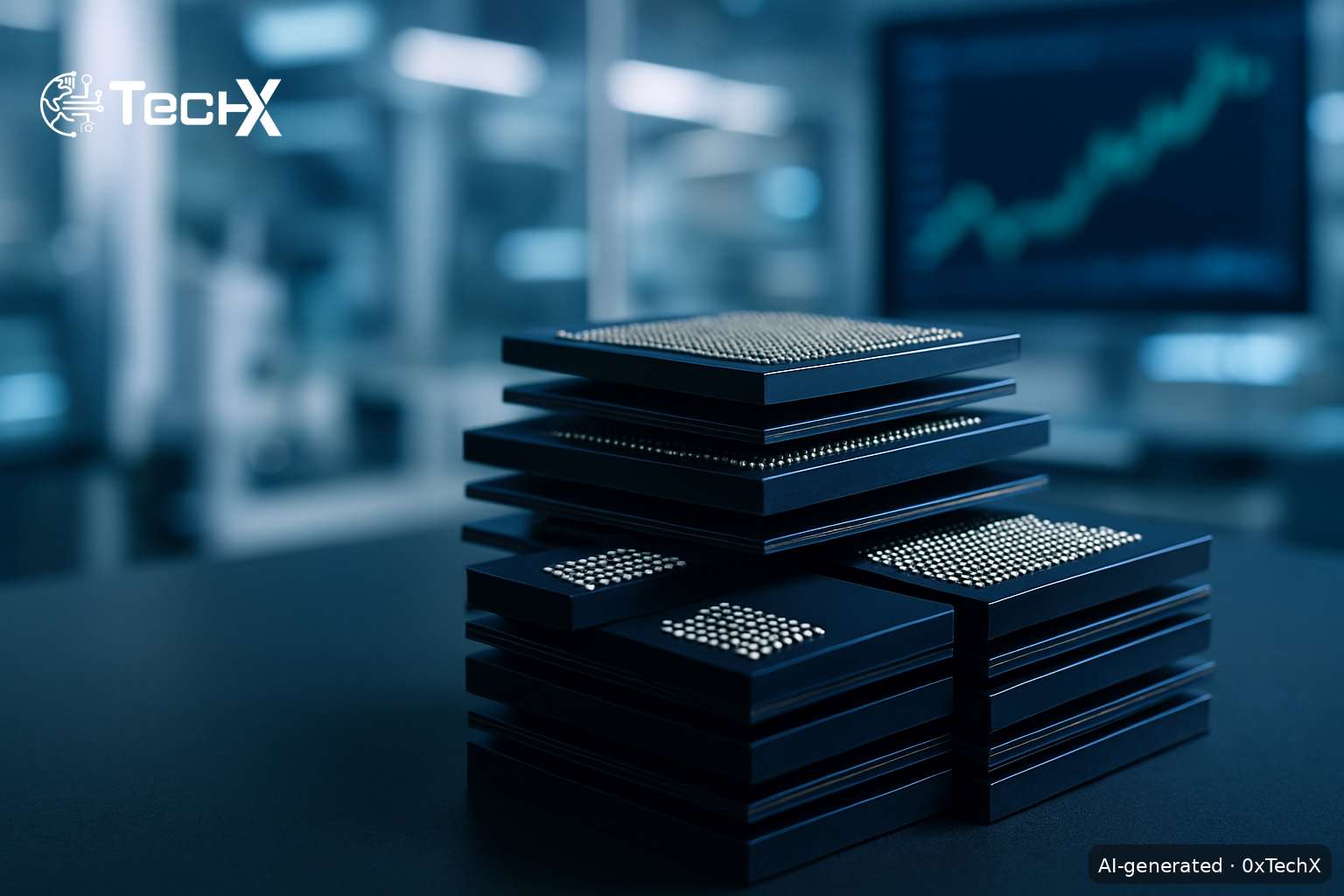
More importantly, SK Hynix is the world leader in a specialised type of memory called High-Bandwidth Memory, or HBM. Think of HBM as super-fast RAM that is stacked in layers like a tiny skyscraper. AI chips from Nvidia need HBM to work, without it, even the most powerful GPU cannot run at full speed.
SK Hynix controlled 57% of the global HBM market share by revenue in the fourth quarter of 2025, according to Counterpoint Research. That dominance is why Nvidia CEO Jensen Huang visited SK Hynix on a trip to Seoul, where the two companies announced a multiyear partnership.
The SK Hynix Nasdaq Debut in Numbers
The company’s Nasdaq debut began with temporary trading on July 10 under the ticker ‘SKHYV’ on a when-issued basis, before regular trading starts under ‘SKHY’ on July 13.
SK Hynix set the price of its American depositary shares (ADS) at $149 each, with the offering consisting of 177.9 million ADS, each representing one-tenth of a share of the company’s common stock.
All told, SK Hynix is hoping to raise $28 billion via the share sale, the largest foreign listing in history, as it seeks to build up manufacturing capacity to keep up with the need for memory and storage chips driven by the global AI build-out.
Investor demand for the share sale has been strong, with institutional orders reportedly exceeding available shares by more than seven times.
With its market cap hovering around $1 trillion, SK Hynix is building a $4 billion production facility in Indiana. Annual revenue almost tripled from 2023 to 2025, when sales reached about $65 billion. For 2026, analysts expect that number to more than triple again to about $235 billion.
How SK Hynix Became Nvidia’s Most Important Supplier
SK Hynix is the leader in the high-performance memory used in AI chips from Nvidia. High-bandwidth memory stacks many layers of traditional memory together, and SK Hynix was the first to do it, analysts project the company will capture more than half the HBM market this year.
SK Hynix has recently secured more than two-thirds of the HBM4 high-bandwidth memory supply orders for Nvidia’s next-generation AI platform, Vera Rubin, with a share approaching 70%.
It is becoming increasingly clear that one of the main constraints on AI market growth is no longer the GPUs themselves, but the availability of the most advanced HBM memory, meaning HBM is emerging as the new bottleneck for the entire artificial intelligence sector.
SK Hynix posted record revenue of approximately $35.6 billion in the first quarter of 2026, surpassing a key milestone for the first time. Revenue increased 198% from a year earlier, and operating profit reached a record of about $25.4 billion. The company reported an operating margin of 72%, underscoring the profitability of the ongoing AI spending boom.
What the AI Memory Shortage Means for Pakistan
The SK Hynix Nasdaq debut is not just a finance story. It is a signal that the global AI memory crunch, already squeezing supply for everyday devices, is getting bigger and more structural.
The voracious demand for HBM by hyperscalers such as Microsoft, Google, Meta and Amazon has forced the three biggest memory manufacturers to pivot their limited factory space toward higher-margin enterprise-grade components. Every wafer allocated to an HBM stack for an Nvidia GPU is a wafer denied to the memory module of a mid-range smartphone or the SSD of a consumer laptop.
Pakistan feels this directly. The mobile and laptop price surge in Pakistan in 2026 reflects a combination of global supply pressure and local economic constraints, with consumers facing record high prices, entry-level laptops crossing PKR 99,000 and flagship smartphones exceeding PKR 400,000.
Soaring memory costs are expected to reduce global personal computer shipments by 10.4% and smartphone shipments by 8.4% in 2026, according to Gartner.
Analysts estimate that the average selling price of smartphones will rise 14% this year to an all-time high of $523, while manufacturers will no longer be able to make phones that cost less than $100. Budget phones below that price point are what millions of Pakistani buyers depend on.
Some manufacturers are keeping prices flat and quietly giving buyers less instead, the electronics version of shrinkflation. In practice, that can mean a laptop that looks identical to last year’s model but ships with 8GB of RAM instead of 16GB, or a dimmer screen.
There is also a concern about ‘shrinkflation’ in the mid-range segment that dominates Pakistan’s phone market, brands like Xiaomi, Tecno, and Infinix, who rely on cheap DRAM for their budget devices. For tips on comparing specs versus price in Pakistan’s current market, our Redmi 14C vs Infinix Hot 50i comparison is a useful reference for what to look for when buying on a tight budget right now.
Will the Shortage End Soon?
Memory makers including Samsung and SK Hynix have warned the shortage could persist into 2027 and beyond, and new factories coming online in 2027 to 2028 will not ease supply immediately. Price increases are finally slowing in the second half of 2026, not because supply improved, but because consumers have hit the ceiling of what they will pay.
SK Hynix’s first US production facility, a $4 billion plant in West Lafayette, Indiana, will be used for advanced packaging of HBM chips, but it is scheduled for completion only in 2028. So meaningful relief is still years away.
The SK Hynix Nasdaq debut gives the company access to fresh capital to speed up that expansion. But for buyers in Pakistan shopping for a new phone or laptop right now, the practical advice is simple: compare specs carefully, not just the sticker price, and consider buying sooner rather than later.
Frequently Asked Questions
What is the SK Hynix Nasdaq debut exactly?
SK Hynix, the South Korean memory chipmaker, has listed its shares on the Nasdaq stock exchange in the US, starting July 10, 2026. It is selling American depositary shares under the ticker SKHY and aims to raise $28 billion, the largest foreign listing ever on a US exchange.
What is HBM and why does SK Hynix dominate it?
HBM, or High-Bandwidth Memory, is a special type of RAM that stacks chips in layers to deliver very fast data speeds. It is essential for running AI models in data centres. SK Hynix was the first company to mass-produce HBM and currently holds over 56% of the global HBM market. Nvidia, its biggest customer, relies on SK Hynix for the memory inside its AI processors.
How does this affect phone and laptop prices in Pakistan?
Because SK Hynix and other memory makers are diverting most of their production capacity to high-margin AI chips, there is less regular DRAM and storage left for consumer devices. This has pushed up the cost of smartphones, laptops, and tablets worldwide. In Pakistan, where devices are already expensive due to import taxes and a weaker rupee, the squeeze is felt even more sharply.
Is there anything Pakistani buyers can do right now?
Yes. Experts suggest buying sooner rather than later, since prices are more likely to rise further than to fall in the near term. Comparing specifications carefully is also important, some brands are offering the same price but with less RAM than before. Considering last year’s models or certified-refurbished devices can also save a significant amount without a major drop in performance.