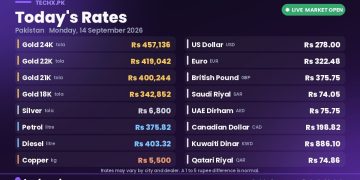
The Pakistan petrol price may go up once more when the government carries out its next weekly fuel review on 17 July 2026. Market estimates suggest petrol could rise by Rs10 to Rs20 per litre, while high-speed diesel may climb by Rs12 to Rs25 per litre. No official notification has been issued yet, so these remain projections only, but the direction of global oil prices makes another increase look likely.
What Is the Pakistan Petrol Price Right Now?
The current petrol rate, set on 11 July 2026, stands at Rs310.71 per litre, up Rs13.18 from the previous week’s Rs297.53. High-speed diesel (HSD) rose by Rs13.80 to reach Rs323.30 per litre. Both rates were set by the Ministry of Energy (Petroleum Division) after a recommendation from the Oil and Gas Regulatory Authority (OGRA).
The jump last week was one of the bigger single-week moves in recent months. It reversed a small cut of Rs1.97 per litre that had briefly brought petrol down to Rs297.53 for the week of 4, 10 July.
Why Pakistan Now Reviews Fuel Prices Every Week
Until early 2026, Pakistan revised fuel prices on a fortnightly schedule, roughly every 15 days. That changed when global oil markets turned sharply volatile following the US-Iran conflict that began in late February 2026. The government switched to weekly reviews so it could respond faster to swings in international crude prices and the rupee-dollar exchange rate.
This shift matters for ordinary consumers. It means your fuel bill can change every Friday, up or down, depending on what happened in global markets that week. For transporters, ride-hailing drivers, and small business owners, planning costs has become harder.
What Could Drive the 17 July Price Change?
International crude prices have stayed elevated because of ongoing geopolitical tension. Global oil markets remain sensitive to any news about the Strait of Hormuz, a key shipping route for crude oil. When traders worry about supply disruptions, Brent crude prices rise, and Pakistan, which imports a large share of its petroleum products, feels that pressure directly through higher import costs.
The final number also depends on the rupee-dollar rate at the time of the review and the government’s decisions on the petroleum levy and other taxes. This is why market estimates carry a wide range: the actual increase could be on the lower end if the rupee holds steady, or near the top if import costs surge.
According to market estimates, petrol prices could increase by Rs10 to Rs20 per litre, while high-speed diesel may rise by Rs12 to Rs25 per litre in the next review. These are unofficial projections only and have not been confirmed by any government body.
Pakistan Petrol Price in Context, A Wild Few Months
To understand how much prices have moved, it helps to look at the recent history. Before the Iran-US tensions erupted, Pakistan’s petrol price sat at roughly Rs266 per litre in late February 2026. It then shot up to a record high of Rs458.41 per litre on 3 April 2026 as global crude markets panicked over potential Strait of Hormuz disruptions.
After the immediate crisis eased and international oil prices pulled back, the government passed those savings on to consumers, and Prime Minister Shehbaz Sharif announced cuts of Rs74 per litre for petrol in mid-June. Prices then gradually drifted back down to the Rs297 range before last week’s Rs13.18 jump reversed some of that relief.
That means Pakistanis have lived through a roughly Rs200 per litre round-trip in just four months, from Rs266 up to Rs458 and then back toward Rs310. That kind of volatility is unusual and puts a real strain on household budgets.
Who Gets Hit Hardest?
Higher petrol prices affect almost everyone, but some groups feel the pain more directly:
- Motorcycle riders and small car owners, petrol is their main fuel, so any increase directly raises their daily commuting cost.
- Truck and bus operators, diesel powers freight and public transport. A diesel hike pushes up the cost of moving goods and people, which often passes through to food prices and bus fares.
- Farmers and the agriculture sector, tractors, water pumps, and other farm machinery run on diesel. Costlier diesel can raise the cost of growing food.
- Small businesses and delivery services, fuel is a direct operating expense. Repeated weekly increases make it very difficult to set stable prices for customers.
Pakistan’s Pakistan State Oil (PSO), the country’s largest fuel distributor, updates its official pump prices in line with every government notification, so any change on 17 July will flow through to petrol stations almost immediately.
How to Stay Updated on Pakistan Petrol Price Changes
The safest way to get the correct figure is to check the official OGRA website or the Petroleum Division’s notification after the weekly announcement, usually made late on Thursday or Friday evening. Third-party trackers and auto-sites can lag by hours, so for time-sensitive decisions, rely on official sources.
If you run a business that is sensitive to fuel costs, it is worth tracking global Brent crude prices through the week as a rough guide to which direction Friday’s review might go. A rising Brent price midweek usually signals an upward revision ahead.
Frequently Asked Questions
When will the next Pakistan petrol price change happen?
The next weekly review is expected on 17 July 2026. Revised rates, if any, usually take effect immediately after the official notification from the Ministry of Energy (Petroleum Division).
How much could petrol go up on 17 July?
Unofficial market estimates suggest a possible rise of Rs10 to Rs20 per litre for petrol, and Rs12 to Rs25 per litre for high-speed diesel. These are projections only, the official figure depends on crude oil prices, the rupee rate, and government tax decisions at the time of the review.
Why did Pakistan switch from fortnightly to weekly fuel price reviews?
The government moved to weekly reviews because of extreme volatility in global oil markets triggered by the US-Iran conflict in early 2026. Weekly revisions allow the government to track international crude price swings more closely and adjust local rates faster.
Where can I check the official petrol price in Pakistan?
The official source is the OGRA notified petroleum prices page. You can also check the Petroleum Division’s notifications or the official PSO fuel prices page for the latest confirmed rates.