
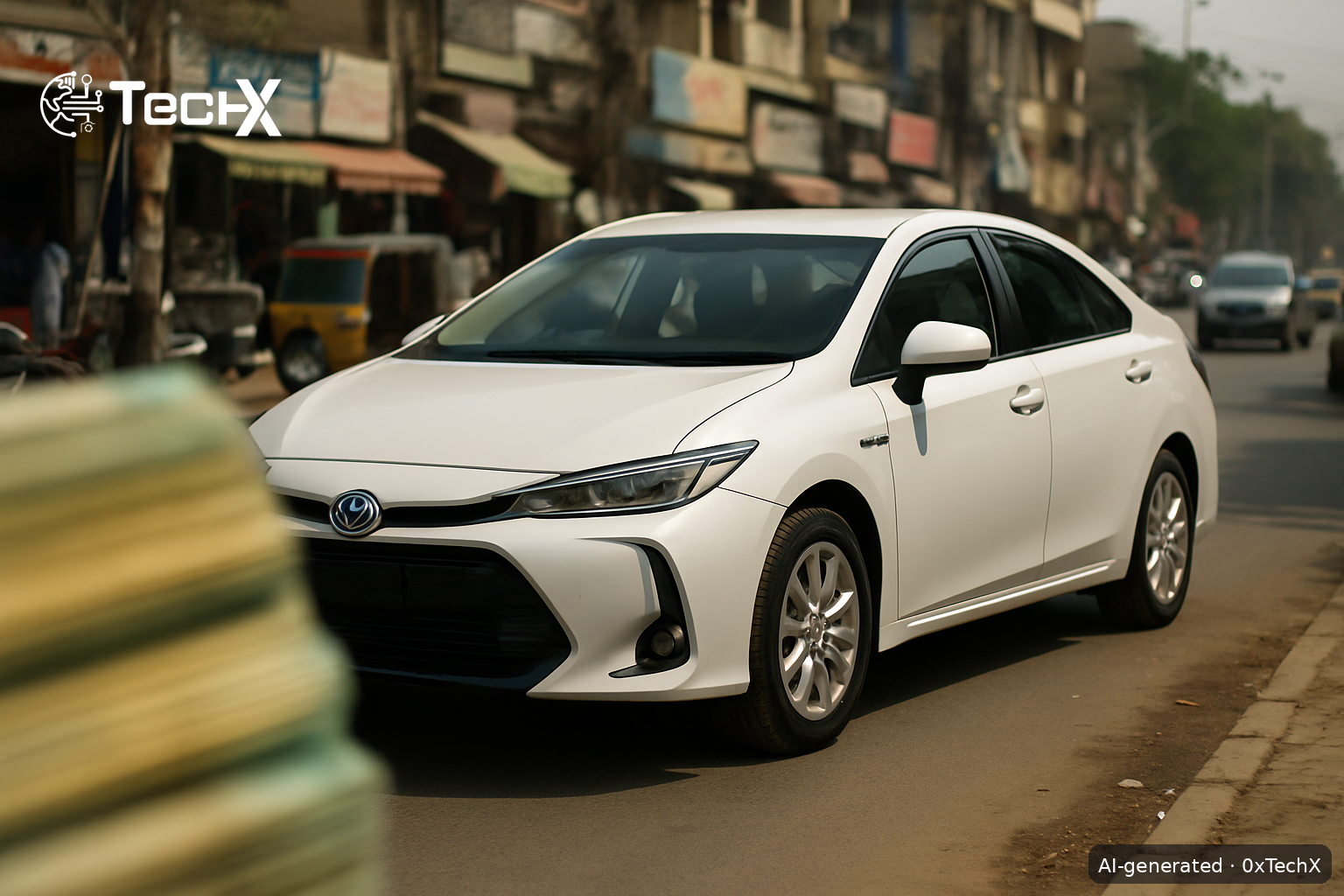
Pakistan hybrid car tax has jumped sharply to 25% after the government’s reduced sales tax concession quietly expired on June 30, 2026. The change was not caused by a new budget measure. Instead, a five-year automotive policy simply ran its course, and no renewal was put in place before the deadline. Buyers, dealers, and automakers are now scrambling to understand what comes next.
What Was the Old Hybrid Car Tax Rate?
Under the Automotive Industry Development and Export Policy (AIDEP) 2021-26, the government offered reduced sales tax to encourage the production and sale of hybrid electric vehicles (HEVs) and plug-in hybrid electric vehicles (PHEVs) in Pakistan. Locally assembled HEVs and PHEVs were taxed at just 8.5% for engine sizes up to 1,800cc, and 12.75% for larger engines above 1,800cc.
This lower rate made hybrids far more attractive to buyers compared to regular petrol cars, which carry a 25% sales tax if priced above Rs4 million or fitted with engines of 1,400cc or more. Popular models like the Toyota Corolla Cross, Haval H6, Hyundai Tucson Hybrid, and MG HS PHEV all benefited from this lower tax structure in recent years.
Why Did the Hybrid Car Tax Jump to 25%?
The AIDEP 2021-26 policy expired on June 30, 2026. The reduced hybrid car tax concession was part of this policy, so it ended automatically on the same date. The government did not announce any extension before the deadline passed.
Under Pakistani tax law, when a concession expires and no new policy or extension replaces it, the goods covered by that concession revert to the standard tax regime. For vehicles priced above Rs4 million or with engines of 1,400cc and above, that standard rate is 25%. Since most hybrid models sold in Pakistan fall into this price and engine bracket, they are now technically subject to the full 25% rate.
The Federal Board of Revenue (FBR) has not issued a new notification to extend the concession, leaving the auto industry in a difficult spot. Several automakers have reportedly paused issuing invoices for hybrid vehicles while they wait for official clarification on which tax rate applies before processing deliveries.
How Much Will Hybrid Car Prices Rise?
The potential impact on car prices is significant. If manufacturers pass the full tax change on to buyers, some hybrid models could cost as much as Rs25 lakh more than they did before July 1, 2026. Both locally assembled HEVs and PHEVs face this uncertainty equally.
The affected brands include Toyota, Honda, Hyundai, Kia, Haval, MG, Jaecoo, and GWM. These companies cover a wide range of hybrid models that have grown popular with Pakistani buyers over the past three years, thanks largely to rising fuel prices and the earlier tax relief.
It is important to note that not all prices will rise immediately. Automakers are still waiting for the government to announce its new auto policy, known as AIDEP 2026-31. If that policy restores a reduced hybrid car tax, prices may stabilise. But until that happens, there is no official reduced rate in place.
What About the New Auto Policy 2026-31?
The government is working on a new automotive policy to replace AIDEP 2021-26. This new framework is expected to set fresh tax rates for hybrid and electric vehicles for the coming five years. Automakers and industry groups are waiting for this policy to be finalised before making pricing decisions.
Pakistan’s broader plan is still to grow its electric vehicle market. The government’s Planning Commission of Pakistan has previously noted a target of 30% electric vehicle sales by 2030. Any new auto policy will need to balance revenue collection with keeping cleaner vehicles affordable for ordinary buyers.
In the Budget 2026-27, the government maintained tax relief for locally assembled EV and hybrid component imports, with nearly Rs24 billion in concessions allocated for completely knocked-down (CKD) kits and EV-specific parts. This signals that the government still wants to support local assembly even as the sales tax question remains unresolved.
What Does This Mean for Buyers Right Now?
If you are planning to buy a locally assembled hybrid car in Pakistan, the situation is uncertain. Dealers may not be able to confirm a final price until automakers receive clarity on the hybrid car tax rate. Some buyers who had already booked cars may face revised invoices.
For now, the best approach is to wait for official government communication on the new auto policy before signing any booking. The coming weeks are likely to bring some clarity, as companies cannot hold off invoicing indefinitely.
This policy gap also raises a broader question about how Pakistan manages transitions between its automotive policies. The hybrid car tax concession ending without a replacement ready has created confusion that could slow down sales and shake investor confidence in the sector, just as Pakistan was beginning to build a genuine hybrid and EV market.
Frequently Asked Questions
What is the current sales tax on hybrid cars in Pakistan?
As of July 1, 2026, locally assembled hybrid cars (HEVs and PHEVs) have automatically reverted to the standard 25% sales tax after their earlier concessional rate of 8.5% to 12.75% expired on June 30, 2026.
Why did the hybrid tax concession expire?
The concession was part of the Automotive Industry Development and Export Policy (AIDEP) 2021-26, which ran until June 30, 2026. The government did not announce an extension before the deadline, so the lower rate lapsed automatically under the existing tax law.
Will hybrid car prices in Pakistan definitely go up?
Prices could rise by up to Rs25 lakh on some models if the full 25% hybrid car tax is passed on to buyers. However, several automakers have paused invoicing while waiting for official guidance. Prices may stabilise if the new auto policy restores a reduced rate soon.
Are electric vehicles also affected?
No. The Budget 2026-27 kept customs duty concessions for EV parts and CKD imports in place, and locally assembled EVs did not see a new tax hike. The current uncertainty is specific to the hybrid car tax, not fully electric vehicles.