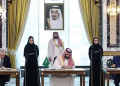
The Pakistan Hajj saving scheme is now officially approved. On 7 July 2026, Prime Minister Shehbaz Sharif chaired a federal cabinet meeting that gave the green light to Pakistan’s first-ever four-year Hajj Policy and Plan, covering 2027 to 2030. The decision changes how millions of Pakistanis plan, save for, and register for the pilgrimage.
What Is the New Pakistan Hajj Saving Scheme?
A Shariah-compliant Hajj savings scheme will be introduced to help citizens plan financially for future pilgrimages. This means aspiring pilgrims will be able to put aside money over time, without paying or earning interest, in a way that follows Islamic finance rules. Think of it like a dedicated Hajj fund you build up slowly, month by month, instead of trying to arrange a large lump sum at the last minute.
The cabinet approved the introduction of a Shariah-compliant savings scheme to enable aspiring pilgrims to benefit from a savings plan for performing Hajj in the future. The exact mechanics, such as which banks will offer the scheme and what the minimum deposit will be, are still being worked out. Standard operating procedures will be developed before the scheme goes live.
For most Pakistani families, this is a big deal. The estimated cost of the government’s Hajj package for 2026 ranged from Rs1,150,000 to Rs1,250,000, subject to final agreements with service providers. That is well over a million rupees, a sum most households cannot arrange in a few weeks. A proper saving plan spread over two, three, or four years makes the dream far more reachable for middle-income families.
Single Registration Valid Until 2030
Pakistan’s federal cabinet approved the country’s first four-year Hajj Policy and Plan for 2027-2030 on Tuesday, removing the need for pilgrims to register every year for the annual Islamic pilgrimage.
Previously, anyone who wanted to perform Hajj had to go through the registration process fresh every single year. That meant paperwork, bank visits, and uncertainty repeated annually. Under the approved policy, intending pilgrims will be able to register once for any Hajj season up to 2030 instead of undergoing annual registration, enabling the preparation of a priority waiting list.
So if you register now and choose Hajj 2029, your spot is in the queue. You do not have to re-apply. This is especially useful for people who are saving up and know they will not be ready for another two or three years.
A Four-Year Roadmap Instead of Annual Guesswork
Pakistan used to issue its Hajj policy every year, laying out how citizens could perform Hajj via the official government scheme or through licensed private tour operators. Unlike previous policies that covered only one year, the new Hajj policy is Pakistan’s first four-year policy and plan.
The cabinet was informed that, unlike previous annual policies, the new framework provides a four-year roadmap to facilitate long-term planning. This matters because families, tour operators, and banks can now plan ahead with confidence. Airlines can negotiate contracts earlier. Banks can design saving products around specific timelines. Pilgrims can set clear financial targets.
For the Pakistan Hajj saving scheme to work well, this long-term certainty is actually essential. You cannot build a saving plan around a policy that changes every 12 months.
Other Key Features of the New Policy
The new policy provides separate quotas for government and private Hajj schemes, introduces both long and short Hajj packages, and includes mandatory pilgrim training, Takaful coverage and emergency response arrangements.
Here is a quick breakdown of what each of these means for ordinary pilgrims:
- Separate government and private quotas: Whether you book through the official Ministry scheme or a private tour operator, there is a defined number of seats for each. Pakistan was allocated a quota of 179,210 pilgrims under both government and private Hajj schemes.
- Long and short packages: Some pilgrims prefer a longer stay in Makkah and Madinah; others want a shorter trip to keep costs down. Both options will now be formally available.
- Mandatory training: Pilgrims will be required to attend at least one training session before departure. This is to make sure everyone understands the rituals, health precautions, and emergency procedures.
- Takaful coverage: Takaful is Islamic insurance. It works on mutual contribution rather than conventional interest-based insurance. Pilgrims will be covered for emergencies during the journey.
- Emergency response: A formal emergency response plan will be part of every Hajj season under the new framework.
Full Digitalisation of Hajj Management
Participants were also told that the entire Hajj system is being digitized in Pakistan. This includes digital payment mechanisms, a digital complaints management system and digital monitoring.
This is a real shift. Right now, many pilgrims still travel to bank branches to pay installments, submit complaints on paper, or wait weeks to hear back about their registration status. Digitisation means payments, status checks, and complaints can all be handled on a phone or computer. The Ministry of Religious Affairs and Interfaith Harmony has been building towards this for several years, and the new policy makes it a formal requirement.
Authorities were also instructed to ensure independent third-party validation of services provided under both the public and private Hajj schemes. This is important because it means an outside body, not just the Ministry itself, will check whether service standards are actually being met on the ground in Saudi Arabia.
What This Means for Aspiring Pakistani Pilgrims Right Now
Pakistan has already begun preparations for Hajj 2027, with Islamabad launching mandatory registration for aspiring pilgrims last month. So if you are thinking about Hajj 2027 or any year up to 2030, registration is already open. You can register once and pick your preferred year.
The Pakistan Hajj saving scheme is not live yet as of July 2026. The government still needs to publish its standard operating procedures and work with banks to create the actual saving products. But the cabinet approval is the first and most important step. For more details on official Hajj policies and announcements, follow the Radio Pakistan government briefings which carry official Ministry statements.
PM Shehbaz directed that the appointment of Hajj assistants be carried out through a transparent and strictly merit-based process. This is also a change worth noting, as the selection of Hajj assistants has often been criticised for being driven by connections rather than competence.
Frequently Asked Questions
What is the Pakistan Hajj saving scheme?
It is a new government-backed savings plan that will allow Pakistani citizens to save money for Hajj in a Shariah-compliant way, meaning no interest is earned or paid. It is designed to help families build up enough funds over several years rather than paying in one large amount close to the pilgrimage date. Full details and bank sign-up procedures are yet to be announced.
Do I need to register for Hajj every year under the new policy?
No. Under the four-year Hajj Policy and Plan (2027-2030), you register once and choose the year you wish to perform Hajj, any year up to 2030. A priority waiting list is then maintained based on your registration. This removes the stress and cost of re-applying annually.
When does the new Hajj policy start?
The policy covers Hajj seasons from 2027 to 2030. Hajj 2026 was completed in May 2026 under the old annual policy. Preparations for Hajj 2027 are already under way, with mandatory registration having started in June 2026.
What is Takaful, and why is it included in the Hajj policy?
Takaful is Islamic insurance. Instead of paying a premium to a company that invests in interest-bearing assets, participants contribute to a shared pool that covers members in case of loss or emergency. Including Takaful in the Hajj policy means pilgrims will have financial protection during their journey in a way that is fully Shariah-compliant.