Pakistan EV local assembly has finally crossed the line from policy document to factory floor in 2026, with a Chinese EV giant building near Karachi, homegrown battery plants switching on in Korangi and Port Qasim, and the government making battery storage mandatory in new renewable energy projects. The momentum is real. So is the danger of arriving too late to build the deep supply chain that would make any of this stick.
From Showroom Imports to Pakistan EV Local Assembly
For years, buying an electric vehicle in Pakistan meant paying for a Complete Built-Up (CBU) unit shipped in from abroad, fully made, fully taxed, and fully expensive. That model is changing fast. BYD’s assembly facility near Karachi is backed by an estimated US$150 million investment, with production targeting a start between July and August 2026, and an initial capacity of around 25,000 vehicles per year on double shifts. The plant is located in Gharo, developed in partnership with Mega Motor Company, a subsidiary of Hubco.
The project is also projected to generate more than 1,100 jobs while laying the foundation for broader industrial development in the automotive sector. That is good news. But BYD is a global company that already controls its own batteries, motors, and electronics. The harder test is whether Pakistani firms can build something alongside it.
On that front, there is some reason for optimism. Pakistan could see its first fully electric, locally manufactured car enter the market by June 2026, with an estimated price of around Rs1 million, according to Engineering Development Board (EDB) CEO Hammad Mansoor. The first plant for producing the Made-in-Pakistan EV will be established in Lahore. A small, affordable local EV aimed at motorcycle users, not a premium import, would be a genuine shift in how Pakistanis think about electric mobility.
And with petrol prices remaining high and household electricity bills biting hard, the incentive for buyers to switch is stronger than ever before.
Battery Plants Are Opening, But Are They Really Manufacturing?
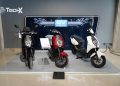
This is the question that separates the headline from the reality. Several battery facilities are now in motion across Pakistan. The initial production capacity at EV Technologies’ Karachi plant is 4 megawatts, enough to supply batteries for around 2,000 e-bikes and e-scooters per month, with rising solar adoption and EV demand driving the need for local battery manufacturing.
Two other Karachi projects are moving in parallel: Wave Tech has announced a $200 million lithium battery plant at Malir Industrial Park, with production targeted for mid-2026, and Crown Group is finishing a lithium iron phosphate battery plant at Port Qasim, projected to produce 5,000 to 8,000 batteries per month at launch.
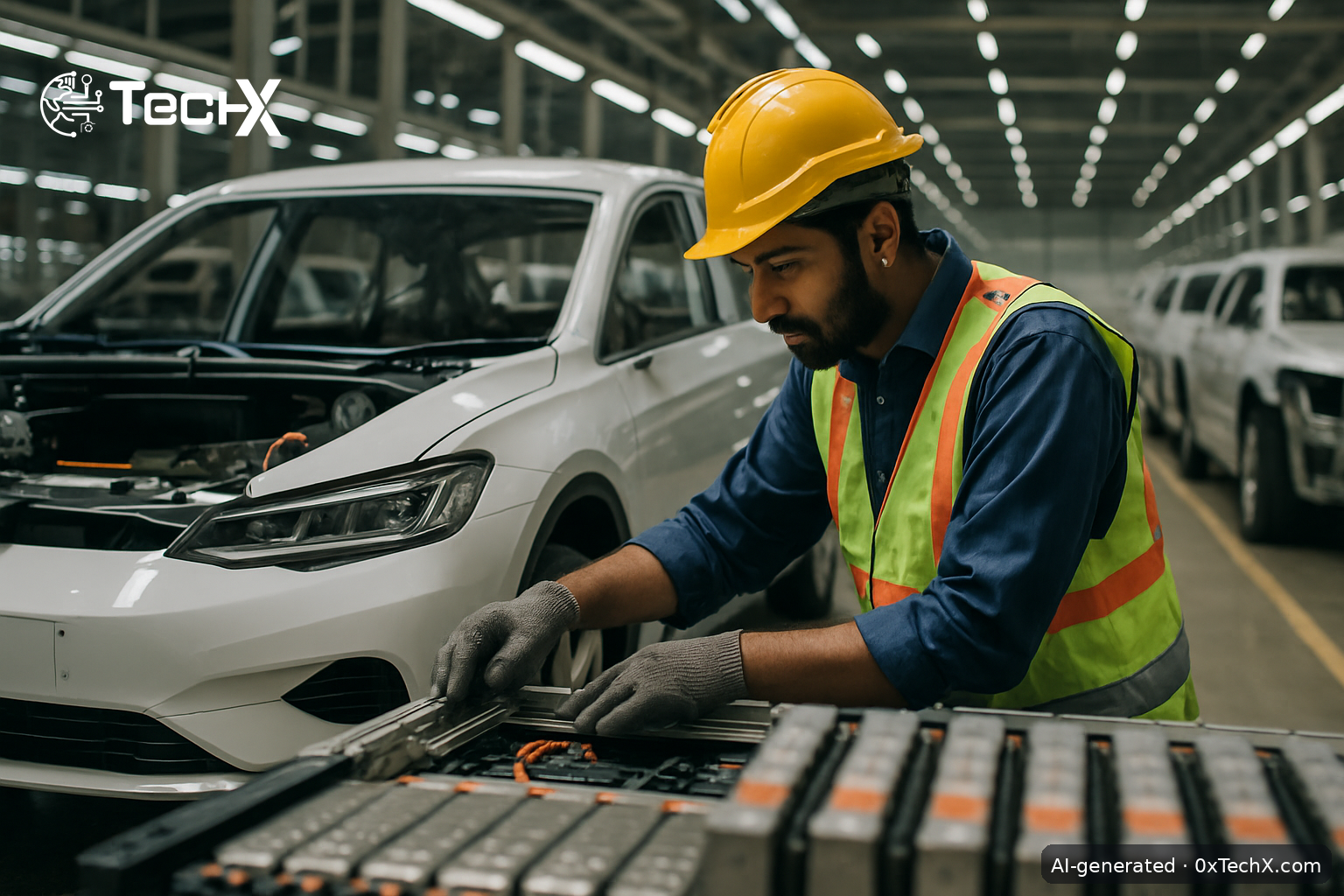
But analysts are asking an important follow-up question. Many local ventures are currently engaged in ‘battery assembly’, importing raw electrochemical cells from China and packaging them locally. That is not the same as manufacturing. True cell production requires making the electrodes, separators, and electrolyte, the chemistry inside. Pakistan’s domestic ecosystem currently lacks core capabilities, including cell production covering electrolytes and separators, plus accredited testing and recycling infrastructure.
About 74 percent of battery components are expected to be produced locally eventually, which could significantly reduce the cost of EVs by relying on domestically manufactured parts, but that figure is a target, not a current reality. Right now, the cells still come from China.
The Policy Push Behind Pakistan EV Local Assembly
The National Lithium-Ion Battery Manufacturing Policy 2026, 31, overseen by the Engineering Development Board and reviewed by Special Assistant to the Prime Minister Haroon Akhtar Khan, has approved lithium iron phosphate (LFP) battery technology as the first chemistry for localisation, citing its safety profile and suitability for solar storage and EVs.
On the BESS side, the government has also been firm. The federal government has decided to make Battery Energy Storage Systems mandatory for all participants in its upcoming 800 MW renewable energy auction, requiring developers to install battery storage equivalent to at least 10 percent of their project’s firm generation capacity alongside solar or wind facilities. That creates a large and growing domestic market for locally made storage, if local makers can meet the demand.
The government is finalizing a fresh policy framework aimed at promoting indigenous manufacturing of BESS in Pakistan, offering incentives to local producers and reducing reliance on imported solutions, as Power Minister Sardar Awais Ahmad Khan Leghari stated at the Solar Storage Flexibility 2026 Conference in Islamabad.
The demand driver is clear. Pakistan imported an estimated 1.25 gigawatt-hours of lithium-ion battery packs in 2024, with battery storage adoption accelerating across residential, commercial, and industrial sectors, driven by high electricity costs and declining solar component prices, as consumers combine solar with BESS to reduce grid dependence and lower energy bills. Without local production, a government estimate puts the country’s future import bill for batteries at USD 2.0 to 3.15 billion.
The Screwdriver Risk, and How to Avoid It
Pakistan has been here before. Past auto policies attracted assemblers who bolted together imported kits, took the tax benefits, and left the supply chain exactly where it started, abroad. Local auto parts manufacturers are actively lobbying under the new Auto Policy 2026, 2031 to ensure that foreign EV entrants transfer technology and use the local supply chain rather than simply assembling imported kits.
If the government reduces tariffs hastily without building local capacity through low-interest loans or grants to upgrade and meet global standards, the risk of industry disruption including plant closures and job losses will be alarming. The parts sector alone could lose PKR 48 to 60 billion annually, with local parts manufacturers at risk of collapse due to increased competition.
The EV charging gap adds another layer of pressure. If you are buying an EV built in Pakistan but there is nowhere reliable to charge it, the market stalls regardless of how good the assembly line is. For a closer look at where that infrastructure stands today, see our earlier piece on how Pakistan’s EV charging network is struggling to keep pace with new launches.
The government is promoting indigenous manufacturing of battery systems through a dedicated BESS Manufacturing Policy being developed by the Ministry of Industries and Production, with the long-term objective of transforming Pakistan into a regional hub for battery manufacturing and innovation. That ambition is achievable, but it requires sustained capital, multi-year policy consistency across different governments, and a level of foreign technology transfer that current agreements do not yet commit to.
The sector is aiming to boost annual vehicle production beyond 500,000 units by the end of the decade while exploring export opportunities, with industry representatives estimating that automotive exports could eventually generate up to $1 billion in annual revenue. Those numbers are possible. But they require the supply chain to grow with the factories, not years after them.
Frequently Asked Questions
Is Pakistan really making electric vehicles locally now?
Yes, in a real sense. For the first time in Pakistan’s history, the production process of a ‘Made in Pakistan’ car built with locally manufactured parts has begun, as stated by EDB CEO Hammad Mansoor, with the vehicle expected to be introduced by mid-2026. BYD is also assembling EVs at its new Gharo plant. However, some key components, especially battery cells, are still imported.
What is BESS and why does it matter for Pakistan?
BESS stands for Battery Energy Storage System. It stores electricity, usually from solar panels, and releases it when needed, especially at night or during load-shedding. Solar combined with BESS has a payback period of 3 to 5 years in Pakistan’s residential sector, despite a 48 percent cost increase from surcharges and duties on lithium-ion batteries. Local production would cut that cost significantly.
What is the difference between battery assembly and battery manufacturing?
Battery assembly means importing the chemical cells from abroad and putting them into a casing or pack locally. Battery manufacturing means making the cells themselves, including the electrodes, electrolyte, and separator. Most Pakistani firms are at the assembly stage right now. True cell manufacturing is the next, harder step that the 2026, 31 policy is pushing toward.
What is the screwdriver assembly risk for Pakistan EV local assembly?
It is the danger that Pakistan ends up as a country that only bolts imported parts together, rather than building real manufacturing depth. Without a massive rollout of charging infrastructure and battery standards, the EV push risks becoming another showroom policy, shiny at launch but dead on the road. Policymakers and local parts makers are both aware of this and pushing for technology transfer commitments from incoming foreign brands.