EV skills development is now at the centre of a fresh push by Pakistan to attract international support for its electric vehicle ambitions. On October 13, 2026, Advisor to the Prime Minister for Industries and Production Haroon Akhtar Khan sat down with a European Union delegation in Islamabad to explore how both sides could work together on training, technical knowledge, and building a local workforce for the EV sector.
What the Pakistan-EU EV Skills Development Meeting Covered
The EU expressed keen interest in expanding industrial cooperation with Pakistan, especially in EV skills development, technical training, and capacity building to support Pakistan’s transition towards sustainable mobility.
The meeting was attended by Secretary of Industries and Production Ihsan Ali Mangi, Prime Minister’s Coordinator Rana Ihsan Afzal, the CEO of the Engineering Development Board, senior officials from the Ministry of Industries and Production, and representatives of the EU delegation. The broad attendance signals that the government is treating this as a serious, cross-ministry effort rather than a routine courtesy call.
Haroon Akhtar Khan emphasised that promoting electric vehicles and developing the skilled workforce required by the emerging sector were important parts of Prime Minister Muhammad Shehbaz Sharif’s vision for a modern, competitive, and sustainable industrial economy.
One honest admission stood out. Khan acknowledged that “Pakistan missed important opportunities during earlier phases of the global automobile revolution,” adding that the country could not afford to miss the electric vehicle revolution. That frankness about the past is rare in official statements and gives this initiative a sense of urgency.
Why EV Skills Development Matters Right Now
Pakistan has set a target of increasing the share of electric vehicles to 30 percent by 2030, and achieving this transition requires more than introducing new vehicles, it demands a skilled workforce, technical expertise, and the development of a supporting industrial ecosystem.
Several companies have entered Pakistan’s EV market, creating a growing need for trained technicians, engineers, and other professionals equipped with modern EV-related skills. Timely investment in skills development would help prepare Pakistani youth for emerging employment opportunities while strengthening the country’s capacity to adopt and manufacture new technologies.
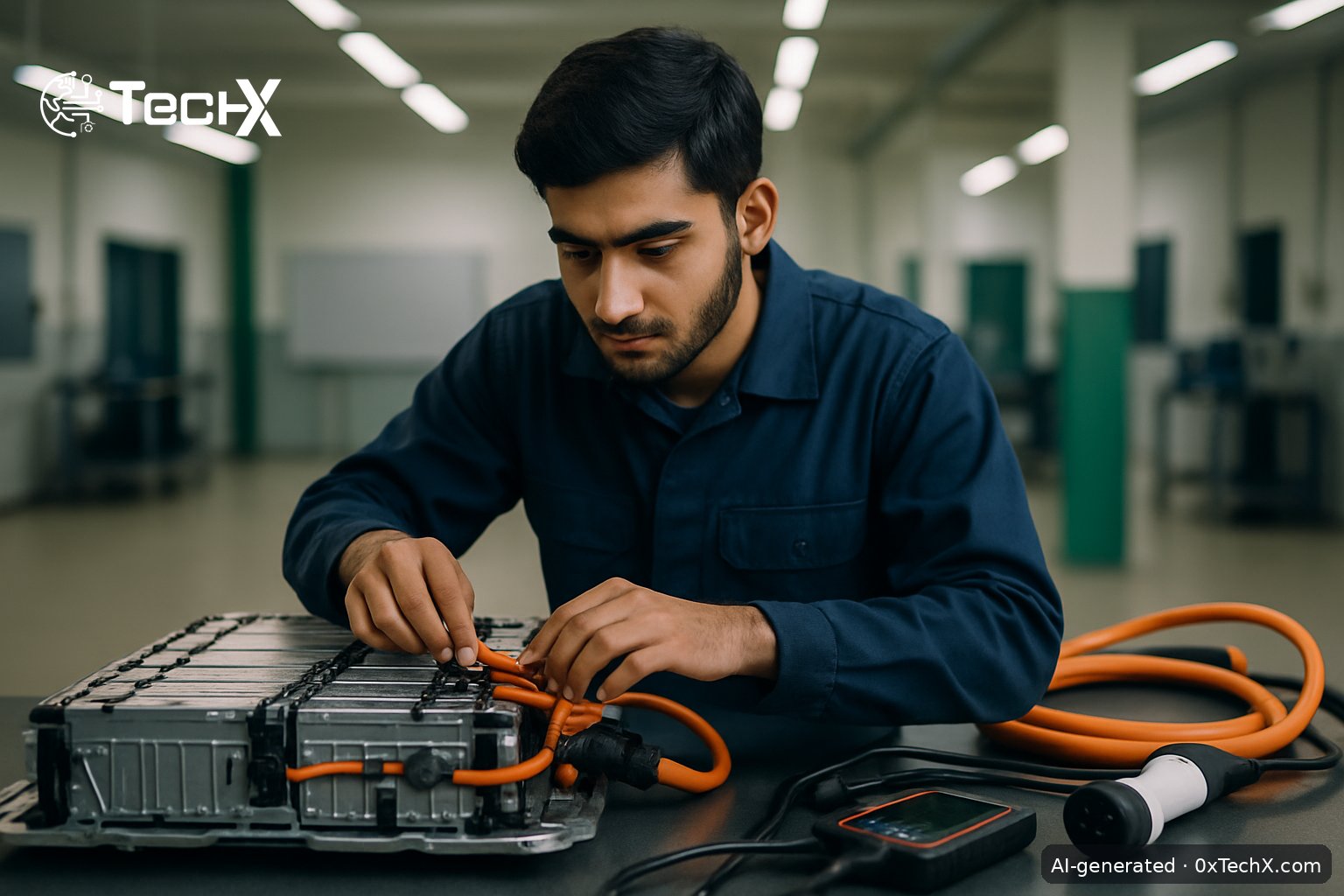
This is the skills gap that most coverage skips over. Buying or assembling an electric vehicle is one thing. Fixing a faulty battery management system, calibrating a regenerative braking unit, or managing a high-voltage charging network is something else entirely. Pakistan currently has very few certified EV technicians, and no structured national programme to produce them at scale. That is exactly the problem these talks aim to fix.
For those interested in related EV manufacturing activity already underway in Pakistan, the electric bike manufacturing push in Punjab with a Chinese partner shows how the industrial side is moving, but a trained workforce has to keep pace.
What the Engineering Development Board Will Do Next
Haroon Akhtar Khan directed the Engineering Development Board (EDB) to engage with the EU delegation and explore practical areas of cooperation in EV skills development, technical training, and capacity building.
Secretary Ihsan Ali Mangi emphasised the importance of aligning skills development initiatives with the emerging requirements of the automotive industry, adding that collaboration with the EU could provide opportunities to exchange technical knowledge, improve training standards, and develop industry-relevant skills, enabling Pakistani workers and technicians to respond more effectively to the changing demands of the EV ecosystem.
Prime Minister’s Coordinator Rana Ihsan Afzal stressed that cooperation with international partners could help connect skills development with the practical needs of industry, ensuring that young Pakistanis acquired competencies relevant to the evolving automotive and clean-energy sectors.
The EDB’s role here is important. As the body that oversees engineering standards and industrial policy under the Ministry of Industries, it is well placed to map the skills gap, identify which TVET institutions need upgrading, and set the technical benchmarks that any EU-backed training programme would have to meet. You can learn more about the Engineering Development Board’s mandate on its official site.
Two New Policies Coming Soon
The meeting also touched on two policy documents that will shape the EV landscape for years to come.
The government’s forthcoming Auto Policy, expected to be rolled out in the coming weeks, will place particular emphasis on electric vehicles and the development of the automotive sector.
Work is also underway on a Battery Energy Storage System (BESS) Policy, which will support the broader transition towards cleaner energy technologies and strengthen the enabling environment for emerging industries. A BESS policy matters because locally made or assembled battery storage is what turns solar panels and EV chargers from expensive imports into viable, sustainable infrastructure.
Together, the Auto Policy and the BESS Policy could give the EDB a clear regulatory framework to work within when it starts formal talks with EU partners. Without that framework, any training programme risks being built on shifting ground.
What Has Not Been Agreed Yet
It is worth being clear about where things stand. The EU delegation expressed interest in exploring cooperation, but no specific training programme, funding commitment, or implementation schedule was announced. This is still an exploratory phase. The real test will come when the EDB sits down with EU counterparts to agree on concrete deliverables: which institutions get upgraded, how many trainees go through in year one, and who pays for what.
Pakistan’s EV transition is moving faster than its training pipeline. Closing that gap through structured EU partnership could be one of the most practical steps the government takes this year, but the next few months of EDB-EU engagement will determine whether these talks produce real courses and real technicians, or simply a well-worded joint statement. For context on the broader global electric vehicle industry, the scale of workforce transformation required is enormous even for countries that started years ahead of Pakistan.
Frequently Asked Questions
What did Pakistan and the EU discuss on October 13?
They discussed EV skills development, technical training, and capacity building to help Pakistan build a qualified workforce for its growing electric vehicle industry. No final agreement or funding was announced at this stage.
What is Pakistan’s EV target for 2030?
Pakistan aims to increase the share of electric vehicles to 30 percent by 2030, which the government says will require trained technicians, engineers, and a supporting industrial ecosystem.
What will the Engineering Development Board do?
The Engineering Development Board has been directed to engage with the EU team to identify areas of cooperation in training and capacity building for the EV sector. It will map skills gaps and set benchmarks for any joint programme.
What other EV policies are coming?
Pakistan’s Auto Policy is expected within weeks and will focus heavily on electric vehicles. A separate Battery Energy Storage System (BESS) Policy is also being developed to support clean energy infrastructure and the broader EV ecosystem.