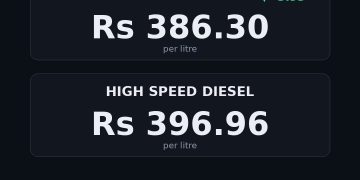

OGRA daily fuel pricing is now a confirmed policy shift in Pakistan. On July 17, 2026, Petroleum Minister Ali Pervaiz Malik announced at a joint press conference that the federal cabinet had approved a new system under which OGRA will set petrol and diesel prices every single day, ending the decades-old fortnightly revision cycle.
The announcement marks one of the biggest changes to Pakistan’s energy pricing in years, and it comes at a time when global oil markets remain deeply unsettled because of ongoing tensions near the Strait of Hormuz.
What Changed and Why OGRA Daily Fuel Pricing Was Introduced
For years, Pakistanis checked pump prices once every two weeks. Fuel prices in Pakistan were usually revised every 15 days, with OGRA calculating rates based on international crude oil costs, the dollar-rupee exchange rate, and import costs. That system left consumers in the dark about why prices moved and by how much.
For years, Pakistanis waited for fuel prices to change every fortnight, then every week during the US-Iran war. Now another major shift arrives as the government announced a new system where petrol prices are revised every single day, a move that will reshape how millions of motorists, businesses, and households plan their spending.
Federal Petroleum Minister Ali Pervaiz Malik announced the government’s decision to introduce the daily fuel pricing mechanism, adding that the recent escalation in regional tensions has pushed up global crude oil prices.
How the New OGRA Daily Fuel Pricing System Will Work
The proposed system would authorise OGRA to determine the prices of Motor Spirit (petrol), High-Speed Diesel (HSD), Light Diesel Oil (LDO), and Kerosene Oil every night, with the revised rates taking effect from 12:00 a.m. daily.
Under the new mechanism, the benchmark for daily fuel prices will be based on the seven-day average of international oil prices, replacing the previous pricing formula. This means wild single-day swings in crude will be smoothed out, but the prices you pay at the pump will still move much faster than before.
A key part of the reform is transparency. A government-appointed committee has directed OGRA to publish Platts pricing data daily on its website to ensure public access to the benchmark used for petroleum pricing in Pakistan. Platts (formally known as S&P Global Commodity Insights) is the internationally recognised source that sets the spot price for crude and refined products used as the starting point in Pakistan’s pricing formula. When OGRA publishes this data every day, consumers, analysts, and journalists can verify for themselves whether the pump price reflects what global markets actually say.
The decision was taken during the fourth meeting of the committee constituted by the Prime Minister to review the petroleum pricing mechanism. The meeting was chaired by Federal Minister for Petroleum Ali Pervaiz Malik and focused on international best practices and prevailing market dynamics.
Petroleum Price Stabilisation Fund Also in the Plan
The participants also agreed that the recently established Petroleum Price Stabilisation Fund should operate under a fully rule-based framework, with clearly defined mechanisms for both funding and disbursement, ensuring transparency and eliminating arbitrary decision-making. In simple terms, this fund is a buffer that can absorb some of the shock when global oil prices spike, so Pakistani consumers do not face the full hit all at once.
The federal government is considering activation of a permanent, rules-based Petroleum Price Stabilisation Fund that would help cushion the impact of sudden spikes or sharp declines in international oil prices, allowing consumers to receive more predictable relief during periods of market volatility.
Who Is Pushing Back on OGRA Daily Fuel Pricing
Not everyone is happy. The proposal triggered strong opposition from the Pakistan Petrol Pump Owners Association, which called it ‘completely unacceptable’ and warned that it could create serious operational and financial challenges for fuel retailers across the country.
The association urged the government to reconsider the proposed mechanism and engage with petrol pump owners before finalising any decision. It has also recommended that, instead of daily or weekly revisions, fuel prices should be determined on at least a monthly basis to ensure business stability and improve inventory management.
Their concern is practical. A pump owner who fills a storage tank at today’s rate may find tomorrow’s official price lower, leaving them holding stock at a loss. Daily pricing works smoothly in markets with computerised systems and automatic tank monitoring, but smaller pumps in rural Punjab or Balochistan may struggle to update signage and billing systems overnight.
Pakistan’s Fuel Supply Chain Is Also Getting a Digital Upgrade
The pricing reform sits alongside a separate but related push to digitise the entire petroleum supply chain. OGRA has introduced a digital track-and-trace system for petroleum products to strengthen oversight of the fuel supply chain. The regulator, in collaboration with the Punjab Information Technology Board, held a training session in Islamabad to brief industry stakeholders on the system.
The platform integrates key functions including import and export management, stock reporting, sales tracking and dispatch monitoring, with real-time connectivity across refineries, depots and retail outlets to track fuel movement nationwide.
Members of the committee emphasised the need for digitisation of the oil supply chain to improve efficiency and oversight. Together, the track-and-trace platform and the daily pricing system aim to close the information gaps that have historically allowed hoarding and artificial shortages to push prices higher at the pump than global markets would justify.
Why This Matters for Everyday Pakistanis
Fuel prices touch almost every corner of daily life in Pakistan. Higher fuel prices increase transport, production, food, and goods costs, making petrol a major factor in headline inflation.
The base OGRA price is uniform nationwide. City differences come from the Inland Freight Equalization Margin (IFEM), the cost of transporting fuel from Karachi’s refineries and port to retail outlets across the country. With daily pricing and daily published Platts data, a shopper in Lahore or a farmer in Sindh will, for the first time, be able to look up the same global benchmark OGRA used to set that day’s price and check the working themselves. That is a meaningful step for a country where fuel price announcements have repeatedly caused public anger and confusion.
Referring to a KPMG study, the minister said petrol prices in Pakistan remain lower than in Bangladesh, Sri Lanka, and Turkiye, and are broadly in line with prices in India. Whether that stays true under daily pricing will depend on how the government handles the Petroleum Price Stabilisation Fund during periods when global crude rises sharply.
For reference on how Pakistan’s EV and transport energy landscape is evolving alongside these fuel reforms, see Finance Act 2026 EV tax rules for imports and local assembly, which explains separate tax changes affecting electric vehicles this year.
You can track official OGRA notifications and price updates directly on the OGRA official website.
Frequently Asked Questions
What is OGRA daily fuel pricing?
OGRA daily fuel pricing is a new system approved by Pakistan’s federal cabinet in July 2026. Under it, OGRA sets petrol, diesel, LDO, and kerosene prices every night based on a seven-day average of international oil prices, with new rates starting at midnight each day.
Will I see a new petrol price every morning at the pump?
Yes, that is the plan. Once the system is fully operational, the price posted at your local pump could change every 24 hours. OGRA will also publish the Platts benchmark it uses daily on its website, so you can see exactly why the price moved.
Why are petrol pump owners against this change?
Pump owners worry that daily price changes will make inventory management very difficult. If a retailer fills their underground tank today and tomorrow’s official price drops, they absorb the loss. The Pakistan Petrol Pump Owners Association has asked for a monthly pricing cycle instead.
What is the Petroleum Price Stabilisation Fund?
It is a government-managed buffer fund designed to smooth out the impact of sudden global oil price spikes. When crude rises sharply, the fund can absorb part of the cost so that domestic pump prices do not jump by the full amount overnight. The government has pledged to run it under a transparent, rules-based framework.