

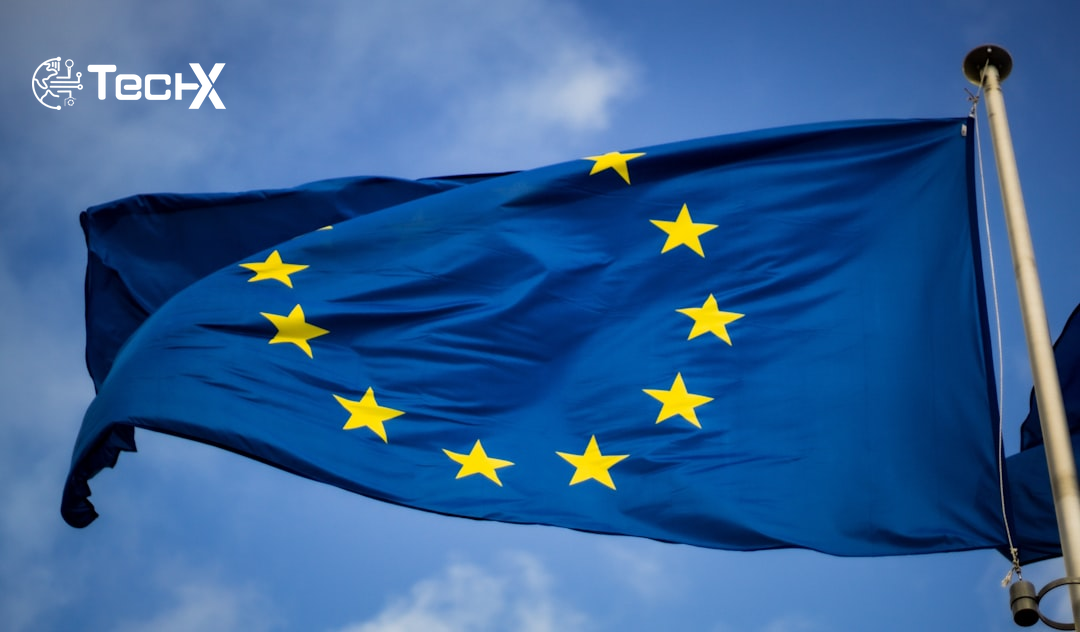
The MiCA grandfathering deadline on July 1, 2026 marks the end of the European Union’s 18-month grace period for crypto exchanges and service providers. After this date, any platform that does not hold a full EU Crypto-Asset Service Provider (CASP) licence must stop serving EU clients immediately. The impact goes well beyond Europe, and it matters for Pakistani traders too.
What Is the MiCA Grandfathering Deadline?
MiCA, short for Markets in Crypto-Assets, is the EU’s unified crypto law (Regulation EU 2023/1114). Before MiCA, a crypto exchange operating in Europe faced a confusing mix of national rules, one regime in Germany, another in France, another in Malta. MiCA replaced that with a single, harmonised system covering all 27 member states.
When MiCA entered into force in 2023, regulators gave existing crypto-asset service providers a grandfathering clause. This allowed platforms operating under older national registrations to keep running their services while they applied for a full MiCA licence.
The MiCA grandfathering deadline on 1 July 2026 is the longest window any EU member state could grant crypto-asset service providers. From that date, any firm still running on a legacy national registration, without a MiCA authorisation, has no transitional cover anywhere in the EU and must wind down or stop serving clients.
Regardless of national variation, 1 July 2026 is the hard outer boundary: no member state may extend grandfathering beyond this date. ESMA has confirmed that after this date, any firm providing crypto-asset services within the EU without holding MiCA authorisation will face regulatory action.
Why Most Exchanges Did Not Make the Cut
The numbers tell a stark story. With the EU’s MiCA transitional period expiring July 1, 2026, only around 210 of the 1,200-plus VASP entities that held pre-MiCA national registrations have converted to full CASP authorisation, a conversion rate of roughly 17%.
The answer lies in the sheer scale, cost, and complexity of the new EU crypto rules. Acquiring a CASP licence is not merely a matter of submitting paperwork; it requires a complete overhaul of corporate infrastructure. The financial burden of achieving full compliance easily runs into the millions of euros.
The licensing cost for smaller firms can be as high as €250,000 to €500,000, which represents a major obstacle for early-stage companies. Continuous compliance adds further pressure. Reports in 2026 indicate that costs may reach up to 15% of revenue for smaller firms, compared to under 2% for large exchanges, accelerating market consolidation.
Major exchanges, including Kraken, Coinbase, Bitstamp, Bitpanda, OKX, and Crypto.com, have secured licences. But the majority could not keep up. Hogan Lovells counted only 194 licensed crypto firms across the EU as of May 2026, in a market that had more than 3,000 registered crypto companies back in 2024. Around 75% of those older firms are expected to lose their right to operate once the grace period ends.
Not All EU Countries Had the Same Deadline
It is important to understand that the MiCA grandfathering deadline was not the same date across every country. Member states could shorten that window. Germany and Ireland closed theirs on 31 December 2025; the Netherlands, Poland, Latvia, Hungary and Slovenia chose just 6 months.
EU member states such as France, Malta, Luxembourg, and Estonia adopted the full 18-month period, providing an extensive runway for firms to prepare and transition to MiCA licensing. July 1, 2026 is just the final, absolute cutoff for everyone remaining.
What Happens to Stablecoins Like USDT?
Circle’s USDC and EURC are the only top-ten stablecoins fully MiCA-compliant, while Tether’s USDT remains shut out of EU-regulated markets after refusing to pursue authorisation.
Major stablecoins like USDT remain non-compliant, forcing exchanges to delist them and fragment liquidity. While this does achieve the goal of protecting consumers, it also pushes users toward offshore alternatives or restricts access to key global stablecoins. Many Pakistani traders use USDT heavily for remittances and trading, so this is a practical concern worth noting.
What Does This Mean for Pakistani Crypto Traders?
Pakistan does not have a direct connection to MiCA rules, but the global ripple effects are real. Many Pakistani traders use international platforms like Binance, OKX, or Kraken. These big exchanges have already secured their MiCA licences, so access to them should continue normally.
The risk is with smaller or mid-sized platforms that have not secured a licence. Users on unlicensed platforms risk account restrictions, withdrawal deadlines, service suspensions, or forced transfers to authorised providers.
Download data analysed by OKX using Sensor Tower found that of 18.5 million crypto app downloads across Europe between May 2025 and May 2026, roughly 7.6 million went to exchanges lacking MiCA authorisation. That shows how many users globally may be caught off guard.
If you are a Pakistani user on a platform that serves European clients, watch for any emails about account migrations or service changes. Your crypto is not seized, but you may lose your ability to freely use it. Failing exchanges could restrict your account, block new deposits, halt all trading features, and eventually force you to withdraw your funds, often during a period of high network fees and low liquidity.
Also worth noting: one of the most significant upcoming developments will be the activation of the Crypto-Asset Reporting Framework under DAC8, effective from January 1, 2026. This will require CASPs to start collecting detailed user data on transactions for mandatory tax reporting. This means EU-regulated exchanges will collect and share user data with tax authorities, which affects all global users of those platforms.
How to Check If Your Exchange Is MiCA-Authorised
Use ESMA’s Interim MiCA Register, the official central source, which publishes five CSV files and refreshes weekly. Check the authorised CASPs file by the exact legal entity name, not just the brand. A licence is tied to a specific legal entity, so a group authorisation may not cover the subsidiary that actually holds your account.
A MiCA licence from one EU member state allows firms to passport services across all 27 member states without additional national approvals. So if your platform has even one EU licence, it can legally serve users across the whole bloc.
The Bigger Picture
The era in which crypto operated in a regulatory vacuum, where an exchange could serve a global audience with minimal oversight, is closing, and MiCA is one of the clearest markers of that shift.
MiCA is widely considered the world’s first comprehensive regulatory framework for crypto-assets. It creates a single, unified set of rules across all 27 EU member states, replacing the patchwork of national regimes that existed before. Other countries, including Pakistan, will likely watch how this plays out as a model for their own future crypto regulation.
Pakistan’s own fintech space is growing fast. The country’s IT and digital exports hit record levels in FY26, and more Pakistani users are entering global crypto markets. Understanding international rules like MiCA is now part of being a smart digital trader.
Frequently Asked Questions
What is the MiCA grandfathering deadline?
The MiCA grandfathering deadline is July 1, 2026. This transitional window officially and irrevocably closes on July 1, 2026. The European Securities and Markets Authority (ESMA) has issued a definitive stance on this timeline. After this date, any crypto exchange without a full CASP licence must stop serving EU clients.
Which major exchanges have a MiCA licence?
As of May 2026, confirmed MiCA CASP authorised exchanges include Bitvavo, Bitpanda, Kraken, Coinbase, and Binance. Crypto.com and OKX received authorisations via Malta’s MFSA, while Bitstamp was approved in Luxembourg. Revolut received its MiCA licence from CySEC in Cyprus.
Does MiCA affect crypto exchanges outside the EU?
Yes. MiCA applies wherever crypto-asset services are provided within the EU, regardless of where the service provider is based. Non-EU firms that solicit or accept EU clients must obtain MiCA authorisation, typically by establishing an EU or EEA subsidiary, or stop targeting EU users.
What should a user do if their exchange is not MiCA-authorised?
Your assets are not seized, but access can be interrupted. Any exchange operating without a MiCA licence must run an orderly wind-down, including transferring crypto-assets to an authorised CASP or to self-hosted wallets that you control. ESMA requires firms to notify clients in advance so they can move funds without harm. The safest step is to withdraw or migrate your funds early, before any disruption hits.