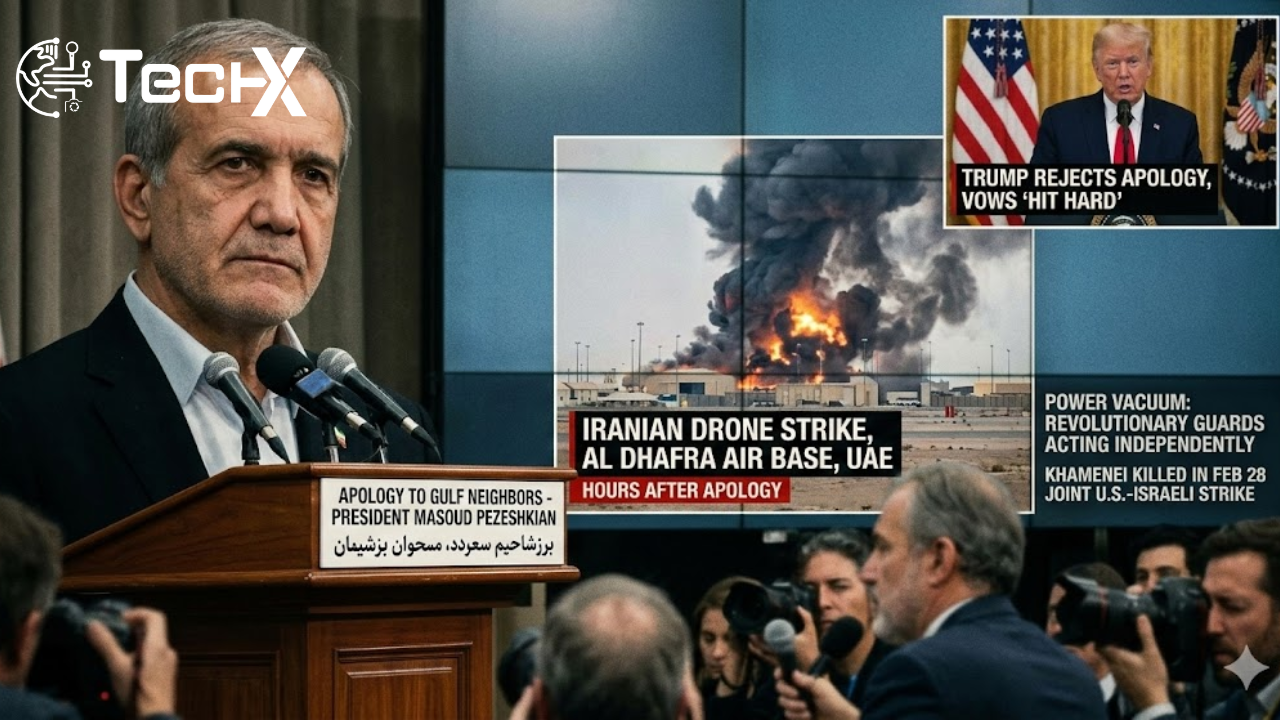
Iran has publicly apologized to neighboring Gulf countries for strikes that damaged civilian infrastructure. The Iranian government stated that these actions were unintended and assured that attacks on these nations would be suspended unless provoked from their territory. This rare apology comes amid rising tensions in the region.
Conflict Continues Across the Middle East
Despite the apology, the war in the Middle East is still ongoing. Missiles and drone strikes continue to hit targets across the Gulf, including United Arab Emirates, Saudi Arabia, Kuwait, Qatar, and Bahrain. The situation remains tense, with ongoing military operations by Iran, Israel, and U.S. forces.
Global Reactions and Warnings
Donald Trump and other world leaders have responded cautiously. Trump dismissed Iran’s apology as insufficient and threatened stronger military action. Gulf countries are on high alert, intercepting missiles and preparing for potential escalations. The international community continues to monitor the situation closely.
Humanitarian and Civilian Impact
The conflict has caused civilian casualties in several countries and disrupted daily life. Airspace closures and flight disruptions are affecting travel and trade. Emergency services are stretched, and many civilians remain in high-risk areas, facing uncertainty about safety and basic necessities.
Evacuations and Safety Measures
In response to the escalating conflict, countries like the U.S. are organizing emergency evacuations. Thousands of American citizens have been flown out of the Middle East on charter flights, and embassies are assisting residents in safe relocation. Governments continue to urge their citizens to leave the region until the situation stabilizes.