

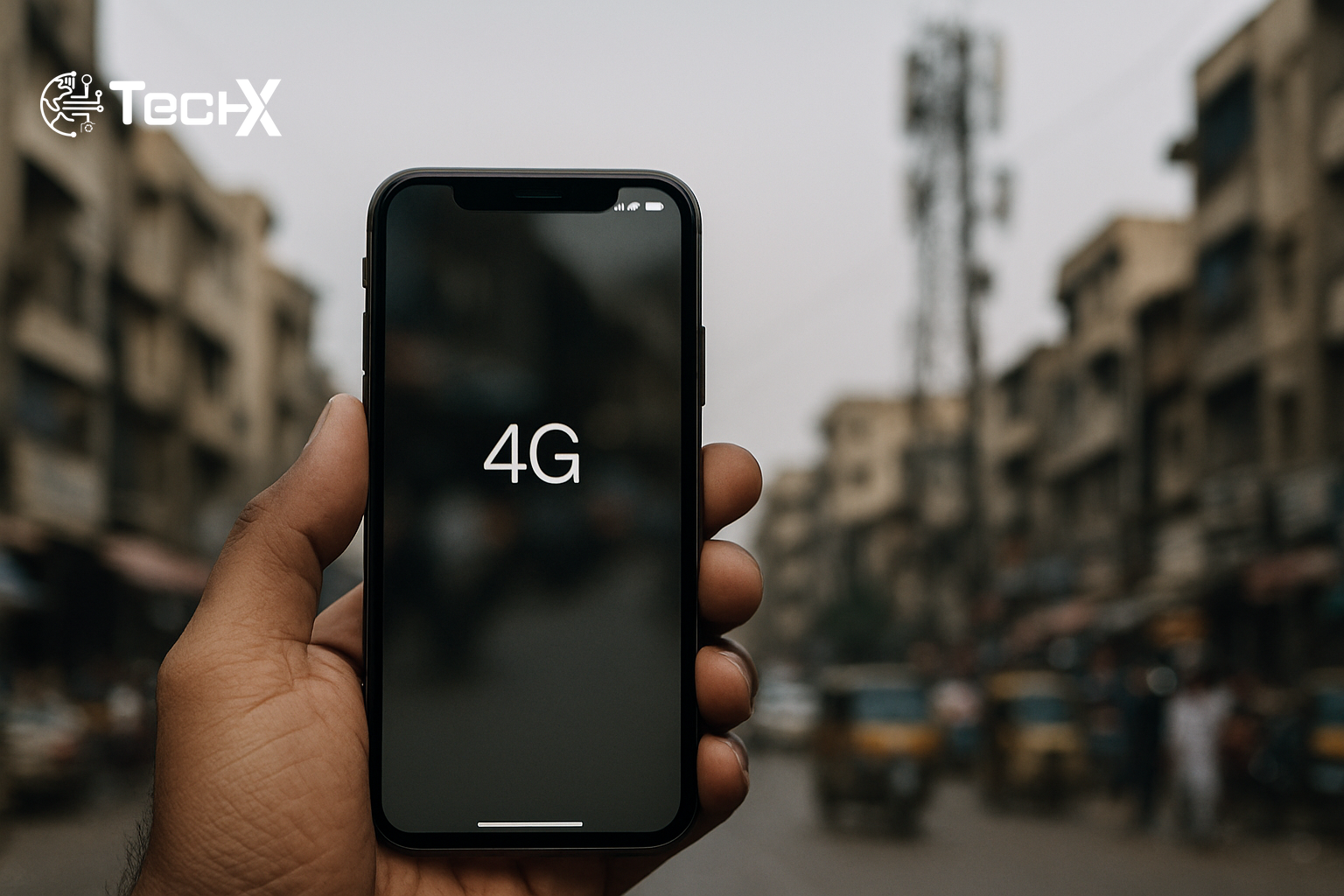
iPhone 5G Pakistan users finally have a reason to cheer, but the road is still bumpy. Pakistan held its landmark 5G spectrum auction in March 2026, raising $507 million and handing out licences to Jazz, Zong, and Ufone. Android phones in pilot cities lit up with 5G bars almost immediately. Yet millions of iPhone users were left staring at the same old 4G LTE icon, even when standing right next to a 5G tower. The culprit is not their phone’s hardware. It is a small software file called the carrier bundle, and only Apple can approve it.
What Pakistan’s 5G auction actually delivered
The Pakistan Telecommunication Authority (PTA) sold 480 MHz of spectrum across the 700 MHz, 2300 MHz, 2600 MHz, and 3500 MHz bands during the March 10, 2026 auction. Jazz emerged as the biggest buyer, securing 190 MHz across all four bands. Zong picked up 110 MHz, and Ufone secured 180 MHz, with the largest share of the 3500 MHz band, which is the global standard for high-speed 5G.
Jazz and Zong received their 5G licences from the PTA and moved quickly. Zong commercially launched 5G in over 16 cities, including Islamabad, Rawalpindi, Karachi, Lahore, Peshawar, and Quetta. Jazz activated roughly 180 pilot sites across major provincial capitals. Ufone received its licence but has not yet announced a full commercial launch date or a list of compatible devices.
For Android users in those cities, 5G started working on many Xiaomi, Vivo, Realme, and Oppo phones fairly quickly, because those brands impose fewer software restrictions on network access. iPhones are a different story.
Why iPhone 5G Pakistan access needs Apple’s permission
Apple does not let an iPhone simply connect to any 5G network it detects. The company uses a system called a carrier bundle, a small signed software file that tells iOS which local networks support 5G and unlocks the 5G option inside your phone’s settings. Without it, the phone’s 5G modem stays off, even on a brand-new iPhone 16 sitting directly under a 5G tower.
Apple’s own support page confirms that carrier settings updates can add support for new features like 5G. These updates are delivered over the air, but they must first be prepared and certified by the carrier, then signed and distributed by Apple. The process requires telecom operators to apply for approval, complete technical testing, and receive final certification before Apple adds the network to its software updates.
This is standard practice in every new 5G market worldwide. The difference in Pakistan is the timeline. Operators only received their spectrum licences in March 2026, which means the certification clock only started ticking then.
Where each carrier stands right now
Zong moved fastest. It is currently the only Pakistani carrier to have completed Apple’s technical requirements, though access in mid-2026 still requires users to install the iOS 26.5 Public Beta through Apple’s Beta Software Program. Once installed, users can manually enable 5G Auto or 5G On under Cellular Data Options. Speed tests near Zong towers have shown download speeds between 244 Mbps and 290 Mbps, which is a massive jump from typical 4G speeds.
Jazz took longer but has since added iPhone support to its 5G rollout, with the company stating that iPhones updated to the latest iOS version can access its network. However, the rollout is still in early stages, and coverage is limited to pilot sites in major cities. Jazz’s existing subscriber base is the largest in Pakistan, which makes the delay particularly felt across millions of users.
Ufone has received its 5G licence but has not yet announced official Apple device support. Once the proposed merger with Telenor Pakistan is formally approved by the PTA, the combined entity will hold a very large spectrum pool, which could accelerate its certification push with Apple.
The three things needed to unblock iPhone 5G Pakistan fully
Getting every iPhone user in Pakistan onto 5G requires three separate things to happen together:
- Carriers must complete Apple’s certification process. This means technical testing, documentation, and sign-off from Apple for each specific band and network configuration. Zong has done this. Jazz is in progress. Ufone has yet to announce a timeline.
- Apple must push a stable iOS carrier update. Right now, Zong’s iPhone 5G access requires a beta version of iOS. Most users will not, and should not, run beta software on their daily phone. A stable update pushed to all users is the moment 5G truly becomes mainstream for iPhone owners in Pakistan.
- PTA must keep the regulatory path clear. The regulator has already made a positive move by abolishing right-of-way charges for telecom infrastructure, making Pakistan the first country in Asia to remove this fee. Continued support for fast infrastructure rollout is essential.
Why this gap matters for Pakistan’s iPhone users
Pakistan’s iPhone market is smaller than its Android market, but it is not small in absolute terms. High import duties have pushed the latest iPhone models to between Rs 480,000 and Rs 650,000 in markets like Lahore’s Hafeez Centre. That price point means most iPhone buyers are premium customers who arguably expect premium network access. Paying flagship prices and staying on 4G while a budget Android phone next to you gets 5G is a hard sell.
There is also a perception gap. Android users in pilot areas are already experiencing 5G. iPhone users see the coverage maps but cannot access the network. Some Jazz subscribers have publicly criticised the network on social media, noting that even in areas with 5G infrastructure, their iPhones remain stuck on LTE.
Industry observers expect a full, stable rollout across all carriers to potentially arrive by late 2026 or early 2027. The actual date depends almost entirely on how fast each operator completes its technical certification with Apple and how quickly Apple packages those approvals into a stable iOS update. There is no official timeline from Apple or from PTA for a definitive completion date.
What you can do right now
If you are on Zong and want to try iPhone 5G today, you can enroll in Apple’s Beta Software Program through Safari on your iPhone, enable beta updates in your software settings, and install the iOS 26.5 Public Beta. After that, go to Settings, tap Cellular, then Cellular Data Options, and enable 5G. Keep in mind that beta software can have bugs, so this is not recommended for people who rely heavily on their phone for work.
If you are on Jazz, make sure your iPhone is updated to the latest stable iOS version. Jazz has begun adding iPhone support, and a carrier settings update may arrive automatically once your device is connected to Wi-Fi. You will see a prompt asking you to install the update.
If you are on Ufone, there is no official iPhone 5G support yet. Keep your iOS updated and watch for official announcements from Ufone or the PTA as the network’s rollout progresses through the rest of 2026.
Frequently Asked Questions
Why does my iPhone not show 5G in Pakistan even with a 5G SIM?
Because Apple locks 5G access through a carrier bundle, a software file that must be certified and pushed by your carrier before iOS enables the 5G option. Even if your phone supports 5G hardware and you are in a 5G coverage area, the feature stays hidden until that carrier bundle is approved and delivered.
Which Pakistani carrier has iPhone 5G working right now?
Zong was the first to complete Apple’s technical requirements. Access currently requires installing the iOS 26.5 Public Beta. Jazz has since added iPhone support and says users on the latest stable iOS can access its 5G pilot network. Ufone has not yet confirmed iPhone 5G support.
Do I need a new SIM to get 5G on my iPhone?
No. You do not need to change your SIM card. The upgrade comes through a carrier settings update delivered to your iPhone over the air or included in an iOS software update. Your existing SIM works fine once the carrier bundle is in place.
When will iPhone 5G Pakistan be available on all networks nationwide?
There is no official confirmed date. Industry analysts suggest full nationwide coverage across all carriers on stable iOS software could arrive by late 2026 or early 2027, depending on how fast operators complete Apple’s certification and how quickly Apple packages those approvals into a mainstream iOS release.