HP has repeatedly attracted criticism for requiring users to purchase notoriously pricey printer ink. This most recent disagreement revolves around reports that the corporation shuts off multifunction printers when the ink runs low, even if users aren’t attempting to print anything.
HP attracted criticism
A federal judge has ruled that HP must face a class-action lawsuit accusing the company of purposefully disabling scanning and faxing features on its all-in-one printers when the ink runs low.
If confirmed, this would be yet another strategy employed by the company to force expensive ink cartridges onto its users. The razor-and-blade approach is used by companies such as HP and Canon to promote inkjet printers.
They sell printers at low prices while profiting handsomely from the sale of pricey ink cartridges. According to Consumer Reports, these cartridges can cost users up to $70 each year.
Those wanting to save money by purchasing less expensive third-party cartridges or refilling their used ones frequently confront various restrictive measures, and these practises have landed HP in hot water with regulators around the world.
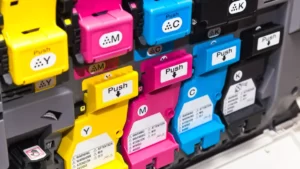
Previous settlements prompted HP to compensate customers in Australia, Portugal, Italy, Belgium, and Spain.
This came as a result of legislative judgements against the company’s Digital Rights Management (DRM) system, which prevents customers from installing third-party or refilled cartridges. Despite this, HP continues to sell printers with this DRM, despite previously removing it.
Furthermore, the International Imaging Technology Council (IITC) later accused HP of using an eco-friendly label to coerce customers into paying for ink cartridge subscriptions.
Once the trial time expires, the subscription automatically initiates regular payments, HP issues firmware upgrades to enforce the DRM without users’ awareness, and the cartridges are disabled when connected to the internet.
The IITC is advocating for the elimination of HP’s eco-friendly accreditation since it clearly requires support for third-party and refurbished cartridges.
According to the present case, HP’s multifunction printers, some of which have scanning and faxing capabilities, become inoperable without ink.
Even if users only need to scan or fax a document, this occurs. Furthermore, the lawsuit contends that HP fails to provide this information to customers. HP has yet to respond to these charges and has been unsuccessful in convincing a court to dismiss the lawsuit.
Finally, the prices of HP’s all-in-one printers and scanners may raise eyebrows, implying another plan to boost ink sales.
While standalone scanners from HP cost hundreds to thousands of dollars, several of its all-in-one devices cost less than $100.
To read our blog on “HP developing fully automated AI PCs that will do your task,” click here