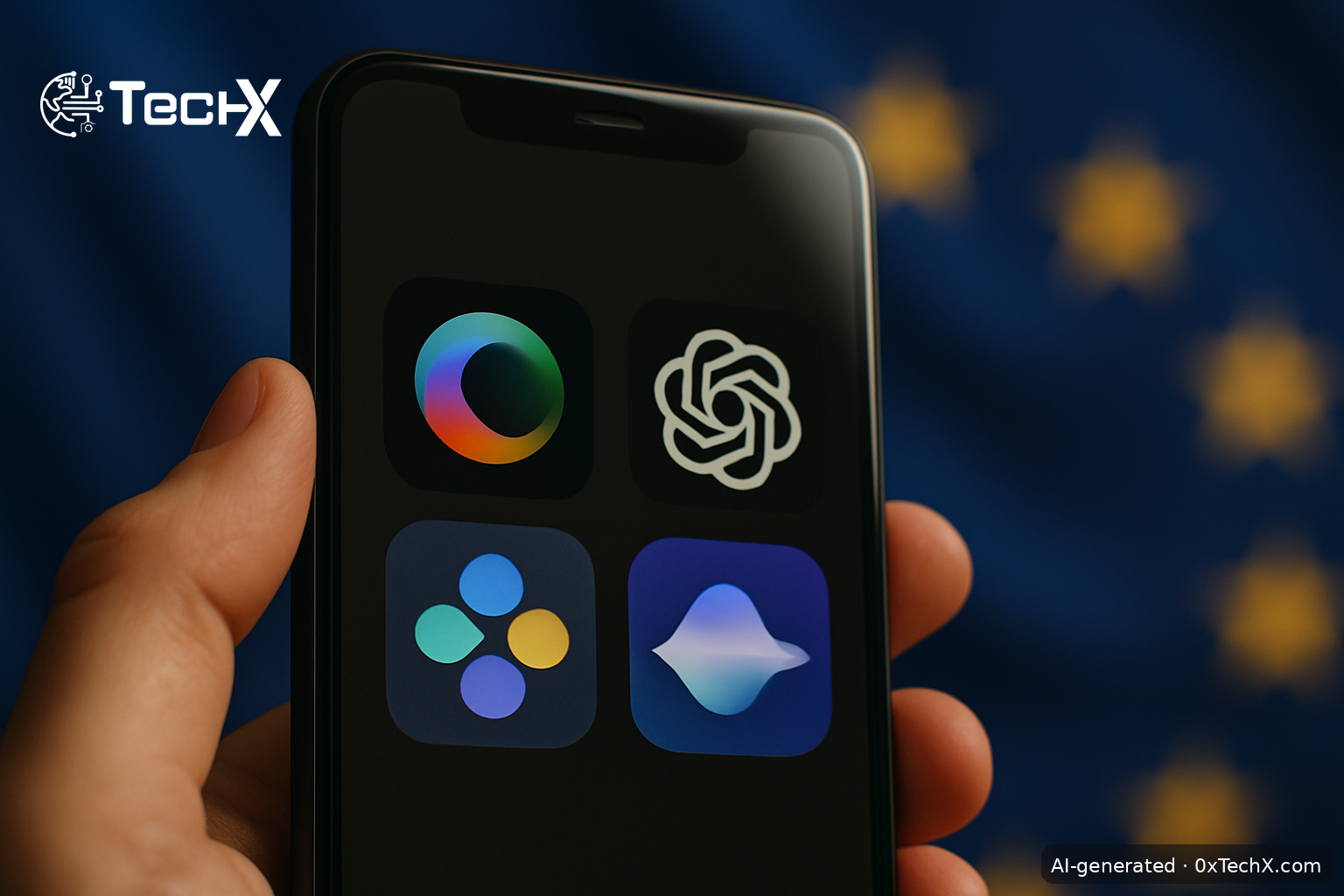
The EU Digital Markets Act has just delivered its biggest blow yet to Google’s grip on Android and search. On July 16, 2026, the European Commission issued two binding orders that force Google to open 11 key Android features to rival AI assistants and share its valuable search data with competitors, changes that will reshape how over two billion Android users interact with their phones.
What the EU Digital Markets Act Actually Ordered
The European Commission issued two binding orders under the Digital Markets Act requiring Google to grant rival AI assistants the same system-level Android integration it reserves for Gemini, and to share the search query and ranking data that underpins its lead in AI-powered search, starting as early as January 2027.
These are binding specification measures, not fines, and they spell out exactly what Google must do. In plain terms, the EU is telling Google that owning Android does not give it the right to lock out competing AI tools.
The Android Side of the Order
Right now, if you use a third-party AI assistant on your Android phone, it cannot do what Google’s own Gemini can. On Android phones, competitors’ AI assistants only have restricted access to key functionalities of the operating system. Without this access, alternative AI assistants are not competing on an equal footing with Google’s own AI services that have full access.
Google will be required to open 11 specific features on Android to competing AI services by July 2027, giving them access comparable to what Google’s own Gemini assistant already has. This includes the ability to use custom wake words (like saying “Hey ChatGPT” the way you say “Hey Google”), and the power to take actions inside other apps on your behalf.
Users will be able to use third-party AI assistants to perform actions in apps on their behalf, for instance, delegating tasks such as booking a taxi, receiving suggestions for relevant replies in chat apps, or asking the AI assistant about a recently visited place.
The difference matters more than it sounds. An AI assistant that cannot be triggered by voice, cannot read what is on the screen, and cannot interact with the operating system’s core apps is not competing on equal terms, regardless of whether it is available for download. The EU is closing that gap.
The Search Data Side of the Order
Subject to anonymisation, Google must share the same data it collects to improve its own search with rival engines and AI chatbots. The aim, the EU said, is to “rebalance the playing field.” Data sharing starts in January 2027.
This matters because Google’s search dominance is partly built on decades of accumulated click data and query logs that no rival can replicate. Sharing search data could help fill the “data moat” Google has built over years through accumulated click data and query logs, providing a significant tailwind for emerging AI search services.
And here is something most coverage misses: Google had technically been sharing some data before, but it was not meaningful. Google was removing between 90% and 100% of unique search queries from the dataset it had previously shared as part of a DMA compliance proposal. It was also unduly restricting the potential pool of beneficiaries by excluding AI chatbots that provide search services. The new order closes those loopholes.
Records with rare or sensitive details would be suppressed, users grouped into bundles of at least 1,000, and identifiers removed, so user privacy is protected under the new framework.
Google Pushes Back Hard
Google has fiercely opposed the decision, warning that granting deep, system-level permissions to external apps bypasses hardware safety guardrails and risks a security catastrophe.
“Today’s decisions risk undermining vital privacy and security guardrails for millions of Europeans. We have repeatedly offered solutions to safeguard users while satisfying the DMA’s goals, but these rulings discount extensive evidence of user harm,” Google’s global affairs head Kent Walker said.
However, privacy experts point out that Google’s motivations deserve scrutiny. Some question whether privacy is Google’s primary motivation for pushing back on the EU’s rules.
The EU Digital Markets Act does give Google some protection: the measures contain robust safeguards, and Google will only offer the 11 features to rivals who fulfil security and privacy criteria. So not just any app can waltz in and access your phone’s core systems.
The Bigger Picture for Android Users Globally
The Commission’s stated goal is to prevent Gemini from becoming the dominant AI platform on Android before the market hardens, a forward-looking move, not a reaction to an established monopoly.
The AI race is still very much open. ChatGPT reportedly held roughly 70% of EU AI chatbot usage as of April 2026. The EU wants to keep it that way rather than let Android’s deep integration tip the scales toward Gemini over time.
The EU has the right to slap fines of up to 10% of a company’s total global turnover for violating the DMA. For Alphabet, which earns hundreds of billions annually, that is a serious threat. Brussels hit Google with fines worth a total of 8.2 billion euros between 2017 and 2019 under different competition rules, and in September last year imposed a €2.95 billion fine in a separate antitrust case.
This ruling also has political heat. The DMA has drawn opposition from the Trump administration, which argues it unfairly targets US firms. But Brussels acted on its own schedule regardless.
For a closer look at how this AI battle is hitting Alphabet’s business, see our earlier piece on the Gemini 3.5 Pro delay and its effect on Alphabet shares, which shows just how much pressure Google already faces in the AI race. The broader shift in who controls AI infrastructure is also covered in our analysis of the Apple and Nvidia market cap battle as AI competition shifts gears.
What This Means for Pakistan and the Region
Pakistan is one of the world’s largest Android markets, with well over 90% of smartphones running Android. While the EU Digital Markets Act only applies to EU users right now, these rulings set a global precedent. When Google rebuilds Android to meet EU rules, those underlying changes often roll out worldwide in the same software update. Pakistani users could end up benefiting from more AI assistant choices even without local regulation requiring it.
Beyond that, regulators in the UK and Japan are already watching the DMA closely and building similar frameworks. If this model spreads, it could eventually push for more open AI ecosystems in developing markets too, giving local developers and AI startups a real chance to compete on Android without being shut out by default Google integrations.
For now, the EU Digital Markets Act orders are the most direct challenge to how Google controls the Android experience. The official details are published on the European Commission’s Digital Markets Act portal. If you want to understand what Android is and how it works at its core, Android’s official site explains the platform’s open-source roots, which makes the EU’s argument about selective openness even more pointed.
Frequently Asked Questions
What is the EU Digital Markets Act?
The EU Digital Markets Act (DMA) is a law that came into force in 2023. It requires large tech companies labelled as “gatekeepers”, like Google, Apple, and Meta, to open their platforms to competition and give users more choice. It is meant to stop these companies from using their size to lock out rivals.
When will Android users see these changes?
Brussels said Google must start sharing search data from January 2027, and users would start benefiting from the changes to Android from July 2027. The Android changes are expected to arrive with the next major Android version.
Which AI assistants will benefit from this ruling?
Alphabet’s Google will have to help OpenAI and other AI rivals, as well as online search engine competitors, access its services to comply with EU rules. Services like ChatGPT, Claude, and other qualifying AI assistants could gain the same deep Android access that Gemini currently has exclusively.
Could Google refuse to comply?
Google can challenge the decisions in court, and it likely will. But the orders are immediately binding. Rather than issuing another multibillion euro fine, the EU opted for binding technical requirements that spell out exactly what Google must change, though the company retains the right to challenge the decisions in court. If Google ignores the orders, it faces fines of up to 10% of its global annual revenue.