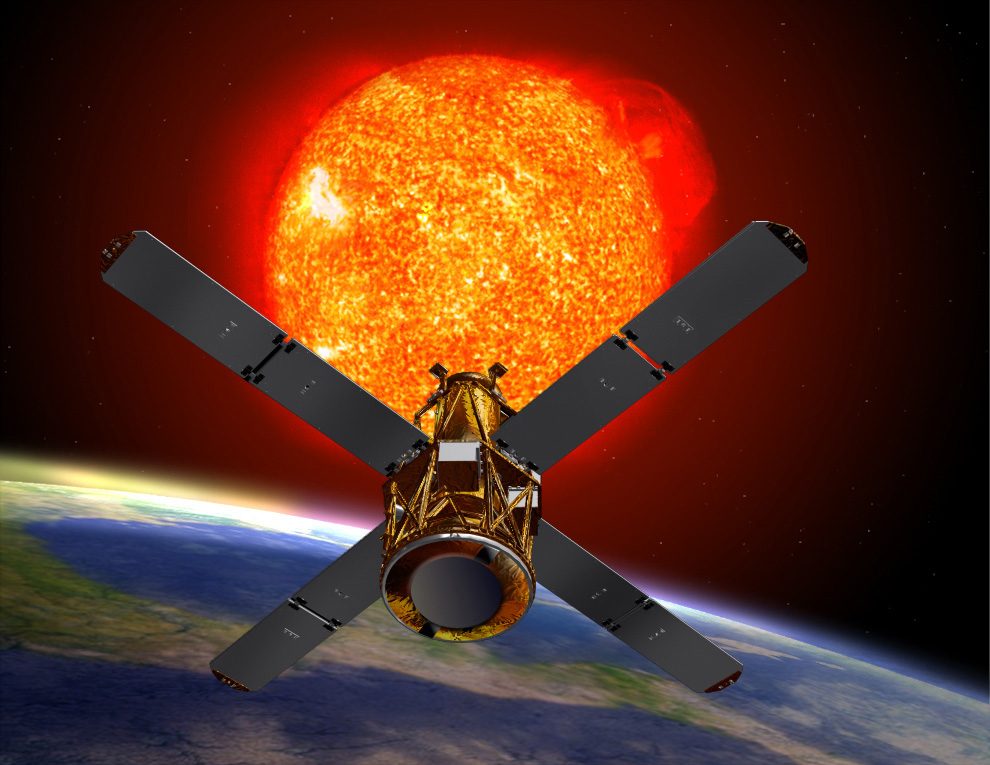
After being deactivated in 2018, an old NASA spacecraft will crash down to Earth on Wednesday, April 19.
After nearing the end of its anticipated life expectancy, the Reuven Ramaty High Energy Solar Spectroscopic Imager (RHESSI) satellite, which has been observing the sun since 2002, was decommissioned.
The 600-pound RHESSI will break down into ash and vapour as it descends towards Earth, according to experts. However, agency representatives stated that “the likelihood of harm occurring to anyone on Earth is negligible – roughly 1 in 2,467.”
As a result of the more than 30,000 bits of orbital debris that are currently being observed by international space surveillance networks, the Earth’s orbit has grown to be exceedingly congested and hazardous.
NASA Old Satellite Can Cause Problems
According to the European Space Agency, there are over 1 million objects in orbit around our planet that are between 0.4 inches and 4 inches (1 to 10 cm) diameter.
Small fragments of this debris have the potential to seriously harm spacecraft or satellites if they come into contact with them.
The imaging spectrometer on the RHESSI satellite, which recorded X-rays and gamma rays, was put into orbit to research solar flares and coronal mass ejections.
More than 100,000 X-ray events were captured by the spacecraft, allowing researchers to examine the powerful particles in solar flares.
To read our blog on “NASA grants $10.8 million to support research and technology,” click here.