
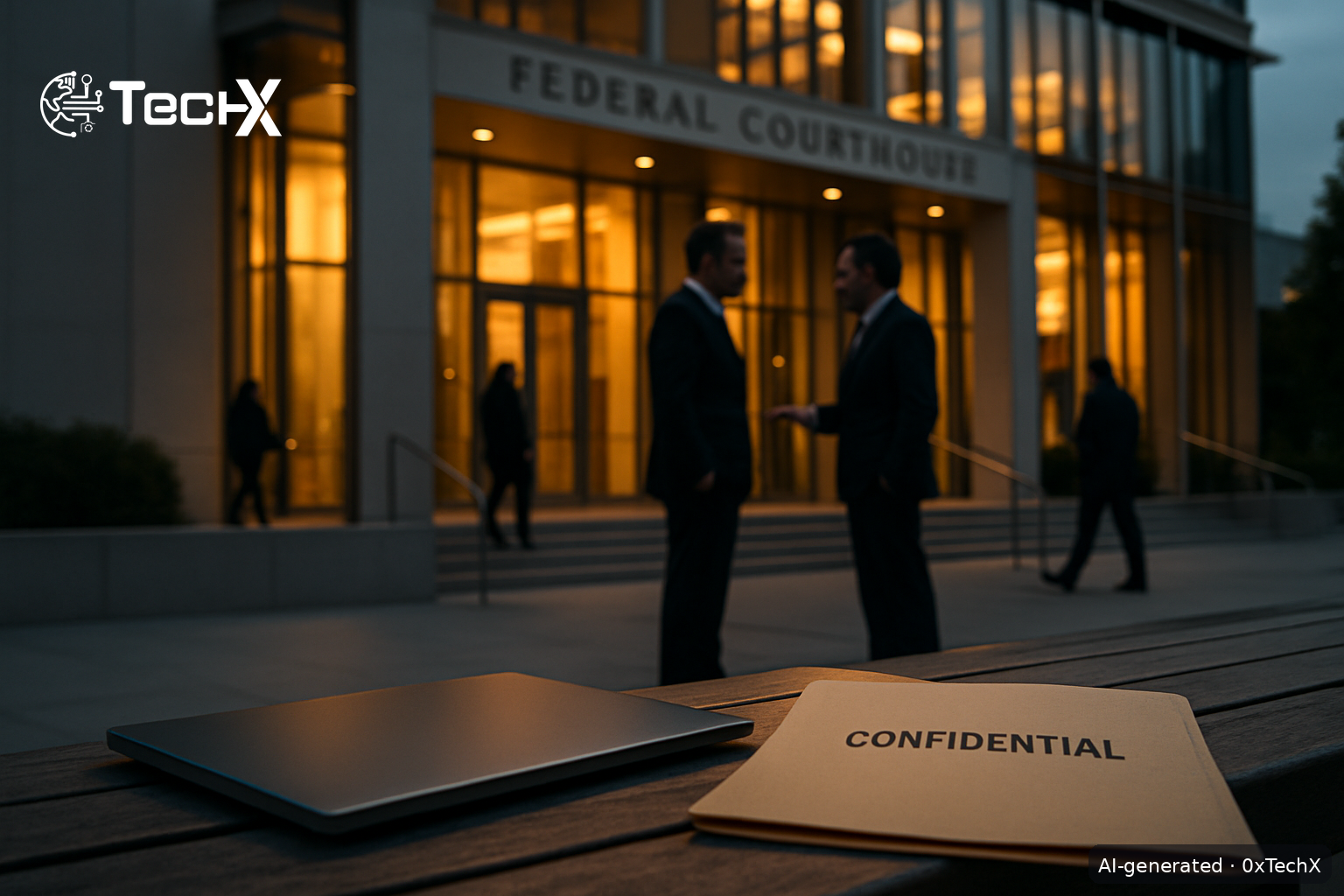
The Apple OpenAI trade secret lawsuit, filed on 11 July 2026 in the US District Court for the Northern District of California, is one of the biggest legal clashes in tech history. Apple alleges that OpenAI ran a coordinated, multi-level scheme to steal confidential hardware secrets, secrets that it says are now baked into OpenAI’s upcoming AI device. Here is what happened, who is involved, and why it matters far beyond Silicon Valley.
What Apple Says OpenAI Did
The core claim is blunt. Apple says OpenAI did not just passively benefit from employees who happened to carry knowledge in their heads. Instead, it alleges a deliberate, top-down operation. According to the filing, over 400 former Apple employees now work at OpenAI, a talent drain of unusual scale, even by Silicon Valley standards.
Apple alleges that OpenAI’s hardware chief, Tang Tan, who spent 24 years at Apple rising to VP of product design for the iPhone and Apple Watch, directed job candidates still working at Apple to bring physical hardware components, batteries, logic boards, and SIP chips, to their OpenAI interviews for what the filing calls ‘show and tell’ sessions. Apple says Tan also used confidential Apple internal project code names during the recruiting process to draw out even more secret details from candidates who had not yet resigned.
Tan also allegedly kept or obtained an internal Apple document, marked ‘Need to Know’, that laid out the company’s exit security procedures. The lawsuit says he shared this document with new OpenAI hires so they could dodge Apple’s standard security checks when leaving.
The Apple OpenAI Trade Secret Theft in Detail
The second key defendant is Chang Liu, a former senior systems electrical engineer who spent eight years at Apple before joining OpenAI in January 2026. Liu did not return his Apple-issued laptop when he left. Apple says he then discovered a software bug that let him keep accessing Apple’s internal cloud storage and used it to download dozens of confidential hardware files, including technical specifications, engineering presentations, and proprietary data about products Apple has not yet announced.
Rather than report the bug, Liu allegedly joked about it in messages to a former Apple colleague who was still employed there. Apple says he also advised at least one Apple employee on what information to study before interviewing at OpenAI, and maintained contact with another Apple employee who continued to send him internal updates about vendors, engineering decisions, and project status.
Beyond individual employees, Apple’s filing goes further. It says OpenAI approached Apple’s trusted manufacturing partners and used confidential Apple information with them, in one case allegedly convincing a supplier that it had Apple’s permission to use a proprietary metal finishing technique for an OpenAI device. Apple says it has no visibility into how far the misuse has spread.
Who Else Is Named in the Lawsuit
Besides Tan and Liu, Apple also named io Products as a defendant. io was a hardware startup co-founded by Tan and Apple’s legendary former design chief Jony Ive, which OpenAI acquired last year in a deal reportedly worth $6.5 billion. Ive is not personally named in the suit. OpenAI CEO Sam Altman had openly described his ambition to build a new class of AI gadgets that could eventually replace the smartphone, making Ive and Tan’s combined expertise at io a huge strategic asset.
Industry analyst Ming-Chi Kuo has reported that OpenAI’s first hardware product could be an AI-first smartphone that relies on AI agents rather than traditional apps, potentially targeting the same mass market as the iPhone. If Apple’s allegations are true, the very foundation of that device business may have been built using stolen Apple knowledge.
A Partnership That Turned Into a Fight
The timing makes this story even stranger. In 2024, Apple and OpenAI announced a high-profile partnership to integrate ChatGPT into Apple products through Apple Intelligence. That deal put the two companies in the same corner publicly. Now Apple is accusing OpenAI of running a theft operation ‘at every level, from members of its Technical Staff to its Chief Hardware Officer.’
Ironically, OpenAI had reportedly been considering its own legal action against Apple, potentially for not promoting ChatGPT integration on its devices as agreed. Now Apple has moved first. Apple sent OpenAI a letter in February 2026 raising its concerns. It says it received no response, after which it filed the lawsuit.
OpenAI’s public response was brief: ‘We have no interest in other companies’ trade secrets. We remain focused on building innovative technology that empowers people everywhere.’ The company has not addressed the specific allegations in detail.
What Apple Is Asking the Court to Do
Apple wants the court to: (1) bar OpenAI from using or disclosing any of its trade secrets; (2) force the return of all confidential Apple materials; (3) preserve all evidence for discovery; and (4) award financial damages in an amount to be decided at trial. Apple is also suing Tan and Liu individually for breach of their employment contracts with Apple.
Legal experts note that the discovery process, where both sides must share documents, could be the most revealing part of the case. Apple admits in its own filing that it does not yet know the full extent of what was taken. Going to court gives Apple the legal tools to find out.
The Bigger Picture for the AI Industry
This is not an isolated incident in the AI world. OpenAI has previously faced accusations from the New York Times over content used to train its models, and just weeks before this filing, a California judge dismissed a separate lawsuit from Elon Musk’s xAI claiming OpenAI had poached an engineer to extract Grok chatbot secrets.
The Apple case is different in scale and in specifics. It describes a systematic, allegedly leadership-directed operation, not just a few rogue employees. If the claims hold up in court, they raise serious questions about what is acceptable in the AI talent wars, and where the line sits between hiring experienced engineers and misappropriating the companies they came from.
The lawsuit also lands at a sensitive time for OpenAI. The company is preparing for what is widely expected to be one of the largest technology IPOs in years. A major, active trade secret lawsuit could complicate that process significantly, both in terms of legal risk and investor confidence.
Why This Matters for Pakistani Tech Users and Developers
Pakistan has millions of active iPhone users, and the ChatGPT-Apple Intelligence integration affects every iOS 18 device in the country. Whether the Apple-OpenAI partnership survives this lawsuit will directly shape which AI features Pakistanis get on their iPhones in the coming years. Apple has already started moving Siri toward Google’s Gemini instead of OpenAI for its next major update.
For Pakistani software developers and startups using AI tools in the BPO and outsourcing sector, the case is also a sign that AI IP battles are intensifying globally. Companies that build AI products, whether in San Francisco or Lahore, will need cleaner, more careful boundaries around how they hire and what employees can bring with them when they move.
Frequently Asked Questions
What is the Apple OpenAI trade secret lawsuit about?
Apple filed a lawsuit on 11 July 2026 accusing OpenAI and two former Apple employees of stealing confidential hardware files, physical components, and proprietary techniques to fast-track OpenAI’s AI device development. The case also names io Products, the hardware firm OpenAI acquired from Jony Ive’s team.
Who are the main people named in the lawsuit?
The lawsuit names Tang Tan, OpenAI’s chief hardware officer and a 24-year Apple veteran, and Chang Liu, a former Apple senior electrical engineer who joined OpenAI in January 2026. io Products is also named as a corporate defendant. Apple’s former design chief Jony Ive, who now leads OpenAI’s device work, is not personally named.
Does this lawsuit affect the Apple-OpenAI ChatGPT partnership?
Apple has not confirmed whether the lawsuit will end or change the existing ChatGPT integration in Apple products. Reports suggest Apple is already shifting its next Siri update to run on Google’s Gemini instead. The partnership is under clear strain, but neither company has officially ended it yet.
How could this case affect OpenAI’s IPO?
OpenAI is preparing for a major public stock offering. An active trade secret lawsuit brought by one of the world’s most valuable companies is a material legal risk that could unsettle investors and complicate the IPO process. The outcome of the case, or even the discovery phase, could reveal sensitive details about OpenAI’s hardware strategy at a critical moment.