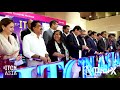

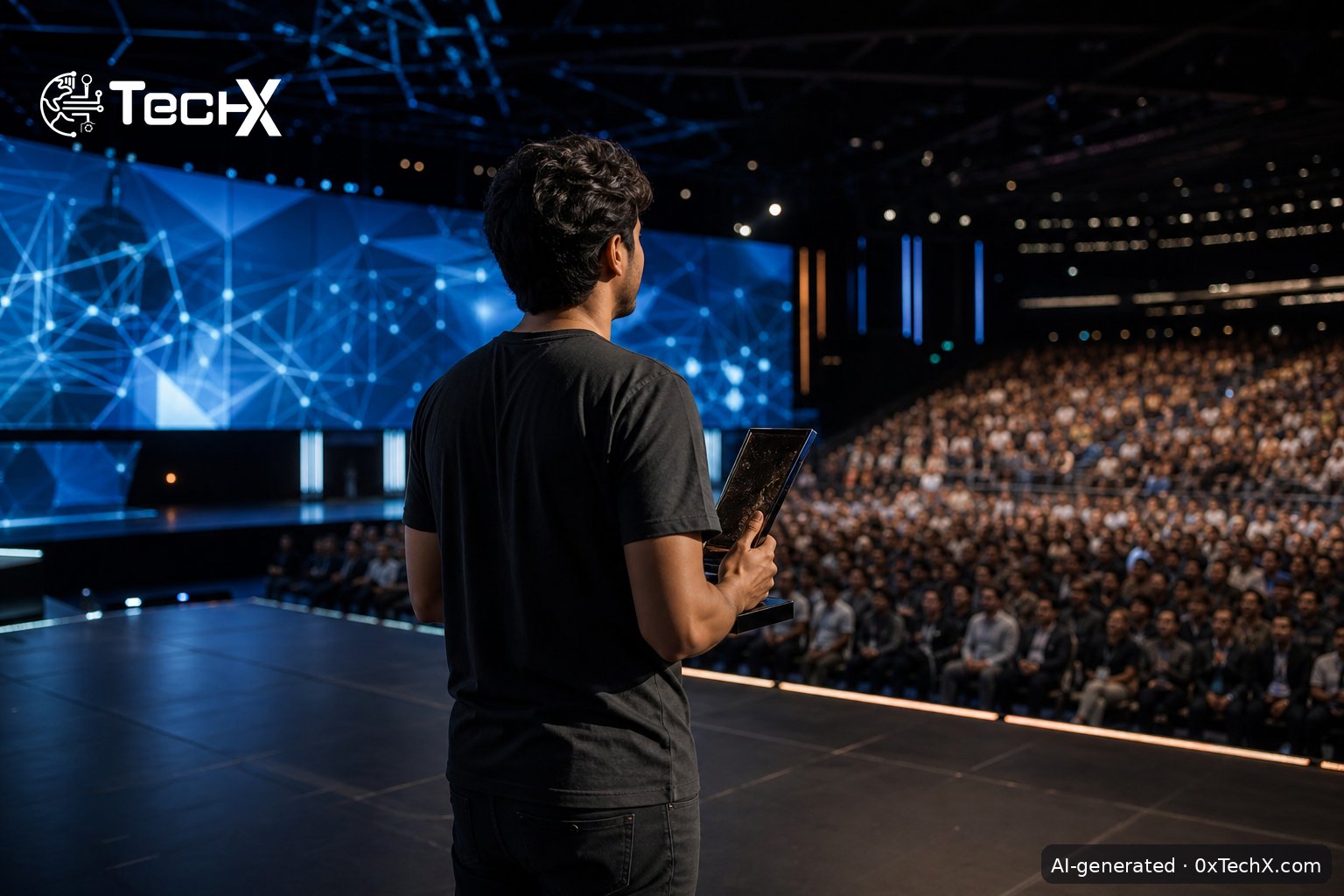
Pakistani startup RLabs GOAL Award winner Harris Ahmed and his team have done something few local founders have managed: they walked into one of Silicon Valley’s biggest innovation summits, pitched to a room of over 3,000 investors and executives, and walked out with the top prize. The win puts Pakistan’s growing startup scene firmly on the global radar.
What Is the RLabs GOAL Award and How Did It Happen?
RLabs, incubated at the National Incubation Centre for Aerospace Technologies (NICAT) and led by Harris Ahmed, won the GOAL Startup Award at the Silicon Valley November Summit. The summit was held from November 2 to 5, 2026, and was organised by global innovation platform and venture capital firm Plug and Play.
RLabs was among 18 startups from around the world selected to pitch under Plug and Play’s Global Overseas Acceleration and Learning (GOAL) programme. That is a very short list out of thousands of applicants globally. Plug and Play’s accelerator programmes are equity-free, offering startups opportunities to pursue pilots, proofs of concept, and potential investment from its in-house venture arm. That means RLabs did not have to give away a share of its company just to get in the door.
Ahmed noted that the summit focused on artificial intelligence and deep tech, featuring live demonstrations and pitches from over 300 startups across more than 20 industry programmes. Standing out in that crowd was no small feat.
What Does RLabs Actually Build?
Harris Ahmed presented RLabs’ work in extended reality (XR) simulators, synthetic data, and machine training. In plain words, the startup builds software tools that let developers create realistic simulation environments far faster than before, using AI to do the heavy lifting.
According to NICAT, RLabs has been training a proprietary Large Language Model to power a modular, cross-platform simulation engine that cuts development time by 75 per cent. That is a bold claim, but it is backed by real technology that caught the attention of a Silicon Valley audience.
NICAT itself is worth understanding. It is Pakistan’s National Incubation Centre for Aerospace Technologies, based in Islamabad. It supports startups working on advanced and deep-tech products, the kind that need serious engineering rather than just an app idea. The fact that RLabs grew out of an aerospace incubator explains why it is building serious simulation and XR infrastructure rather than a consumer product.
Harris Ahmed is a 2018 graduate of the National University of Sciences and Technology (NUST) in Islamabad. NUST has quietly become one of Pakistan’s strongest pipelines for deep-tech founders, and Ahmed’s win adds another proof point to that reputation.
What the RLabs GOAL Award Reveals About Pakistan’s Startup Scene
This win did not happen in a vacuum. Pakistan’s startup ecosystem has been building toward moments like this for a few years now. Pakistan’s startup ecosystem has crossed $4.77 billion in cumulative funding across 22,600 or more registered companies. Q1 2026 alone tracked $62 million in deals, with 18 new angel investors entering the market.
Pakistan placed 16th out of 193 countries in the 2026 Global Outsourcing Talent Index by Ataraxis Management, putting it in the top 9 per cent globally. The talent is clearly there. The question that RLabs is now helping to answer is whether Pakistani founders can build products from that talent, not just provide services.
The Pakistani startup ecosystem has matured significantly, with the focus shifting from rapid user acquisition to sustainable revenue models and the creation of intellectual property. RLabs fits that trend precisely. It is not building another app; it is building infrastructure and IP around AI and XR simulation.
TechJuice previously reported that four NIC Lahore startups entered the same GOAL programme in 2025, marking the first time any Pakistani incubator placed founders in Plug and Play’s Silicon Valley network. RLabs has now taken that progress a step further by winning the award outright.
You can read more about how Pakistan’s AI sector is tackling security challenges in our earlier piece on Pakistan’s National CERT flagging AI banking fraud as a growing threat, which shows the same AI maturity happening across different parts of the ecosystem.
What Comes Next for RLabs?
Following the Silicon Valley recognition, Ahmed said RLabs is preparing to launch in the United States. That is the logical next step, but it is also where many award-winning startups from emerging markets stumble. Getting the prize is one thing. Getting paying US customers is another.
The award provides a credential and visibility, but translating that into commercial traction remains the next challenge. Pakistani founders who have succeeded globally tend to treat the domestic market as validation and build their go-to-market strategy for the US or Gulf from day one. RLabs will need to do exactly that.
Still, the doors that open after a Plug and Play award are real. Plug and Play has a global network of corporate partners and investors, and being inside that network gives RLabs access to conversations that most Pakistani startups never get.
For the broader Pakistan tech community, the message is simple. The gap between a good idea in an Islamabad incubator and a stage at Silicon Valley’s biggest summit is smaller than it used to be. RLabs just proved it.
Frequently Asked Questions
What is the RLabs GOAL Award and who gave it?
The GOAL Startup Award is given by Plug and Play, a global innovation and venture capital platform based in Silicon Valley. The award is part of its Global Overseas Acceleration and Learning programme, which brings startups from outside the US into its network. RLabs from Pakistan won the award at the November 2026 Silicon Valley Summit.
Who founded RLabs and where is it based?
RLabs is led by Harris Ahmed, a 2018 graduate of NUST in Islamabad. The company prepared for its Silicon Valley pitch at the National Incubation Centre for Aerospace Technologies, where it originally incubated. It is a Pakistani startup building XR simulation and AI tools.
What technology does RLabs build?
RLabs pitched its work on extended reality simulators, synthetic data, and machine training. According to NICAT, the company is training a proprietary Large Language Model to power a modular, cross-platform simulation engine that cuts development time by 75 per cent.
What does this win mean for Pakistan’s startup ecosystem?
It shows that Pakistani founders can compete at the highest global level in deep tech and AI, not just in services or freelancing. Combined with growing investment numbers and policy support in 2026, wins like this signal that Pakistan’s startup scene is shifting from an outsourcing hub to a source of globally competitive technology products.