
The Pakistan Sweden investment treaty, signed all the way back in 1981, will stay in place after Islamabad pulled back a termination notice it had sent earlier this year. Pakistan’s Board of Investment (BOI) confirmed the decision on October 9, 2026, and both countries are now setting up formal talks to rewrite the agreement for a modern era.
How the Pakistan Sweden Investment Treaty Almost Ended
Earlier in 2026, Pakistan sent Sweden a formal notice to end the Bilateral Investment Treaty (BIT). The move was part of a wider strategy to renegotiate Pakistan’s old investment deals. Pakistan’s Board of Investment had argued that older treaties exposed the country to costly international arbitration cases. Pakistan had conveyed the termination notice to Sweden through its mission in Stockholm, under Article 11 of the treaty, which required a one-year notice period before termination, meaning the agreement was due to end on September 28, 2026.
The BOI maintained that certain provisions in old treaties had exposed Pakistan to significant risks and costly international investment arbitration. So the decision to send the notice was not random. It was part of a bigger policy push.
But the move caused concern. The government formed a committee to probe the issuance of the termination notice, with members of the cabinet raising serious concern and demanding that the termination notice be revoked before it could come into effect.
Pakistan Pulls Back and Commits to the Pakistan Sweden Investment Treaty
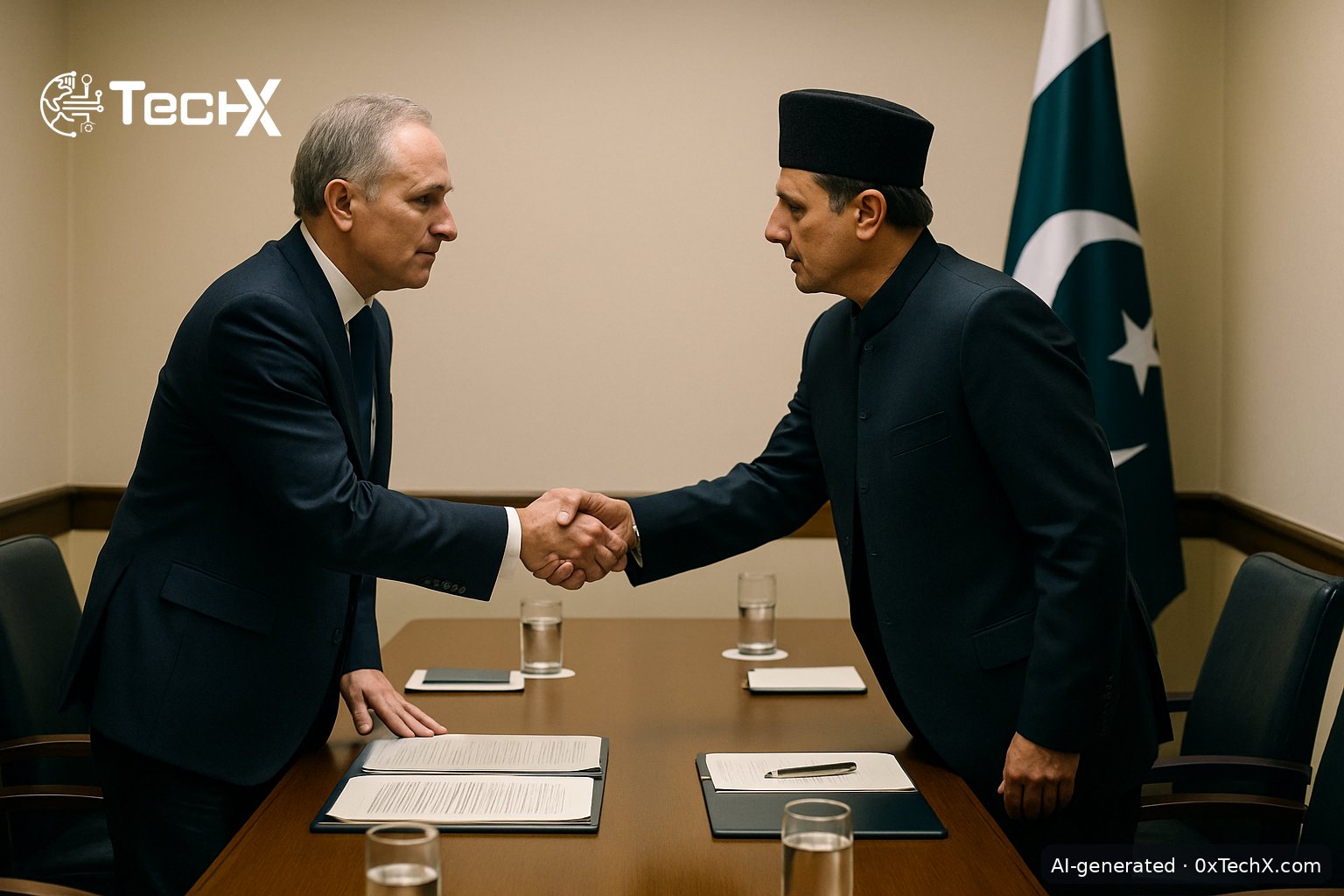
Federal Minister for BOI Qaiser Ahmed Sheikh met Swedish Ambassador Alexandra Berg von Linde, and informed her that the Government of Pakistan had decided to revoke the notice of termination of the treaty, reaffirming its commitment to maintaining constructive investment relations with Sweden.
The government has also set up a committee to review Pakistan’s overall BIT framework and develop a clear policy approach, including a review of the Model BIT template, to ensure that future investment agreements are modern, balanced and aligned with contemporary international practices.
Sweden welcomed the move. Sweden’s ambassador said the country was “very much looking forward to restarting negotiations over updating the Bilateral Investment Treaty.”
November 2026 Talks and the Tech Angle
According to a Pakistani government official, the first round of negotiations is scheduled for November 17 and 18 in Islamabad. Before that, a virtual Zoom meeting is proposed for the coming week to brief the Swedish side on Pakistan’s approach to bilateral investment treaties and the mandate of the BIT committee.
What makes this story relevant for Pakistan’s tech sector is the list of priority areas both sides put on the table. The minister identified agriculture, mining and minerals, information technology, digital services, engineering, manufacturing and other productive sectors as promising areas for Swedish investment.
He particularly encouraged Swedish businesses to explore opportunities in sectors where Swedish expertise could support Pakistan’s economic transformation through technology transfer, innovation, modern production methods and sustainable industrial development.
This matters because Sweden is already home to some of the world’s biggest tech and telecom brands, and several of them are active in Pakistan right now. More than 40 Swedish companies operate in Pakistan, including Ericsson, IKEA, H&M and Tetra Pak, representing ICT, retail, consumer goods and packaging. Ericsson in particular plays a direct role in Pakistan’s telecom infrastructure. A stable and updated investment treaty gives companies like these stronger legal ground to grow their operations here.
Why This Matters for Pakistan’s IT Sector
Pakistan has been pushing hard to grow its IT exports and attract foreign tech investment. The ASOCIO Summit 2026 earlier this year highlighted Pakistan’s push for stronger Asia-Oceania tech ties, and the Sweden development adds another dimension to that story.
Sweden is one of Europe’s strongest tech hubs, with global leaders in telecom, industrial automation and green technology. A refreshed Pakistan Sweden investment treaty could open doors for Swedish tech firms to set up operations, fund local startups or bring new digital tools to Pakistan’s fast-growing IT sector.
President Asif Ali Zardari had already called for an expansion of Pakistan-Sweden cooperation in renewable energy, sustainable technologies, information technology and agriculture. The BOI meeting puts some formal structure behind that ambition.
There is also a trade protection angle. Sweden’s ambassador highlighted the need for continued efforts to honour Pakistan’s international commitments under the GSP Plus scheme, the European Union’s duty-free access program that gives Pakistani exports a major boost in EU markets. Sweden is an EU member, so keeping it as a close partner has direct economic value.
The meeting concluded with a shared understanding of the importance of sustained dialogue, closer engagement with Swedish businesses and continued cooperation on BIT review, investment facilitation, energy transition, technology and education.
What Happens Next
The path forward involves three clear steps. First, a Zoom briefing between Pakistani and Swedish officials to align on policy. Second, a formal first round of treaty talks in November 2026 in Islamabad. Third, a longer process of drafting new treaty text that both sides can agree on. BITs with 25 countries have so far been terminated by Pakistan, while 29 treaties remain in force, so the Sweden deal being kept alive shows Islamabad is being more careful about which relationships it protects.
For Pakistani IT firms, freelancers and startups, the message is simple. More Swedish investment in Pakistan means more demand for local tech talent, more partnerships and more doors into European markets.
Frequently Asked Questions
What is the Pakistan Sweden investment treaty?
It is a Bilateral Investment Treaty (BIT) signed in 1981 that gives each country’s investors legal protection when operating in the other country. It covers issues like fair treatment, property rights and how disputes are resolved. Pakistan recently withdrew a notice to end it and will now renegotiate a modern version.
Why did Pakistan try to end the treaty in the first place?
Pakistan sent a notice to terminate the 1981 treaty as part of its strategy to renegotiate all existing investment treaties, as Islamabad was keen to review the deals to avoid large fiscal exposures due to international arbitration.
When will new BIT talks between Pakistan and Sweden begin?
Both sides discussed the proposed commencement of the first round of BIT negotiations in November 2026, with a Swedish delegation expected to engage with Pakistani counterparts. A Zoom briefing is planned beforehand to set the agenda.
Which Swedish tech companies are already in Pakistan?
More than 40 Swedish companies operate in Pakistan, including Ericsson, IKEA, H&M and Tetra Pak, representing ICT, retail, consumer goods and packaging. Ericsson’s presence in Pakistan’s telecom sector makes the treaty especially important for the local tech and connectivity industry.