
Part 1 of 5 in our Defence Day series.
What Is Defence Day and Why Does It Matter?
Every year on 6 September, Pakistan pauses to remember one of the most defining moments in its history. Schools hold special assemblies, television channels broadcast documentaries about brave soldiers, and the national flag is raised with pride at public buildings across the country. This day is called Defence Day, Youm-e-Difa, and it is a day of solemn gratitude, not just celebration.
Defence Day is Pakistan’s way of saying thank you to every soldier, airman, sailor, and civilian who stood firm when the country was threatened in September 1965. It is a reminder that the Pakistani nation, when tested, stood as one, and did not break.
The Background: Why Did the 1965 War Start?
To understand Defence Day, we have to go back a little further, to 1947, when Pakistan and India gained independence and were born as two separate nations. From the very first day, the Kashmir dispute became a source of deep tension between the two countries. Kashmir’s majority Muslim population and its geographical closeness to Pakistan made it a matter of great importance for Pakistanis, and the unresolved question of its future would shape events for decades to come.
By the mid-1960s, tensions along the border had been building for years. In August 1965, events in the Kashmir region escalated sharply, and by early September the situation had transformed into a full-scale conflict. On the night of 5, 6 September 1965, without any formal declaration of war, Indian forces crossed Pakistan’s international border and launched a major offensive aimed at the city of Lahore, Pakistan’s cultural heart and second-largest city at the time.
The Night Pakistan Was Attacked
At 3 a.m. on 6 September 1965, Indian forces crossed Pakistan’s international frontier and advanced in a three-pronged thrust targeting Lahore, Sialkot, and parts of Sindh. The timing was deliberate, it was the dead of night, and Pakistan’s army was on normal border watch, not in full battle positions. It was a bold and sudden move that caught many off guard.
Yet the response that followed was equally bold. Pakistani soldiers, the Pakistan Air Force (PAF), and ordinary citizens refused to be overwhelmed. Along the Lahore front, the BRB Canal, a wide, deep waterway running along the city’s eastern edge, became Pakistan’s natural line of defence. Pakistani troops held that line under intense pressure, and the advance on Lahore was stopped.
The PAF played a critical and celebrated role in these first hours. Pakistan Air Force pilots flew sorties to push back the advancing enemy columns, and their bravery in the skies above Punjab became legendary. The air war that followed was one of the largest aerial engagements in South Asia since the Second World War, with both air forces conducting thousands of sorties over the following days.
Key Battles of the 1965 War
The war was fought across several sectors, from the plains of Punjab to the deserts of Sindh and the mountains of Kashmir. Here are some of the most important engagements:
- The Defence of Lahore (Lahore Sector): The most emotionally significant battle for Pakistanis. Indian forces advanced toward Lahore but were met with fierce resistance at the BRB Canal. Pakistan’s soldiers and airmen together held the city, and Lahore never fell.
- The Battle of Burki: On the Lahore front, the Battle of Burki became one of the most celebrated engagements of the war. It was here that Major Raja Aziz Bhatti of the 17th Punjab Regiment chose to stay with his forward platoon through five continuous days and nights of relentless artillery and tank fire, organizing the defence of the BRB Canal with extraordinary courage. He embraced martyrdom on 12 September 1965, and was posthumously awarded Pakistan’s highest military honour, the Nishan-e-Haider. He is remembered to this day as the Muhafiz-e-Lahore, the Defender of Lahore.
- The Sialkot Sector: Indian forces also launched a major offensive toward Sialkot, which saw fierce tank battles on the Punjab plains. Pakistani armoured and infantry units fought hard to contain and push back the advance.
- Operation Grand Slam: Before the border crossing of 6 September, Pakistan had launched Operation Grand Slam on 1 September 1965, targeting the Akhnoor area in an effort to disrupt enemy logistics in the Kashmir region, a bold military move that reflected Pakistan’s strategic thinking at the time.
- The Air War: Squadron Leader Muhammad Mahmood Alam became one of Pakistan’s most celebrated war heroes when he shot down five Indian aircraft in a single day on 7 September, a feat that earned him the Sitara-e-Jurat and lasting national fame. The PAF’s performance throughout the war gave the entire nation a sense of pride.
How the War Ended
The fighting continued for 17 intense days. On 22, 23 September 1965, both sides agreed to a ceasefire brokered by the United Nations. The guns fell silent, and an uneasy peace returned to the subcontinent. Diplomatically, the conflict was formally concluded with the Tashkent Declaration, signed on 10 January 1966, under which both countries agreed to withdraw their forces to pre-war positions.
The war ended without a decisive military victory for either side, but for Pakistan, the moral outcome was clear: a smaller, younger nation had defended itself against a much larger adversary and protected its cities, its people, and its sovereignty. That pride has never faded.
How Pakistan Observes Defence Day Today
Every year, Defence Day is marked with dignity and warmth across the country. Change-of-guards ceremonies take place at the mausoleums of Quaid-e-Azam Muhammad Ali Jinnah in Karachi and Allama Iqbal in Lahore. Military parades are held, and the Pakistan Army displays its weapons and equipment as a symbol of readiness. Schools and colleges organise special programmes so that younger generations understand the meaning of the day. Media channels broadcast documentaries and interviews with veterans, keeping the stories of our shuhada and ghazis alive.
The day is not about glorifying war. It is about remembering sacrifice, and renewing the promise that Pakistan will always stand up for itself.
The Spirit of September and Modern Pakistan
Sixty years after September 1965, Pakistan’s armed forces are more capable and more technologically advanced than ever before. The Pakistan Air Force that defended Lahore’s skies in F-86 Sabre jets now operates modern aircraft and indigenous drone programmes. The same spirit of dedication that drove our soldiers in 1965 continues to guide Pakistan’s defence scientists, engineers, and military personnel today.
For Pakistan’s young generation, engineers, coders, entrepreneurs, and changemakers, Defence Day carries a timeless message: when a nation unites behind a shared purpose, it can overcome challenges far greater than itself. That lesson is as relevant in the boardroom or the innovation lab as it ever was on the battlefield.
Frequently Asked Questions About Defence Day
Why is Defence Day celebrated on 6 September?
Defence Day is observed on 6 September because it was on this date in 1965 that Indian forces crossed Pakistan’s international border without a declaration of war and launched an attack on Lahore and other cities. Pakistan’s military and people responded bravely, stopping the advance. The date is now permanently commemorated as a day of national pride and remembrance.
Who is the most famous hero of the 1965 war?
Many heroes emerged from the 1965 war, but Major Raja Aziz Bhatti Shaheed holds a very special place in the nation’s heart. He defended the BRB Canal on the Lahore front for five days and nights under continuous enemy fire, and was martyred on 12 September 1965. He was awarded the Nishan-e-Haider, Pakistan’s highest military honour, posthumously. Squadron Leader Muhammad Mahmood Alam, who shot down five aircraft in one day, is another celebrated name from the same war.
What was the outcome of the 1965 war?
The 1965 war ended with a United Nations-brokered ceasefire on 22, 23 September 1965, followed by the Tashkent Declaration signed on 10 January 1966. Neither side achieved a clear-cut military victory, but Pakistan successfully defended its territory, including the city of Lahore, and emerged from the conflict with its national pride and sovereignty intact.
How is Defence Day different from Youm-e-Azadi (Independence Day)?
Youm-e-Azadi, celebrated on 14 August, marks the birth of Pakistan in 1947. Defence Day, observed on 6 September, specifically commemorates the 1965 war and honours the soldiers and civilians who defended Pakistan at that critical moment. Where Independence Day is a celebration of creation, Defence Day is a tribute to protection and sacrifice.
A Hopeful Closing
On Defence Day, as the national anthem plays and families light candles for their shuhada, Pakistan is reminded of something powerful: this country was not built on luck alone. It was built, and saved, by the courage of real people who loved it deeply enough to give everything for it.
We at TechX.pk salute every martyr, every veteran, and every family that has carried the weight of sacrifice with quiet dignity. May Pakistan always find such sons and daughters when it needs them most. And may we, in our everyday lives, whether in our work, our honesty, or our service to this country, carry forward even a small part of that same spirit.
Pakistan Zindabad.
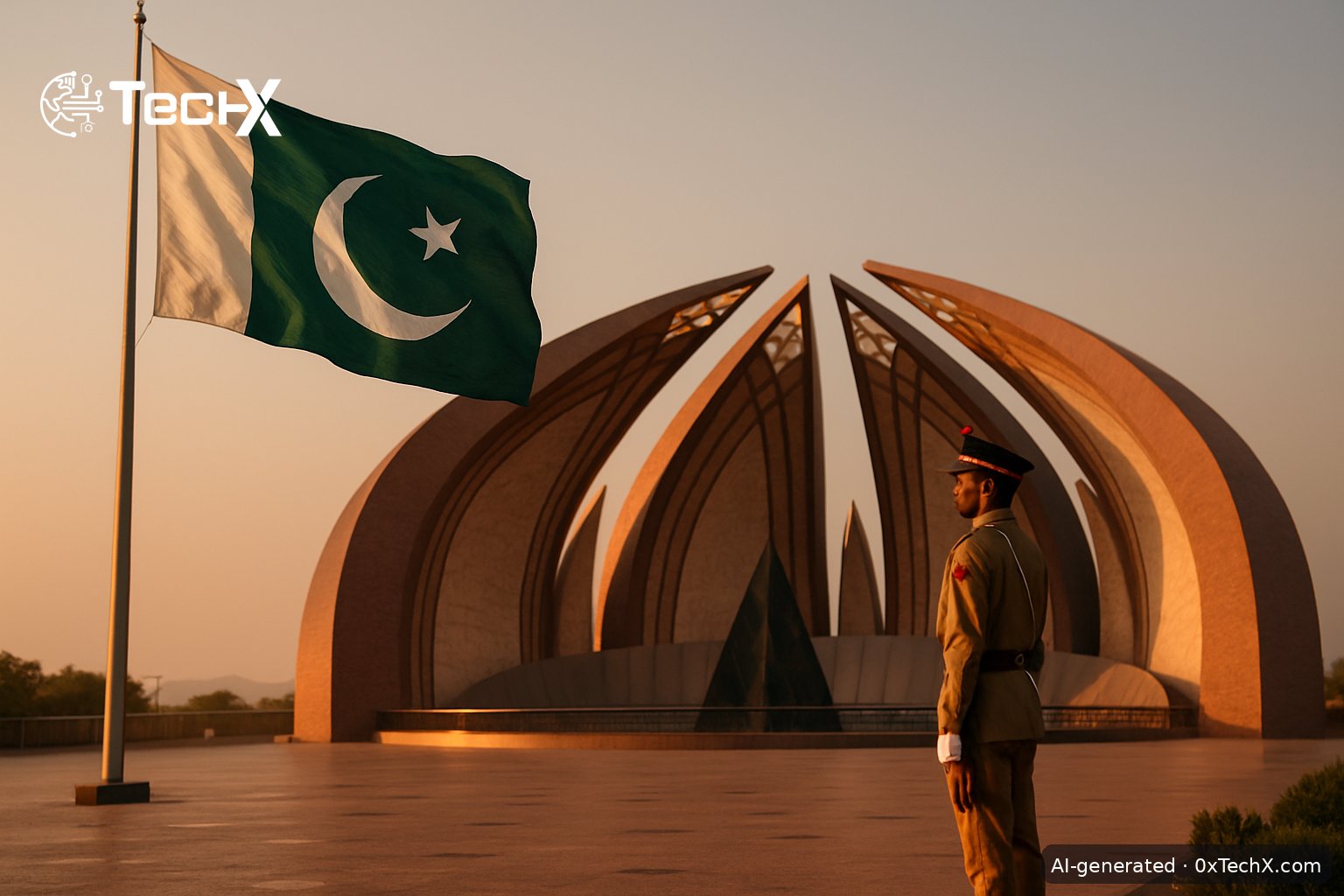
Disclaimer: This article has been compiled from information publicly available on the internet and from published sources. The featured image is AI generated and is for illustration only. If you notice anything that needs correction, please contact us.