
Pakistan’s plan to give telecom operators a telecom industrial tariff is moving from talk to action. The federal government has set up a joint task force to work out how mobile network operators can start paying industrial electricity rates instead of the higher commercial rates they pay today. If it works, it could change the cost equation for 5G in a big way.
Why Electricity Bills Are a Big Problem for Telecom
Running a mobile network is not cheap, and electricity is one of the biggest costs. Tower sites are energy-intensive to run. Rising fuel prices have made operations more expensive, and frequent power outages disrupt services and reduce customer satisfaction.
The deeper problem is the type of tariff operators pay. NEPRA did not classify telecom as an industry for a long time, which forced mobile network operators to pay higher commercial electricity rates instead of lower industrial tariffs. That gap matters a lot when you multiply it across thousands of towers running every hour of every day.
To put some numbers on it: the government cut industrial electricity tariffs by up to Rs4.58 per unit for factories and businesses, with the revised rates taking effect in February 2026. Small industrial consumers now pay Rs26.23 per unit, down from Rs30.80 previously. Telecom operators have been locked out of savings like these because they were billed as commercial users, not industrial ones.
When operators cannot cover costs from revenue, they have two bad choices: cut network investment or pass costs to users through higher data prices. Neither is good for Pakistan’s digital growth.
The New Task Force Working on a Telecom Industrial Tariff
The federal government has started work on a proposal to provide cheaper electricity to Pakistan’s telecom operators by extending industrial electricity tariffs to the sector, following its recent decision to grant the telecom industry industrial status.
The task force includes representatives from the Ministry of Information Technology and Telecommunication (MoITT), the Power Division, the National Electric Power Regulatory Authority (NEPRA), the Pakistan Telecommunication Authority (PTA), telecom operators, and electricity distribution companies. That is a broad table, which means the government is serious about finding a real solution rather than just writing a report.
A joint task force has held its first consultative meeting to discuss the implementation of industrial electricity tariffs for telecom operators. The meeting focused on developing a practical mechanism and preparing a comprehensive framework for the new tariff structure.
Operators made a clear case at that meeting. Telecom operators argued that commercial electricity tariffs have placed significant financial pressure on the sector, and said the telecom industry contributes substantial tax revenues to the national exchequer, similar to other industrial sectors, and that telecommunications have become an essential public service rather than a luxury.
The task force is also looking beyond just the rate change. It will prepare recommendations on industrial electricity tariffs, smart grid solutions, and dedicated power feeders to improve network resilience and service continuity across the country.
Years in the Making
This issue is not new. Although the telecom sector has been officially declared an industry, telecom operators have so far been unable to benefit from industrial electricity tariffs, with the issue remaining entangled in litigation with NEPRA for several years. The fight over this classification has dragged on quietly in the background while operators absorbed the higher costs.
The regulator has also recommended shifting the telecom sector to an industrial electricity tariff to reduce costs and improve service reliability. Even PTA has been pushing for this, so it is not just operators asking for a favour. The regulator itself sees the logic.
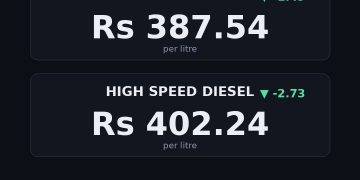
The issue became harder to ignore as backup costs climbed. The PTA warned that current backup systems are becoming unsustainable, and while operators are using fuel-powered generators to bridge the gap, rising petroleum prices are making this practice prohibitively expensive. You can read more about how fuel prices are affecting costs across Pakistan’s economy in our coverage of the latest petrol and diesel price changes from OGRA.
What This Means for 5G
Pakistan’s 5G rollout is already under way. Industry sources say operators have set internal targets to complete major deployment phases by August 14, Pakistan’s Independence Day. Jazz is working toward approximately 1,000 5G sites, Zong is targeting 400 to 500, and Ufone (now merged with Telenor Pakistan as PTML) is focused on reaching 100 sites during this initial phase.
But the economics of 5G are tougher than 4G. Each new 5G tower draws more power than older equipment. If operators keep paying commercial electricity rates on a much larger network, the costs compound fast. A telecom industrial tariff would directly reduce that burden and free up cash for more sites.
Industry bodies have specifically called for classifying telecom as critical infrastructure and providing industrial electricity rates to cut costs as part of a broader set of 5G reform demands. The government forming a task force is the first concrete sign that this particular ask is being taken seriously.
Officials have said the rollout of 5G will be gradual, with initial services concentrated in urban centres before expanding nationwide. Analysts note that while 5G promises faster internet and new applications in areas such as industry, health and education, its success will depend on infrastructure readiness, affordability and consumer adoption in a price-sensitive market.
Lower electricity costs for operators do not automatically mean lower data prices for users. But they do make wider and faster network expansion more financially viable, which is the first step toward better and cheaper connectivity reaching more people.
Renewable Energy Also on the Agenda
Alongside the tariff push, there is a parallel conversation about solar and wind power at tower sites. A parliamentary panel recommended the use of alternative energy sources for telecom infrastructure, particularly wind and solar power, and directed the Ministry of IT and Telecommunication to encourage telecom operators to gradually install renewable energy systems at telecom sites. This would reduce dependence on both expensive grid power and diesel generators over time. The two approaches, better tariffs now and cleaner energy later, are complementary rather than competing.
You can track the broader policy picture at the Pakistan Telecommunication Authority (PTA) and NEPRA’s official website, where tariff decisions are formally published.
Frequently Asked Questions
What is the difference between a commercial and an industrial electricity tariff in Pakistan?
Commercial tariffs are charged to shops, offices, and service businesses at higher per-unit rates. Industrial tariffs are lower rates given to factories and manufacturers to support production. In February 2026, the government cut industrial rates by up to Rs4.58 per unit. Telecom operators currently pay commercial rates, which is why getting the telecom industrial tariff matters so much for their costs.
Which government bodies are involved in the task force?
The task force includes MoITT, the Power Division, NEPRA, PTA, the telecom operators themselves, and electricity distribution companies (DISCOs). This cross-ministry setup gives the group the authority to design a practical framework rather than just recommend one.
Will cheaper electricity for operators lower my mobile data bills?
Not directly or immediately. Lower operating costs improve operator margins and make it easier to expand networks without passing costs to users. Over time, a financially healthier industry tends to invest more in coverage and capacity, which can lead to better service and more competitive pricing.
How long has this issue been stuck?
For several years. Even though the government formally declared telecom an industry, operators could not access industrial electricity rates because the matter was tied up in litigation with NEPRA. The new task force is the first structured attempt to resolve it properly, with the right stakeholders at the table.